This conference, the first of its kind ever held, has just closed in Philadelphia. Two thousand delegates were enrolled, as supporters of its object. The daily attendance, however, averaged about four hundred, with one exception. This was a rally held in the Academy of Music, when more than two thousand were present. This seems quite remarkable, when admittance was by delegate or visiting tickets, which cost the holders one dollar each.
The delegation was a representative one. Looking over the audience, one could not fail to notice that the majority there seated were mature and strong-minded men. The speakers were all past middle life, and men of culture and thoughtful mien. Their speech indicated that they felt they were laden with divine responsibility, and were determined to discharge this at all hazards.
The Object and Its Meaning
One object alone seemed in sight. Whatever the subject assigned to any speaker, he invariably shaped his speech to point out that one object. Whether missionary work, family training, divorce, Sunday observance, or purity of public officials, was the theme, desirable attainments in any of these lines were to be sought in but one way, and that was to enthrone the name of God in the Federal Constitution, and that “Christianity be recognized as the source and standard of all authority.”
This was clearly set forth in a resolution unanimously adopted by the conference, concerning a proposed Christian amendment to the United States Constitution, now pending before the judiciary committee of Congress, which reads in part: “We, the people of the United States, acknowledging Almighty God as the source of power and authority in civil government, and the Lord Jesus Christ as the ruler of nations, and His revealed will as of supreme authority, do ordain,” etc. The resolution requested the National Reform Association to press this matter upon the attention of Congress.
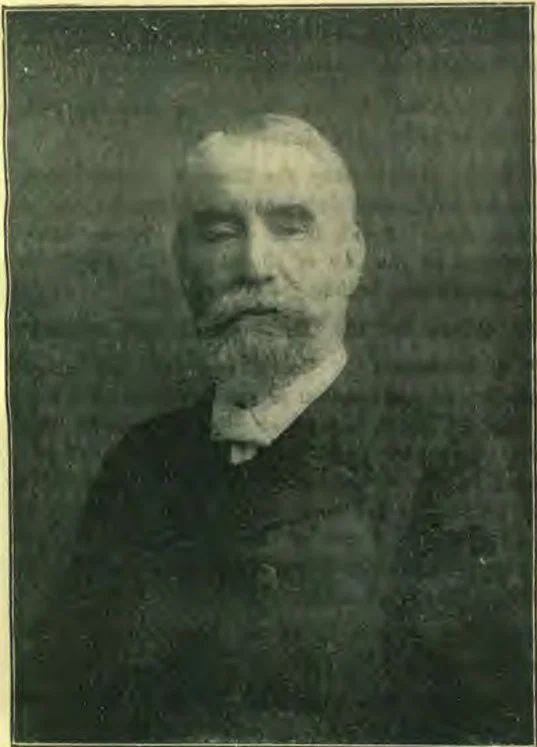
Rev. S. F. Scovel, President National Reform Association
Let such an amendment be made in the Federal Constitution, and the dullest mind can readily comprehend that the interpretation and enforcement of law would be given over to a set of religiously biased minds, which would bode no good to any who differed from them in religious sentiment.
Rev. John F. Carson, of Brooklyn, New York, epitomized the result of such a measure, when he said: “The Bible should have a place in our state and national legislative halls. Give us an enthroned Bible in our legislative halls, and Mormonism would be banished from Utah and this country; we would have no infamous divorce laws; the Sabbath would be respected; we would have no laws which would make possible the enrichment of the few at the expense of the millions; pirates of politics would be swept from position and power; the saloon, that great monster of iniquity, that menace to civil authority, would be banished forever.”
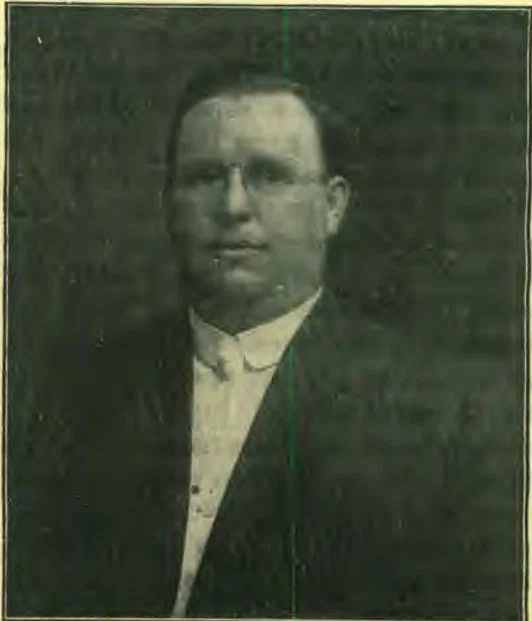
Rev. J. S. McGraw, Field Secretary National Reform Association
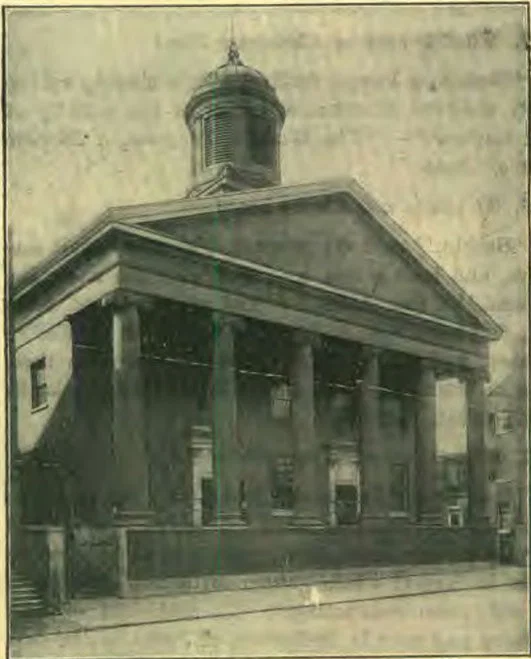
First Presbyterian Church, Philadelphia, where some of the meetings were held
Not the Bible, but the Bible Interpreted
This sentiment was applauded to the echo, which showed how ready men are becoming to enforce precepts by the arm of civil law, regardless of conscientious scruples. No well-disposed person would question for a moment the utility of good morals in every community. But when we stop to think that this movement contemplates making Bible interpretation the standard by which to enforce laws, and consider that these interpretations would be according to the creedal teachings and consequent religious bias of those who would administer the law, one can not but stop to ask whether men's worst mobocratic passions would not be inflamed by such a form of government.
Then again, it seems clear that to place thus the enforcement of Bible sentiment, in the form of civil law, in the hands of ultra-religious people, instead of Gospel teaching of free will and Gospel mercy for offenders, would be to confront the country by a gospel of relentless force, like that administered by Russia against Count Tolstoy, who, because he could not endorse all the doctrines of the Greek Church, was excommunicated by the civil church, out of which he recently died, and was denied the rites of a Christian burial.
The turbulent unrest in Russia under such a régime, could not fail to be reproduced in America's fair land, should the adopted program of this World's Christian Citizenship Conference be carried out.
Principles Adopted
But that these people fully intend to carry out the principles here enunciated, is evident from a declaration of principles and plan of action adopted by the conference. Lack of space forbids giving these entire, but they may be thus summed up:
The declaration of principles assumes that NATIONS ARE MORAL BEINGS, capable of doing right or wrong, and are, therefore, subject to God's moral government, to be administered through His moral law. Then as the Word of God is the revelation of His will, as relates to national life, that Word must have definite application to nations and governments.
In view of these assumed “principles,” the universal plan of action adopted covers these points: It is the duty of all Christian citizens everywhere, assiduously, and in harmony, to propagate the adopted principles, and to sustain civil government in applying them in its administration, and so to “use the powers of government, wherever possible, for the correction and suppression of moral evils.” It is to be seen that families “conform to the moral laws of the Christian religion.” The state is to be instructed to educate its prospective citizens in “Christian morals, upon Christian sanctions, derived from the Word of God in its proper use in the public schools.” Public utilities are to be made to conform to Sunday rest; and in order to gain this object, none but men who have regard for the moral law, thus showing themselves fit to deal with the moral and religious interests of the people, are to be elected to public office. Besides the points here mentioned, the “plan” includes safeguarding the judicial oath, the temperance question is mentioned, and last of all, in order to win the adherence of organized labor, shorter hours, advanced wages, and Sunday rest for toilers, are to be advocated.
A Movement Prophetic
Many of these ideas may seem Utopian to some, because they have not taken time to study this now almost world-wide movement. But those who have studied the prophetic Word to a purpose have looked for just such11a movement to arise, which would minimize the work of grace in individual hearts, and stand for civil enforcement of national religious rites. The beginning has been made in the lines marked out by the sure word of prophecy. More than twenty years ago the writer attended a meeting of the leaders of the present movement in Pittsburg. Then its adherents could almost be counted on the fingers of one's two hands. But the present status of the movement is far from feeble. Let it secure the machinery it so assiduously reaches after, and its momentum will be tremendous. And it is bound to gather strength; for already men high in political stations have seen the trend of affairs, and are lending their influence to its propagation.
The conference adjourned to meet in Los Angeles, California, two years hence. In the meantime it will pay all to watch the development of affairs in this line, and so be able to decide what its final object is to be, both as to its adherents, and dissenters from its work. Next week we hope to have some things relative to the final outcome of the whole matter.