L. A. REED.
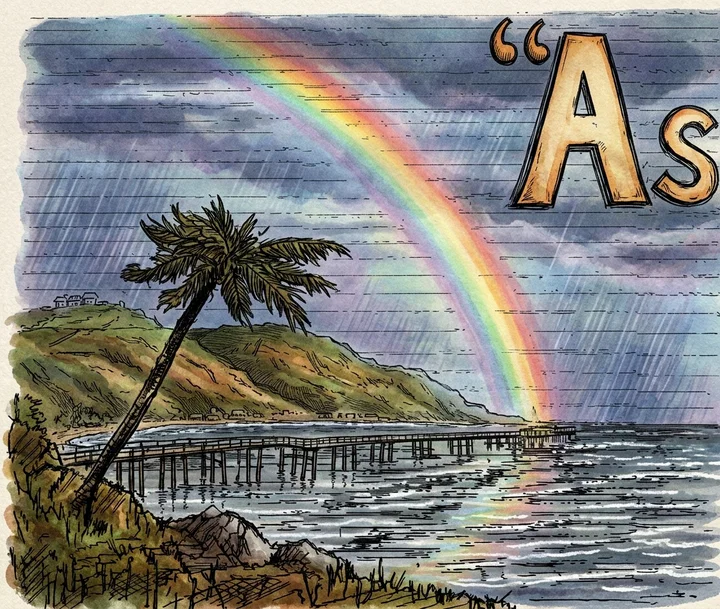
“As the appearance of the bow that is in the cloud in the day of rain, so was the appearance of the brightness round about. This was the appearance of the likeness of the glory of the Lord.” Eze. 1:28. Ezekiel, beholding the throne of God and the glory round about, tells us that this glory looked like the rainbow.
God’s glory is God’s own peculiar attribute; it has its distinguishing features. We have for some time been studying that glory, and learning what it is. We have seen the relation that it bears to the light of the sun and the light of the candle; we have learned that God’s righteousness, goodness, character, and grace are comprehended in the single word “glory;” we have traced to some extent the relations existing between his character and the bright shining of his character; and now, by the words of Ezekiel, we are given a new point of view.
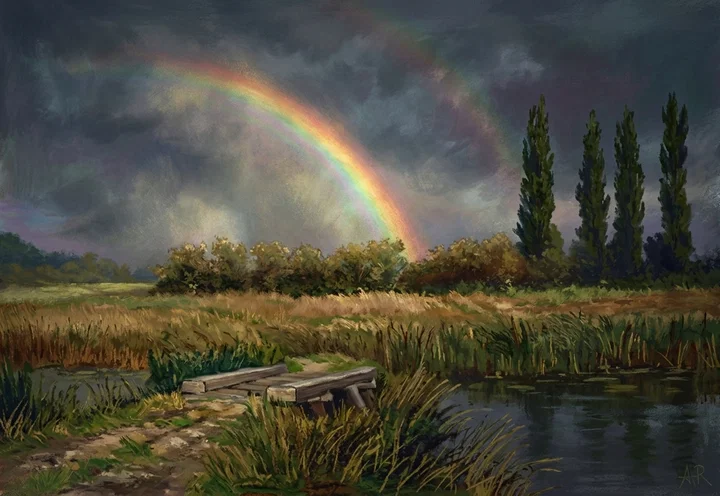
Ezekiel tells us how God’s glory appears; he says that this glory shines with all the colors of the rainbow. Its appearance is the appearance of the bow in the cloud in the day of rain. The rainbow is caused by the action of light on the rain-drop. This action is a very complicated affair, so complicated that I shall not venture to explain it. It is a result depending upon so many things, any one of which failing, we would have no rainbow, that the goodness and the wisdom of the God of light are therein most marvelously displayed. No one will dispute that it is God’s bow; for none but he could make it. Well may he call it “my bow.”
But how is it that light and the glory of God each give us an effect, or appearance, in every point the same? Is it a mere accident?—No.
The similarity is not accidental; for God said to Noah, “I do set my bow in the cloud.” God calls it “my bow.” These words evidently refer to the bow shining about God’s throne,—the bow seen by Ezekiel. And when God says, “I do set my bow in the cloud,” he must mean just what he says. “I do set,” is an emphatic form of utterance. If God had simply said, “I set,” the words would not be so emphatic; but as if to forewarn us not to think that the bow in the cloud is some other bow,—the rain’s or light’s bow, instead of being, first of all, God’s bow,—he calls it “my bow.” And it came there by no accident; for he tells us, “I do set my bow in the cloud.” Then the bow is in the cloud in the day of rain because God set it there.
It is his bow; for he says it is. And since the bow in the cloud—the rainbow, as we commonly call it—is God’s bow, it follows that Ezekiel was right in saying that the bow about the throne, and the bow in the cloud in the day of rain, are alike in appearance. He might also have said that they are the same in actual nature and composition; for God took his own bow, and did set it in the cloud—and there it is.
And since the rainbow is made by the shining of light upon the rain-drop, being thereby analyzed into its varied constituents, we must conclude that God’s glory and the light of the sun are one and the same thing. And therefore Professor Prescott was right in saying, not long ago, that “the sunshine is simply the light of the Father’s countenance.”
But the bow in the cloud is a pledge; the bow is God’s glory: therefore the glory of God is the pledge. And that bow might have remained only there about his throne,—many scientists to the contrary,—but left so that we, since the clouds and darkness of sin entered, could not see it. But no: God said, I will place it in the cloud in the day of rain, in the day of clouds and thick darkness. And there it is, an everlasting pledge of his love and care, the rainbow of his light and glory. When you look upon it, you behold the radiant beauty of the glory of God.
Light is God’s glory, and hence reveals his glory. It comes to teach us of the glory and beauty of the character of God.