"FROM GLORY TO GLORY."
Some Thoughts on 2 Corinthians 3.
THE expression "from glory to glory" is found in the last verse of the third chapter of 2 Corinthians. It presents a most desirable condition, even a change to the image of Christ, to the character of God. All through this wonderfully precious chapter we have the two glories compared, the great and the greater, the brightness of the one fading before the brightness of the other. What is meant by the expression "from glory to glory"? To what do these terms apply?
Some Primary Considerations.
It will make the subject somewhat clearer to the uninstructed reader briefly to consider some other important and underlying truths, the mere statement of which will be self-evident to the believing Bible student.
1. The God of the Bible is the ever-living and true God, the self-existent present One. He is not "I was" to his people; he is not "I shall be;" he is the "I AM," the ever-present One, in whom is the all-sufficiency for the needs of all his creatures.
2. The God of the Bible is the great moral Governor, or Ruler, of the universe, and therefore of the earth.
3. Being the Ruler of the universe, he must have subjects and a law.
4. This law—the rule of the conduct of his subjects, the standard of right—must be the expression of his own character. It must be righteous, and only righteous, enjoining all righteousness and condemning all sin, or unrighteousness.
5. God being unchangeable in his perfection of character (James 1:17; Mal. 3:6; Num. 23:19), his law, the expression of his character, must also be unchangeable.
6. God's law, in its very nature, being the expression of his character, is laid in infinite wisdom. No emergency could arise, no rebellion could take place, no conditions could be evolved, which would not be met in God's law. There never was a time when his law was not, or did not exist in all its fullness; for it is the expression of his character, and his character is as perfect and unchangeable and eternal as himself. In fact, it is himself; for we can not conceive of such a being as God without character. But his creatures did not always exist. They came into being at different times, by the power of his creative word. As soon as one responsible intelligence came into being, he came within the operations of God's law in every relation of life open to him. When more than one was given existence, associated with each other, their relations in life multiplied, and other principles of the law came into operation, imposing new duties, answering to the new and increasing relations. The law is as old as eternity; relations are new and ever varying.
7. This law of God is, like himself, living. It has within it the principle of life; it is a living law. "For the word of God is quick [living] and powerful." Heb. 4:12. Working as God gave it, it always produces or supports life. If his creatures yield to his law, it will work out God's life in them. If they rebel, or pervert that law, the living law will still work, but it will produce death in the transgressor. The death does not come in because of the law, but because of man's perversion of the law. In its own divine way, the law works out life. Perverted, its power works out death, because of the perversion. It contains in itself the penalty of transgression. In itself it will make an end of sin.
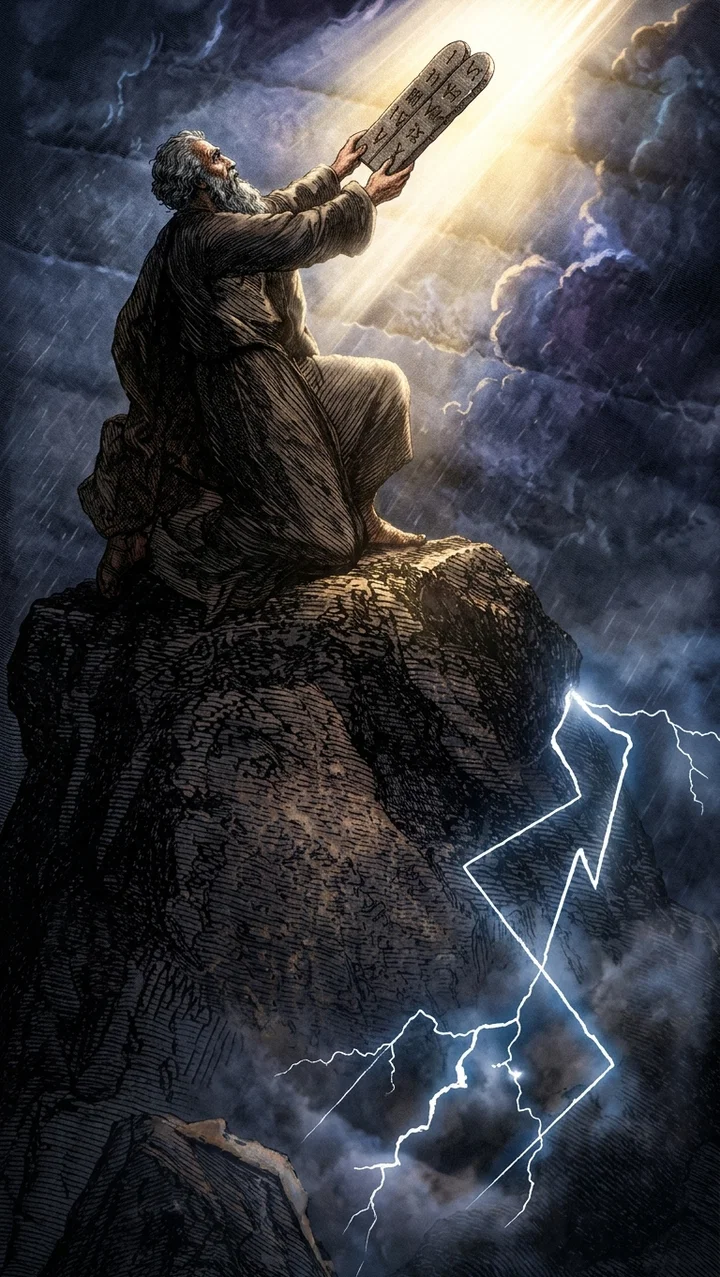
God's Standard Revealed in His Word.
The law referred to in the abstract in the foregoing propositions is the law of human conduct which God has given in his word. The character required of man is thus stated in two dispensations. In the Levitical:—
"Ye shall be holy; for I the Lord your God am holy." Lev. 19:2.
In the Christian dispensation, the apostle quotes from the above text to sustain the same proposition:—
"But as he which hath called you is holy, so be ye holy in all manner of conversation [living]; because it is written, Be ye holy; for I am holy." 1 Peter 1:15, 16.
The same truth is stated in the following scriptures, the first to Abraham, the second to Israel, and the third to those in this dispensation:—
"I am the Almighty God; walk before me, and be perfect." Gen. 17:1.
"Thou shalt be perfect with the Lord thy God." Deut. 18:13.
"Be ye therefore perfect, even as your Father which is in heaven is perfect." Matt. 5:48.
"Be perfect, be of good comfort, be of one mind, live in peace." 2 Cor. 13:11.
The same expressions are used concerning God and his law:—
"As for God, his way is perfect." Ps. 18:30.
"The law of the Lord is perfect." Ps. 19:7.
"Wherefore the law is holy, and the commandment holy, and just, and good." Rom. 7:12.
From the above scriptures it will be seen that God's requirements are the same in all dispensations. And yet, there is no such a thing as dispensations where character and God's requirements are concerned. The only matter concerning man's relations to God which may be divided into dispensations is that of priesthoods and the offerings by which the believer indicates his faith in the great atoning Sacrifice, Christ Jesus. The moral requirements are always the same, because God is ever the same. The way of salvation through Christ—living faith in him—is ever the same, but the manifestation of this faith has been different in different ages of the world. Before Christ, we have the patriarchal and Levitical priesthoods and the typical service; since our Sacrifice was offered, we have the priesthood of Christ and the ordinances of the Gospel. But as God is onep. 2 and unchangeable, so what he requires of man—his rule of right, his moral standard, the expression of his own character—is ever the same, one and unchangeable also.
The Law of Character
The Scriptures clearly reveal what this law of character is,—this law which includes in its exceeding scope all righteousness and condemns all sin.
1. God's law is the embodiment of righteousness, and this "righteousness shall not be abolished." This is positively stated in the following scriptures:—
"Lift up your eyes to the heavens, and look upon the earth beneath; for the heavens shall vanish away like smoke, and the earth shall wax old like a garment, and they that dwell therein shall die in like manner; but my salvation shall be forever, and my righteousness shall not be abolished. Hearken unto me, ye that know righteousness, the people in whose heart is my law." Isa. 51:6, 7.
"My tongue shall speak of thy word; for all thy commandments are righteousness." Ps. 119:172.
2. The opposite of righteousness is unrighteousness or sin; for "all unrighteousness is sin." 1 John 5:17. But "sin is the transgression of the law" (1 John 3:4); therefore the law which points out sin, condemns all unrighteousness, and therefore in itself must comprehend all righteousness.
3. But further, the law that reveals and condemns sin is the law embodied in the Ten Commandments, or Decalogue. Very clearly indeed the Spirit of God reveals this through the apostle Paul:—
"Where no law is, there is no transgression." Rom. 4:15.
"By the law is the knowledge of sin." Rom. 3:20.
"Nay, I had not known sin, but by the law; for I had not known lust, except the law had said, Thou shalt not covet." Rom. 7:7.
It is the Decalogue that declares, "Thou shalt not covet." That by this Paul does not refer to a new law or a changed law comprising this precept is evident from Rom. 2:17-23.
"Behold, thou art called a Jew, and restest in the law, and makest thy boast of God, and knowest his will, and approvest the things that are more excellent, being instructed out of the law; and art confident that thou thyself art a guide of the blind, a light of them which are in darkness, an instructor of the foolish, a teacher of babes, which hast THE FORM OF KNOWLEDGE AND OF THE TRUTH IN THE LAW.
"Thou therefore which teachest another, teachest thou not thyself? thou that preachest a man should not steal, dost thou steal? thou that sayest a man should not commit adultery, dost thou commit adultery? thou that abhorrest idols, dost thou commit sacrilege? thou that makest thy boast of the law, through breaking the law dishonorest thou God?"
How clearly the above shows that the law to which the apostle refers was a law which the Jew held as obligatory, in which he boasted, which revealed God's will, which instructed him in the things most excellent, which, as held by the Jew, had "THE FORM OF KNOWLEDGE AND OF THE TRUTH," and which contained the commandments which condemned idolatry, adultery, and theft. It can refer to nothing else than the law of the Ten Words.
4. This law of Ten Commandments was honored above all other laws, and distinguished from them, in the following particulars: (a) It was spoken by God's own voice amidst such unparalleled grandeur and glory as fallen earth had never before witnessed. (b) It was engraven with the finger of God on tables of stone, showing its enduring character. (c) It was placed in a sacred ark, made for that express purpose, under the mercy seat, upon which rested the symbol of God's presence, in the most holy place of the sanctuary. (d) It is expressly called of itself "a law," and its completeness is further indicated in that it is expressly said that God "added no more." See Ex. 20:1-17; 32:15, 16; Deut. 5:22; Ex. 24:12, etc. Other laws were given through Moses, written on parchment, or papyrus scrolls, or in books. These other laws are interwoven with the principles of the Decalogue in the government of Israel. In fact, the principles of the Decalogue are involved in every other positive and ceremonial law ever given. But the ceremony changes, the type passes, while the moral law remains unchanged and unchangeable.
Christ and the Law.
It is thus that the Spirit of Christ through the psalmist speaks of Christ's sojourn on the earth and his relation to the law:—
"Then said I, Lo, I come; in the volume of the book it is written of me, I delight to do thy will, O my God; yea, thy law is within my heart. I have preached righteousness in the great congregation; lo, I have not refrained my lips, O Lord, thou knowest." Ps. 40:7-9. See also Ps. 111:3, 7, 8.
How our Lord preached righteousness and performed his Father's will is manifest in every word of his teaching. Here are a few of his utterances:—
"Jesus saith unto them, My meat is to do the will of Him that sent me, and to finish His work." John 4:34.
"Jesus answered them, and said, My doctrine is not mine, but His that sent me. If any man will do His will, he shall know of the doctrine, whether it be of God, or whether I speak of myself." John 7:16, 17.
"Believest thou not that I am in the Father, and the Father in me? the words that I speak unto you I speak not of myself; but the Father that dwelleth in me, he doeth the works." John 14:10.
"Think not that I am come to destroy the law, or the prophets; I am not come to destroy, but to fulfill. For verily I say unto you, Till heaven and earth pass, one jot or one tittle shall in no wise pass from the law, till all be fulfilled. Whosoever therefore shall break one of these least commandments, and shall teach men so, he shall be called the least in the kingdom of heaven; but whosoever shall do and teach them, the same shall be called great in the kingdom of heaven." Matt. 5:17-19.
"It is easier for heaven and earth to pass, than one tittle of the law to fail." Luke 16:17.
Again, the "Gospel prophet," speaking by the Spirit of Christ (1 Peter 1:11), declared of our Saviour: "The Lord is well pleased for his righteousness' sake; he will magnify the law, and make it honorable." Isa. 42:21. And every perfection of character manifested on the part of Christ—and he was all-perfect—was a revelation to the world of what the law of God is that is summarized in the Decalogue. All the love, all the mercy, all the beauty of character in Christ Jesus, was only what God had for over four millenniums been telling to the world in his word, of which the Decalogue is the all-comprehending rule, and Christ is the perfect example of the rule worked out in the flesh. Jesus Christ kept his Father's commandments, "did no sin," and hence the law in him was righteousness and life. He magnified it; that is, he revealed its beauties by his blameless life and marvelous teachings, and at last he died in its eternal vindication upon the cross. And yet we are told that his death abolished that law the transgression of which made his death necessary if souls were to be saved and sin was to be abolished. To abolish the law which points out sin is to justify sin, is to impugn the character of God, is to make the sacrifice of Christ of none effect.
But the law still holds in all its integrity, the expression of God's character, comprehending "the whole duty of man," the rule of the future judgment. Eccl. 12:13, 14; James 2:8-12. Jesus Christ is still our example (1 Peter 2:21, 22); it is still the duty of those who name his name "so to walk even as he walked" (1 John 2:6); it is still the law based on love, even as of old (Matt. 22:37-40); it is still "the love of God that we keep his commandments," and find them not a yoke or burden, but a delight (1 John 5:3).
The Law to the Sinner.
But while God requires perfect obedience to his holy law, sinful man—and "all have sinned, and come short of the glory of God"—can not render this obedience. He is a captive of Satan and sin. He has inherited a carnal heart which sets its will against God's righteous will, and "is not subject to the law of God, neither indeed can be." Rom. 8:7. The carnal mind is the husband; the sinner is the wife, held in bondage. The law which thus binds the sinner in bondage is the law of God perverted by the carnal mind. All evil is good perverted. God's "law was ordained to life" (Rom. 7:10), "which if a man do he shall even live in them." But the sinner can not keep the law. Like Paul, he finds "the law is spiritual; but I am carnal, sold under sin." "When I would do good, evil is present with me." "Wherefore the law is holy, and the commandment holy, and just, and good." The law is the expression of God's character, and God's character is his goodness, his glory. See Ex. 33:18, 19; 34:6, 7. The sinner comes short of this glory, and therefore is condemned by the glory. We are never condemned by that which is as bad or worse than we are. We are condemned for our filth when we look upon that which is clean. We are condemned for our moral imperfection when we look upon that which is morally perfect. Our lives are condemned when we hear the purity of God speaking through his holy law. "The commandment which was ordained to life" we find, as did Paul, "to be unto death." "The law is spiritual," and the Spirit of God forces home its terrible glory even to the very thoughts and emotions of the heart. See Rom. 7:14; Heb. 4:12; John 16:8, 9; Matt. 5:27, 28; Acts 2:17, 23, 37. Looking upon the law, seeing his own imperfections and corruptions in the light of its glory, the sinner exclaims: "O wretched man that I am! who shall deliver me from the body of this death?" Rom. 7:24. Not who shall deliver me from obedience to the law, for in his mind he delights in the law (verse 22); but who shall deliver me from its condemnation, from its death of sin. It was not the good law that was responsible for the sin; it was the carnal mind which pervertedp. 3 the almighty power in God's law in a wrong channel, that is responsible. Sin thus compelled the law to work death. "Was then that which is good [the law] made death unto me? God forbid. But sin [the transgression of the law], that it might appear sin, working death in me by that which is good; that sin by the commandment might become exceeding sinful." Verse 13.
And this is one of the purposes of God in revealing the law to the sinner, of speaking it from heaven, of writing it on the tables of stone and in his word, that man might have an unvarying standard, and that sin, by the commandment, might be seen to be "exceed- ing sinful." God wants the law in men's hearts as it was in Christ's heart, but when the race by sin had so obliterated it in the heart, God "added" it in written form, that man might have no excuse. "Moreover the law entered [in its written form] that the offense might abound." Rom. 5:20. "Wherefore then serveth the law? It was added [in its written form] because of transgressions till the Seed should come to whom the promise was made." Gal. 3:19. The Seed has not yet come to inherit the promise; the world, the earth (Gen. 22:17, 18; Rom. 4:12; Eze. 21:25-27), and the law still serves its purpose. To him who believes God's word, whose heart is open to his Spirit, the law still makes sin appear what it is,—exceeding sinful.
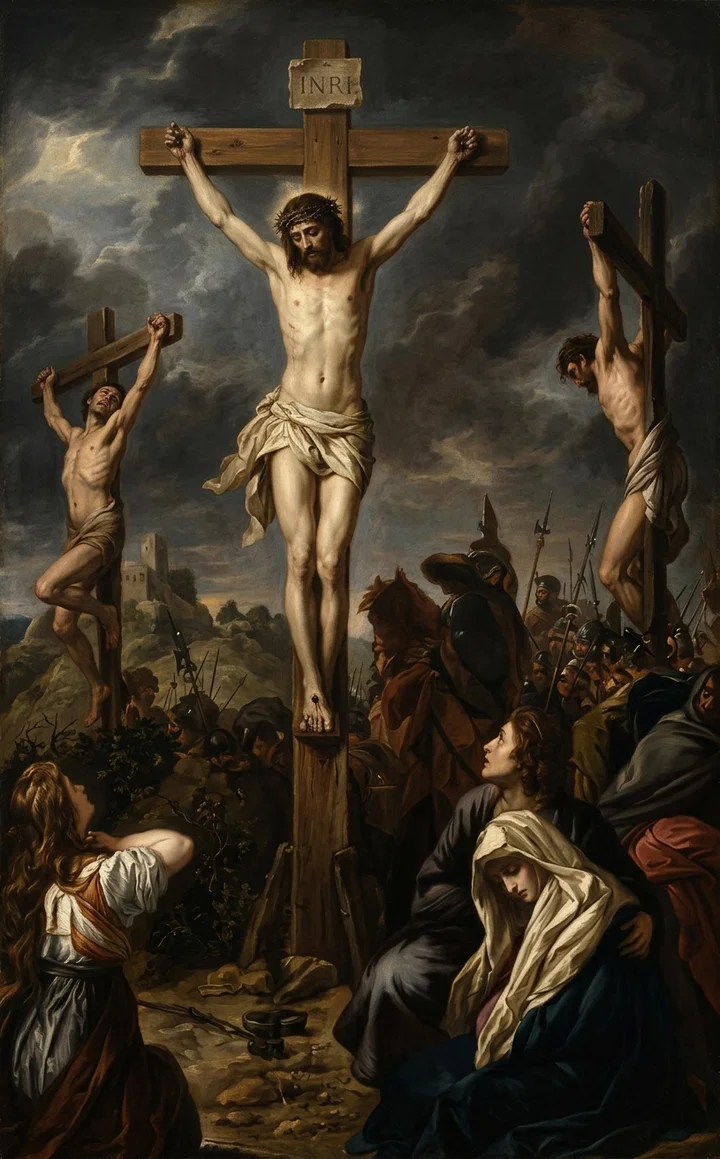
God Condemns That He May Justify.
But God does not condemn to destroy; he condemns that he may save. He reveals to man that he is a sinner, in order that man may be so sick of sin as to choose the way of righteousness. The physician does not cause the disease; but he reveals the character of the sickness, the sure effect of the disease if left to itself, in order that man may be induced to apply the proper remedies. So God reveals to man, by his Spirit through his holy law, that "the heart is deceitful above all things, and it is desperately sick" (Jer. 17:9), that "the Balm of Gilead" may be applied, and the heart healed (Jer. 3:22; 8:22). The glory of God shining from his law reveals to the sinner his state of condemnation and death.
Christ the End of the Law.
But the end, or object, of the law is to bring the sinner to Christ, in whom alone he may obtain righteousness.
"For Christ is the end [object] of the law to every one that believeth." Rom. 10:4.
"Wherefore the law was our schoolmaster [pedagogue] to bring us unto Christ, that we might be justified by faith; but after that faith is come, we are no longer under a schoolmaster." Gal. 3:24, 25.
In Christ Jesus we are no longer under the condemnation of the law. Why?—Because Christ puts the law in us where it was in him, namely, in our heart. This is clearly stated in the following scriptures:—
"If we confess our sins, he is faithful and just to forgive us our sins, and to cleanse us from all unrighteousness." 1 John 1:9.
"For I am not ashamed of the Gospel of Christ; for it is the power of God unto salvation to every one that believeth. . . . For therein [in the Gospel] is the righteousness of God [Isa. 51:6, 7] revealed from faith to faith." Rom. 1:16, 17.
"Even the righteousness of God which is by faith of Jesus Christ unto all and upon all them that believe; for there is no difference." Rom. 3:22.
This righteousness of God, which the sinner receives by faith, is the obedience to God's moral law which has been wrought out in the character of Jesus Christ; for it is by Christ's "obedience" that the many who have faith "are made righteous." Rom. 5:19. Not only that, but to show that the righteousness by faith is the same righteousness that God requires in the law, the law witnesses to its correctness. Rom. 3:21. This is further shown by the work which is wrought within the child of God at conversion; not only are past sins forgiven, but the carnal heart, which loves sin, is removed, man is given a new heart and a new mind, which loves God's law, and which, in the grace of Christ, will cause him to do it:—
"A new heart also will I give you, and a new spirit will I put within you; and I will take away the stony heart out of your flesh, and I will give you a heart of flesh. And I will put my Spirit within you, and cause you to walk in my statutes, and YE SHALL KEEP MY JUDGMENTS, AND DO THEM." Eze. 36:26, 27.
"There is therefore now no condemnation to them which are in Christ Jesus, who walk not after the flesh, but after the Spirit. For the law of the Spirit of life in Christ Jesus hath made me free from the law of sin and death.
"For what the law could not do, in that it was weak through the flesh, God [did by] sending his own Son in the likeness of sinful flesh, and for sin, condemned sin in the flesh; THAT THE RIGHTEOUSNESS OF THE LAW MIGHT BE FULFILLED IN US, who walk not after the flesh, but after the Spirit." Rom. 8:1-4.
The same truth is stated by the apostle in Gal. 5:23, when he declares that against the fruits of the Spirit "there is no law," showing that the heart changed by the Spirit of God keeps God's law. Therefore to be in Christ Jesus is to be a "new creature" (Gal. 6:15); it is to have the "faith which worketh by love" (Gal. 5:6); it is to possess the love which keeps God's commandments and counts them not grievous (1 John 5:3). In other words, it is to live as Christ lived. The condemnation is passed away; the justification has come; the abounding sin has passed away before superabounding grace. Rom. 5:20. Righteousness and life have taken the place of sin and death. Rom. 8:2. The glory of condemnation in the law to the sinner has passed away before the glory of righteousness in Christ. He is our husband, bound unto us by the law of life; and in him we "bring forth fruit to the glory of God."
Ministration of Life and Death.
The foregoing principles and propositions have been abundantly proved by Scripture, and are known to be true by the thousands who have tested the good word of God. They were not alone once true, but are true now, and will be living, operating truths as long as God is saving sinners. That he may save them, he sends his servants to the lost, ministering the word of life. To him who sees in it condemnation alone, it is the ministration of death; but to him who believes and receives it into his heart, it is the ministration of life. So the apostle says:—
"For we are unto God a sweet savor of Christ, in them that are saved, and in them that perish; to the one we are the savor of death unto death; and to the other the savor of life unto life." 2 Cor. 2:15, 16.
It is in all cases a savor, or fragrance, of God's glory; in all cases God designs his word to work life; but rejected it is death. The apostle speaks to those who received it by faith:—
"Forasmuch as ye are manifestly declared to be the epistle of Christ ministered by us, written not with ink, but with the Spirit of the living God; not in tables of stone, but in fleshy tables of the heart." 2 Cor. 3:3.
Whatever of God's moral truth we hold merely as a theory, as something not a part of the life, outside of the heart or affections, we hold it only in the letter, and it always condemns. Held only without, the carnal mind is set against it; and the living law perverted by the carnal mind, works death. Rom. 7:10; John 12:48. Whateverp. 4 moral truth—and the law comprehends it all—is received into the heart by faith, works life in the believer. 1 Thess. 2:13; Rom. 8:2. Receiving the law in the heart through Christ is letting the Spirit of God write it in the heart. In the heart it is no longer condemnation and death; it is a principle of love and life. The apostle expresses his confidence that his ministry to the Corinthian brethren was that of life:—
"And such trust have we through Christ to Godward; not that we are sufficient of ourselves to think anything as of ourselves; but our sufficiency is of God, who also hath made us able ministers of the new testament, not of the letter, but of the Spirit; for the letter killeth, but the Spirit giveth life." 2 Cor. 3:4-6.
The letter of the new testament (or covenant) is simply the truth of God as it is in books. It does him who thus holds it no good; it ministers sin and death. Paul then refers to a well-known illustration of this fact, the case of Moses and the children of Israel:—
"But if the ministration of death, written and engraved in stones, was glorious, so that the children of Israel could not steadfastly behold the face of Moses for the glory of his countenance; which glory was to be done away; how shall not the ministration of the spirit be rather glorious? For if the ministration of condemnation be glory, much more doth the ministration of righteousness exceed in glory. For even that which was made glorious had no glory in this respect, by reason of the glory that excelleth. For if that which is done away was glorious, much more that which remaineth is glorious." Verses 7-11.
That which is ministered by the servant of God in all cases is sent forth to save if possible. The difference is between receiving it in the spirit and the letter. To the people of Israel it was wholly without; it was seen in the letter; it therefore condemned them. They said, "Let not God speak with us, lest we die." Ex. 20:19; Deut. 5:25. They did not desire the glory of his righteousness (Acts 7:39-41), and therefore the law was to them the glory only of condemnation. But the Corinthian believers received that law in their hearts in receiving Christ, the personification of the law, and it brought to them the greater glory of righteousness. To those who hold the law apart from the life,—who hold it only in the letter,—its ministration is that of condemnation and death. To those who receive it through Christ, it is the ministration of righteousness and of life. The apostle continues:—
"Seeing then that we have such hope, we use great plainness of speech; and not as Moses, which put a veil over his face, that the children of Israel could not steadfastly look to the end of that which is abolished; but their minds were blinded ["hardened," R. V.]; for until this day remaineth the same veil untaken away in the reading of the old testament; which veil is done away in Christ. But even unto this day, when Moses is read, the veil is upon their heart. Nevertheless, when it [the heart] shall turn to the Lord, the veil shall be taken away:
"Now the Lord is that Spirit; and where the Spirit of the Lord is, there is liberty. But we all, with open face beholding as in a glass the glory of the Lord, are changed into the same image from glory to glory, even as by the Spirit of the Lord."
The veil represents sin. It is sin cherished, chosen, which separates from God and hides his face. Isa. 59:1, 2. It was not God nor Moses which asked for the veil, it was Israel. They were afraid of the glory, because it condemned them. They were like those in the present day, of whom the prophet speaks: "Now go, write it before them in a table, and note it in a book, that it may be for the time to come forever and ever [literally, "the latter day," margin]; that this is a rebellious people, lying children, children that will not hear the law of the Lord, which say to the seers, See not; and to the prophets, Prophecy not unto us right things, speak unto us smooth things, prophecy deceits; get you out of the way, turn aside out of the path, cause the Holy One of Israel to cease from before us." Isa. 30:8-11. They did not look to the end, or object, or purpose, God had in condemning them, namely, to bring them to Christ. Rom. 10:4; Gal. 3:24. They willingly shut it away from their sight by cherishing sin; and multitudes both of Jews and Gentiles do it to-day. But when they will turn to the Lord, the sin shall pass away, the condemnation will be abolished; its glory will have no glory in the greater glory of God's perfect righteousness and love within the heart; for the perfect love which keeps God's commandments "casteth out fear." 1 John 4:18; 5:3. Thus it was with Moses. He looked to the end of that which was abolished; he saw the glory of condemnation and death fade in the light of God's glory and mercy. The people prayed, Let not God speak any more; let us not hear his voice or see his glory. Moses drew nearer to God with open heart and prayed, "I beseech thee, show me thy glory." Ex. 33:18. And God did reveal himself in righteousness and life as the Merciful One. Chapter 34, verse 6.
As it was with Moses personally, so it was with Paul and the believing Corinthians, so it is with every justified Christian to-day. They do not ask God's minister to cover his face; he does not need to do it. No one who desires to be and to do what God requires him to be and do, will desire to hide from God. He will look beyond the condemnation to the glory of God's free grace of righteousness in the character of Jesus Christ. With open heart and face he will plead, "I beseech thee show me thy glory," and the living God, by the Spirit of life, will engrave upon the tables of the heart the greater glory of the law of life in Christ Jesus. So will he be changed from the image of the condemned sinner to the image of Jesus Christ, "from glory to glory."
The apostle further confirms the truth of the above in the following:—
"But if our Gospel be hid ["veiled," R. V.], it is hid ["veiled," R. V.] to them that are lost: in whom the god of this world hath blinded the minds of them which believe not, lest the light of the glorious Gospel of Christ, who is the image of God, should shine unto them. . . . For God, who commanded the light to shine out of darkness, hath shined in our hearts, to give the light of the knowledge of the glory of God in the face of Jesus Christ." 2 Cor. 4:3-6.
God grant that so may our readers find God's perfect law of Ten Words in all its fullness in our Lord Jesus Christ, and so finding it may rejoice to follow him in doing the whole will of God. M. C. W.