ANDORRA

8%

S. D. A. Publishing Association · Battle Creek, Mich. · May 9, 1895

FromThe Youth’s Instructor, Vol. 43, No. 19.

Read the full edition

ANDORRA

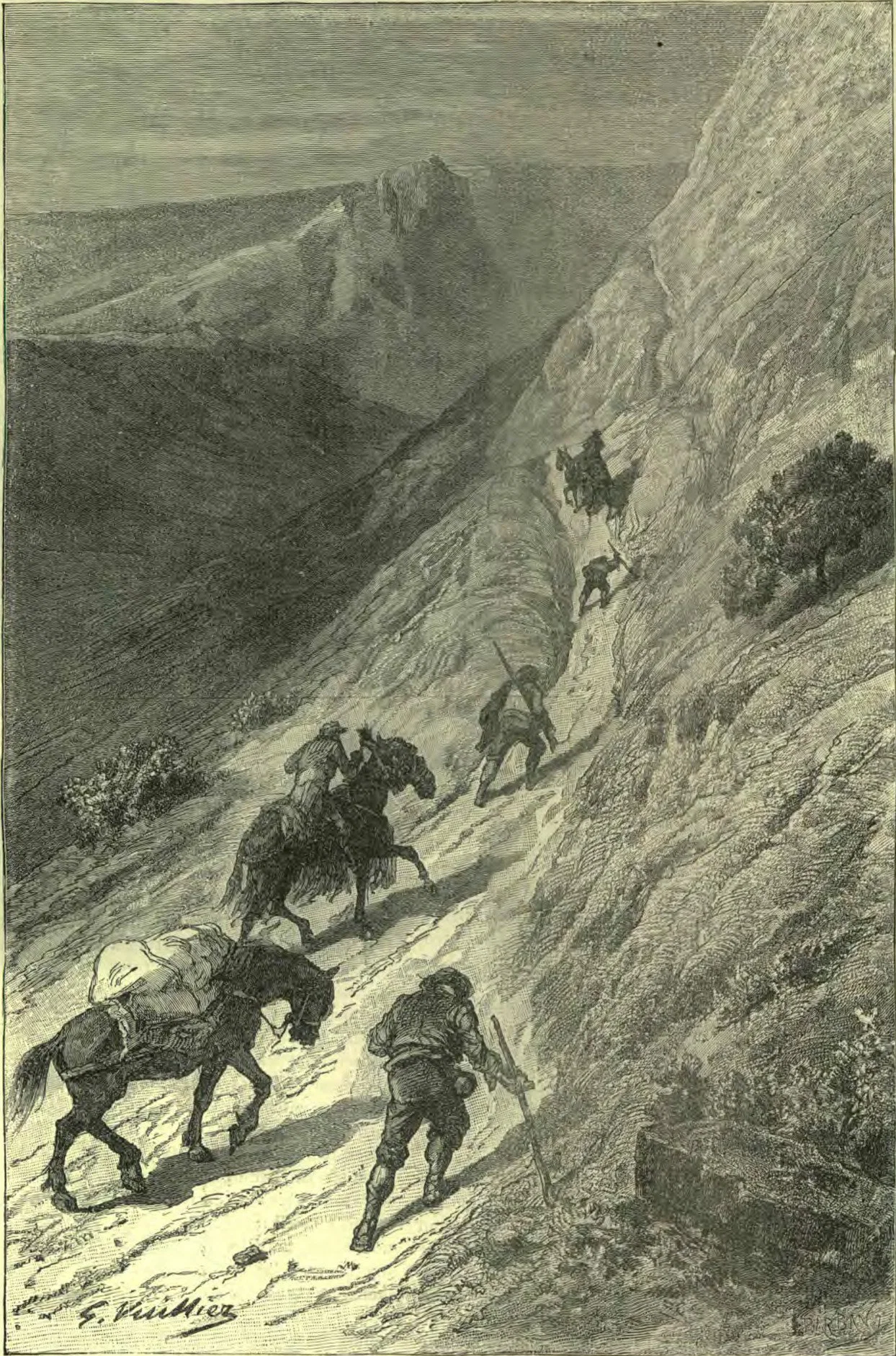
THE ROAD TO ANDORRA.
This is the name of a mountain basin in the eastern half of the Pyrenees. It is watered by the Balira, beautifully situated between the French departments, Ariége and Catalonia. Its natural position between France and Spain favors its independence and neutrality, which are recognized by the governments of both countries. The valley is a very singularly constituted, genuinely democratic, farmers’ and herders’ republic, covering one hundred and fifty square miles, and numbering some twelve thousand inhabitants, distributed over six civil communities. The dense bushes furnish an abundance of wood; there are also good pasture lands and rich iron mines. The soil is adapted to grape and fruit culture, but grains are very much raised, so that the people are under treaty with France for annual grain exports to that country. Since 805, during the reign of Louis the Pious, Andorra has been neutral territory, although it has to pay a small sum annually both to France and to the bishop of Urgel,—to the latter for exercising the right of nominating the clergy, etc. The republic received its first judge, or provost, from France, the second from the bishop of Urgel. These “men of authority” are intrusted with the administration of justice. The taxes, however, are imposed by a supreme council of twenty-four persons, who are chosen by a free ballot.
Every male citizen between sixteen and sixty years of age is liable to military service. The Andorrans are a kind, moral, peace-loving, and hospitable people. Their speech is the same as that of the Catalonians and Castilians; their mode of living is extremely simple. The customs and habits of over one thousand years ago are still in vogue here. The chief place in the republic is the village of Andorra.
With these few general preliminaries, I will quote M. Gaston Vuillier, a native of Perpignon, who describes a visit to this very small republic:—
“In the beautiful month of July we started from Perpignon, in south-eastern France, and went by rail to Prades, and the foot of Canigon. Here we found the regular diligence from Mt. Louis in waiting, which took us through the magnificent gorge from Villefranche to Mt. Louis. Part of our journey had to be made at night, and as the moon cast its silver light over the mountains, and these on their part threw gigantic silhouettes of their contour across our track, we found the charm so pleasing that no thought of sleep entered our mind, nor did the eyes refuse to serve us with their best, as we tried to discern what we were passing. For a moment Fontpédrouse loomed up through the night, in the gorge, and its roofs cast a faint bluish reflection through the darkness of the night. About midnight, chilled by the freshness which prevails at all seasons on these heights, we reached Mt. Louis. Spending the rest of the night in comfortable quarters, we set out the next day in a private berlin, the regular conveyance being overcrowded. A storm overtook us on the way, and it seemed as if all the winds were let loose at once. Lightning followed lightning, revealing in its garish glare the outlines of this sad-looking piece of mother earth, where the thunder reëchoes with frightful crashes. The horse, seized with fright, seemed to vie with the wind in speed, and the vehicle creaked like an ancient vessel in the tempest.
“Finally we reached Bourg-Madame, in a drenching rain. We were wetted pretty thoroughly, in consequence of the jolting and tossing of the coach to and fro, which splashed the gathered waters from the top of the conveyance onto us. Never did we appreciate the luxuries of a tight roof and a comfortable hotel more than then, and the refreshments served revived our ardor. After a splendid night’s rest we had the great pleasure of looking out from the morning window to see the country flooded with bright sunlight, which the golden orb of day scattered most lavishly everywhere, a brilliantly blue sky crowning all from above. In an ornate conveyance we soon left for Porté, through the valley of Carol. Puigcerdà lies on the boundary line between France and Spain, a bridge connecting the two countries. On the one side are French ‘douaniers’ (revenue-collectors), and on the other the Spanish carabineros. After we have traveled for some distance on Spanish ground, the roads again wind onto French territory at the entrance of the valley of Carol.
“This is a wild gorge of a grand and beautiful character, bristling with a perfect chaos of rocks bearing many traces of glaciers that must have covered them in former ages, enhanced at present by a noisy torrent that foams at a great rate of speed along its dashing way. From the lofty rock-heights of the mountains, with sparkling sprays the waters descend in rainbow colors, forming themselves into long, silvery bands. Before us are the towers of Carollie, remains of the castle of a feudal knight who was afterward conquered by Charlemagne.”
“We passed, without stopping, through the little hamlet of Porta and the village of Porté, the last of France in this region, and came in sight of the Puymorens, at the foot of which we stopped till the next day.”
“The next morning, before daybreak, we heard the beasts of burden made ready for the continuance of our journey. The muleteers led the beasts by the bridle as we rode them along a rocky footpath up the steep mountainside. This route, though quite rough, is very much nearer,—yet plenty long for all that, even when riding mule-back, before we reach Solden, the first village of Andorra. The sun darts forth for some time before we leave the rocky declivity; and now, behold, we are on the summit of Puymorens!”
“We then traversed a waving plateau covered with short grass. Soon we saw the Andorran muleteers. They arrived clad in short leggings, with red girdles and hats and velvet vests. The beasts of burden, caparisoned in metal plated and trimmed leather trappings and fly-nets of many colors, made a dazzling display in the bright sunlight. There was before us a very enjoyable treat, fond as we are of looking upon bare mountains, abrupt crests, and general outlines of landscapes. Below was the mountain peak of steep Andorra, to the right the valley of Ariége, and much higher up, to the left, the source of the Ariége River,—a blue lake reflecting the sun’s rays like a brightly polished surface of glittering steel.”
“Having drunk in at the full the varied scenes presenting themselves as we turned our gaze hither and thither in warm admiration, we descended toward the course of Balira, our downward trip having nothing of note to chronicle beyond the appearance of a humble flower-girl, offering her pretty wild flowers,—a sort of white pinks,—that she had gathered on these mountain slopes round about.”
AUGUST KUNZ.