A GIANT INDUSTRY

10%

Review and Herald Publishing Company · Battle Creek, Mich. · May 25, 1899

FromThe Youth’s Instructor, Vol. 47, No. 21.

Read the full edition

A GIANT INDUSTRY.

The century just closing has been described not inaptly as the “iron age,” on account of the marvelous advances made in the use of the dark metal. In this wonderful development, few manufacturing concerns have had a more important part than the Reliance Iron Works of the Edward P. Allis Company, of Milwaukee, Wis. This company is to-day without a rival in its line, being the most extensive builders of steam-engines in the world. Its shops have a floor space of twenty-eight acres, the daily pay-roll is four thousand dollars, and fully two thousand men are employed all the time. In every part of the world where civilization and modern methods have found their way, the products of this firm are used.
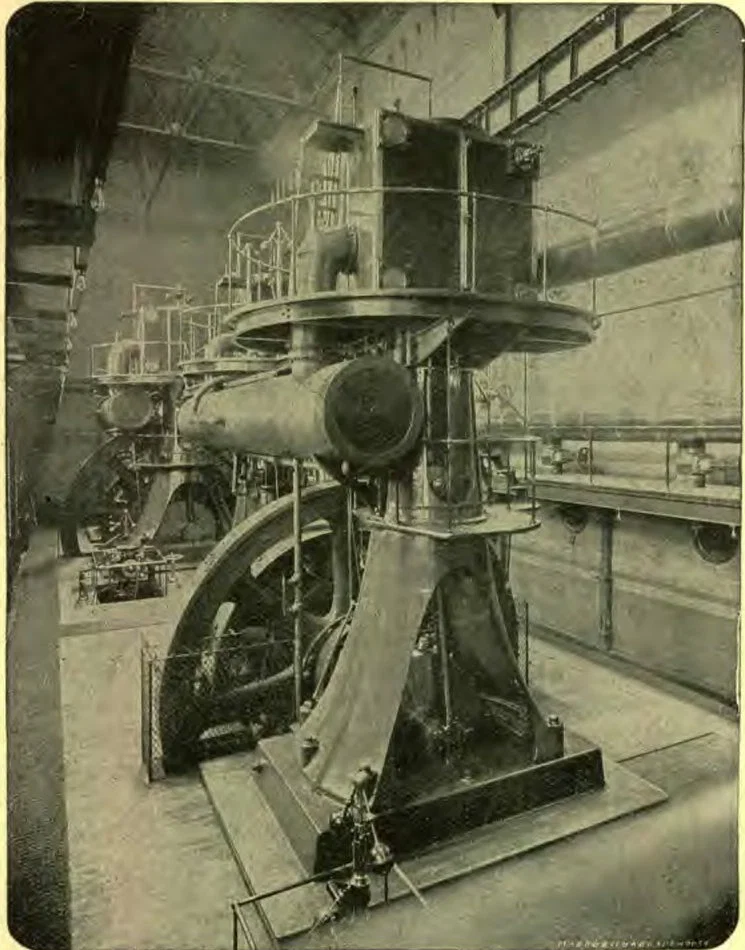
ALLIS VERTICAL CROSS COMPOUND CONDENSING ENGINE, IN THE POWER-HOUSE OF THE CHICAGO METROPOLITAN RAILROAD.
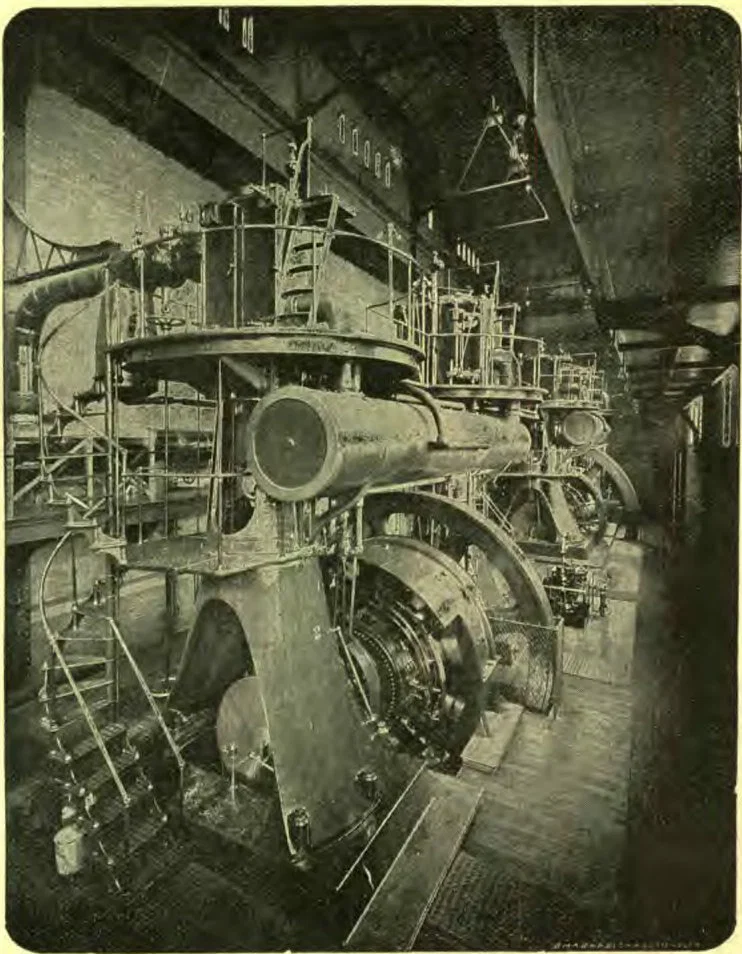
ANOTHER VIEW OF THE COMPOUND CONDENSING ENGINE.
Fifty expert draftsmen are constantly employed in this great institution, working out plans and specifications for steam-engines. No two engines in this shop are made exactly alike, plans being designed for each one, so that in each case the machine will be specially adapted for its work in the place where it will be operated.
As one enters the various departments, where different processes of manufacture are carried on, the attention is attracted by the immense electric cranes used in lifting and carrying to different parts of the works the enormous castings finally brought together in the completed engine. The delicacy shown in the adjustment of these machines, and their fitness to do what is expected of them, in just the way desired, are certainly wonderful. There are, all told, thirteen of these cranes in the institution, some of them having a lifting capacity of forty tons.
One of the most interesting features of the establishment is the molding department. Both sand-work and loam-work are produced; but the latter method is used most, especially for large castings. In making molds for the loam-work, large brick-kilns are constructed according to specially prepared plans, and so built as to conform to the shape of the casting to be molded. After the metal has had time to cool in the molds, the entire structure, brick work and all, is torn away; and the well-shaped part of some monster engine comes to light. Castings weighing as much as sixty tons are often made in this way.
The Allis Works is now filling the largest single order for stationary steam-engines ever received by any company, being that of an Eastern street railway company. The order calls for eleven power-engines, with a total running capacity of sixty thousand horse-power. When these engines are completed and in place, the company owning them will have the largest power-plant under one roof in the world. These engines are so made that each one can be run with perfect safety to the limit of seven thousand horse-power, though they will probably be run at a rate not exceeding six thousand horse-power . The significance of these figures will be appreciated when it is remembered that expert mechanical engineers thought that the top notch of high-power engines had been reached when a three-thousand-horse-power engine was made by the Allis Company, and set up to run the vast machinery connected with the Columbian Exposition, held at Chicago in 1893. The gain made since that time seems almost incredible. The Allis Company not only manufactures engines, both large and small, but other kinds of machinery as well, including flour-mill, saw-mill, and mining machinery. The firm maintains agencies in the leading American cities, also in the City of Mexico, Paris, Sydney, London, Johannesburg, and other foreign points.
Orders have recently been filled for immense street-railway power-plants at Madrid and Barcelona, Spain; Dublin, Ireland; and for the underground railway system of London, England.
J. C. BARTHOLF.