JAPAN

8%

S. D. A. Publishing Association · Battle Creek, Mich. · Jun 20, 1895

FromThe Youth’s Instructor, Vol. 43, No. 25.

Read the full edition

JAPAN

There is a great deal to be seen in Japan to catch the fancy and please the eye of a stranger, but also much to cause pain to the observant, the earnest, and the reflective. Facts have been glossed over and invested with a tinge of romance not true to life.
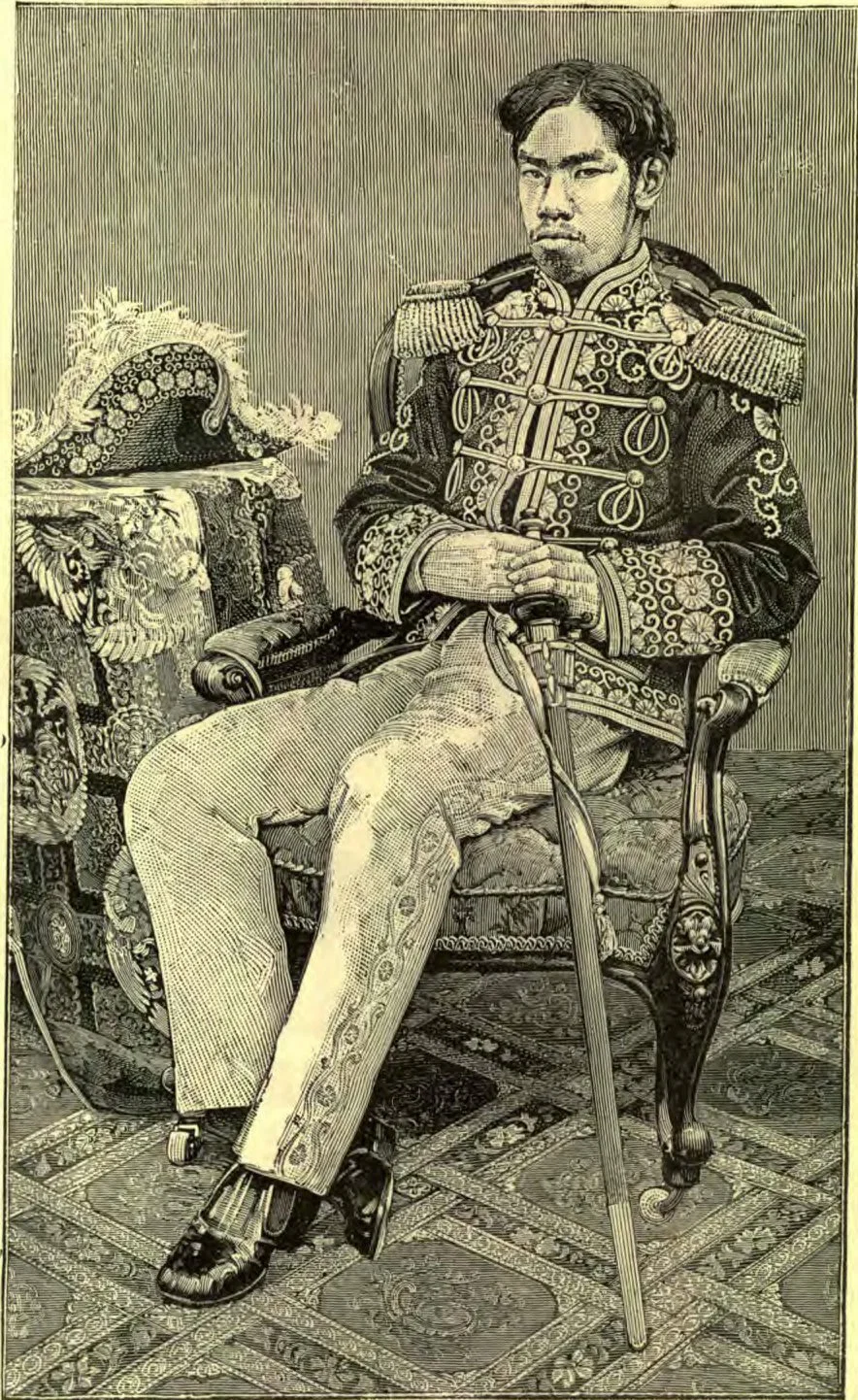
THE EMPEROR OF JAPAN.
In this little island, not larger than the New England States, and about two thirds consisting of mountainous lands, one can readily see that there is not much surplus room. The majority of the natives are extremely poor, compared with Western nations, and can live upon about a tenth, or less, of what it takes to sustain an American. They are very proud of the history of their country, and also very justly so of her fine scenery. Japan is girt round by the ocean that rolls in its restlessness or sleeps in the sunlight, and reflects on its broad bosom the over-arching canopy and the azure mountains, refulgent and glowing with the tints of an ever-varying sky. Great silver lakes nestle among the green hills mantled with flowers which seem to gaze meditatively into the deep heart of the crystal waters. The little blossoms that adorn like bright gems the banks, nod and coquette with the soft clouds mirrored beneath. Peaceful rivers flow through the country, rippling along among the tall rushes and groves of bamboo and pine, or, coming boldly out into the cultivated plains, bring life and moisture to the rice fields and tea plantations. What wonder, then, that the Japanese people have developed such fondness for beauty, surrounded as they have been for ages by such enchanting scenes of matchless loveliness!
The comity of this people is marked. They are courteous, affable, and self-depreciative,—almost beyond the limits of sincerity, so it appears to the practical American. This accounts, in a measure, for the extreme difficulty of the language to a foreigner. The speaker must refer to himself in the most depreciative and abject terms, while he addresses his companion in a very exalted and complimentary manner.
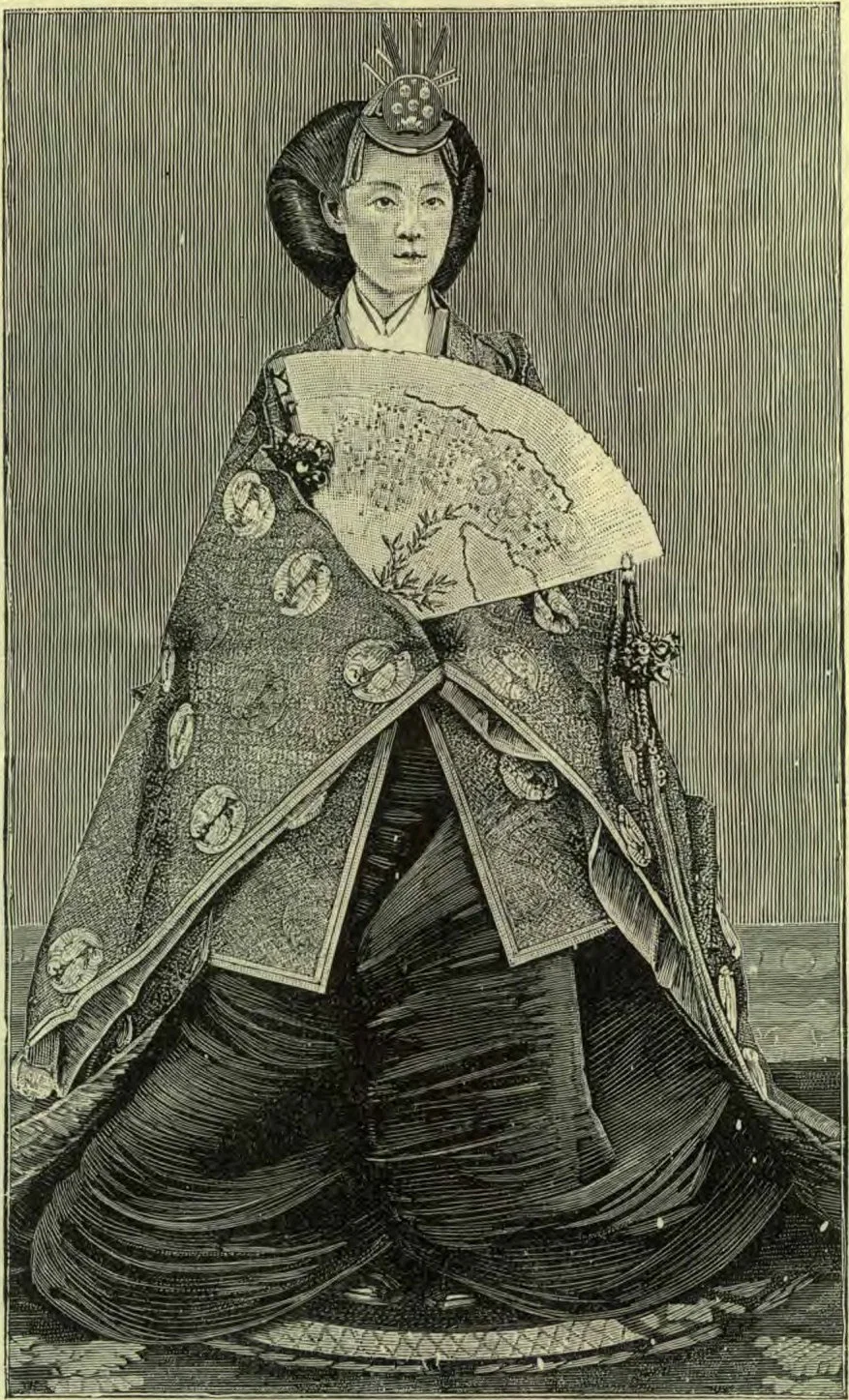
This nation is now in a transitional state. She has placed ancient religions, customs, and civilizations in the balance against Western progress and Christianity. Though old things are passing away, the prejudices, practices, and beliefs of centuries cannot be lightly cast off or discarded in a short time. For instance, some time ago the mikado visited various portions of his dominions; but, although vast crowds flocked to see him, it was observed that no one mounted an eminence, or looked from an upper window, but all stood with bared heads upon the ground. Why?—Because no one dared to look down upon such an exalted personage as the “Son of Heaven,” as the ruler of Dai Nippon (Great Japan) is called. Formerly the emperor’s subjects were not permitted to look upon him, and he was worshiped as a god. The present empress is said to be a most gracious lady, discouraging such old and absurd practices as shaving the eyebrows and blacking the teeth, and promoting by her patronage and assistance the establishment of schools for the education of girls and women. Though wonderful progress has been made in the last few years, and civilization and Christianity have made rapid strides in the island empire, still to-day the masses of the people are heathen.
There are three distinct systems of religion in Japan, so intermingled that the majority of the people can be said to be adherents of all three, without a clear comprehension of any of them. Though the Sabbath is unknown among them, they yet have festivals and set days when they flock to the temples, to make offerings and hear the priests chant prayers. The paraphernalia used in the Buddhist temples is almost exactly like that employed in the worship of the Roman Catholics. These are images, pictures, lights, holy water, altars, and beads; almost everything found in Roman Christianity is found in Buddhism. Even the holy objects belong to the same category. The Buddhists pray to bones of saints, foot-prints of Buddha, holy toe-nails, statues of wood, from which blood flows (so they say), and numerous other sacred relics.
The religion of the Japanese heathen sits lightly upon him, unless he is in trouble. He then begins to haunt the shrines of the gods whom he imagines may be able to help him. He will petition the god to slay a man as quickly as he will to bless him, if he has cause of complaint against him. The priests as a class are very corrupt; and though the people have but little confidence in their priests, they will go on permitting these “blind leaders” to do their praying for them and giving them money to live in idleness, until we teach them a better way. It is considered a very meritorious deed to make a pilgrimage to a sacred shrine.
Among the most popular of the shrines are those of the sun goddess at Isi. Scenes have been dramatized from the life of this deity, and have had a most debasing effect upon the purity and morals of the people. They are particularly fond of visiting the shrines upon high mountains; and as they ascend, they ring bells and chant an invocation, which, being interpreted, means: “May our six senses be pure and the weather on the mountain be fair.” They repeat this in Chinese, and have no idea what it means. After bowing down a few times before the idols and paying the priest, they go to the theaters, gambling dens, and other resorts of similar nature by which the favorite temples are usually surrounded.
The temples are never shut, so that the devotees go whenever they wish, and tap the bell to call the attention of the deity if he happens to be sleeping, visiting, or inattentive. They clap their hands and mutter vague prayers, such as “Namu Amida Butsu” (Save thou, great Buddha), a great number of times. They attach no special meaning to the words, and if the more ignorant among them are asked for an explanation, they will reply: “Our fathers made that prayer, and we make it, knowing that the gods will understand it and bless us.”
THE EMPRESS OF JAPAN.
They never leave the temple without making an offering. Surely that is a lesson for us. If we appreciated as fully as we should our duty and privileges in giving our means to the Lord, to be used for the spread of the gospel, it would not be long before the light would shine brightly not only in Japan, but all over the world, and all the honest-hearted would forsake their idols of wood and stone for the worship of the true God.
MRS. JOHN A. BRUNSON.