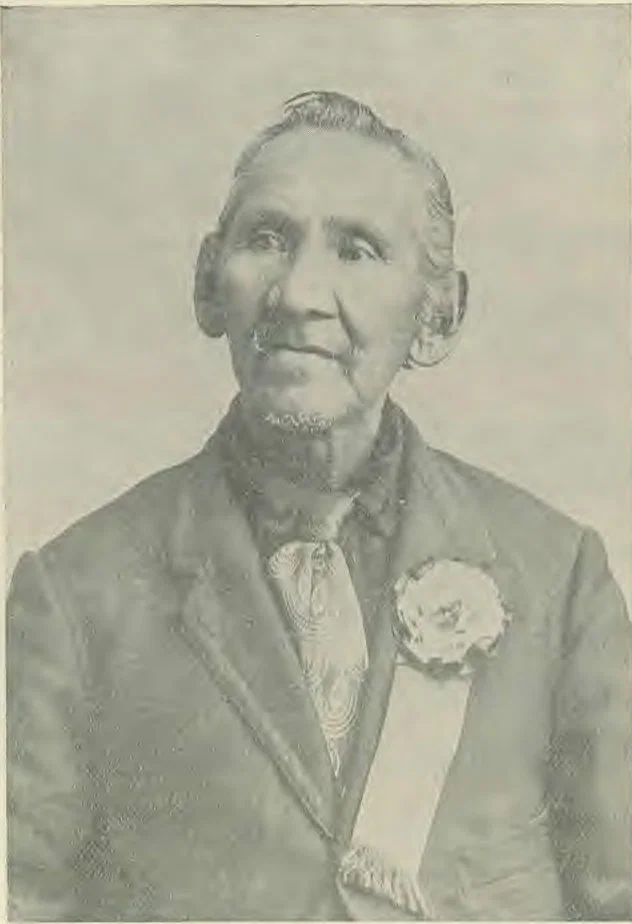
SIMON POKAGON

8%

Review and Herald Publishing Company · Chicago, Battle Creek, Michigan, Atlanta · Mar 16, 1899

FromThe Youth’s Instructor, Vol. 47, No. 11.

Read the full edition

SIMON POKAGON.

The original Americans, those whose ancestors inhabited this country before the advent of Europeans, are usually regarded by the latter as greatly inferior to them in every way. Those, however, whose hearts have been drawn out in sympathy for the poor, dying race, because of the countless and ceaseless injustices perpetrated upon them, are glad to notice that among this people are those who far outrank their egotistical judges in the qualities that make good human character. Of such was the subject of this sketch, who was buried January 29, at Hartford, Mich.
Chief Simon Pokagon
Chief Simon Pokagon
He was born in an Indian village on Pokagon Creek, near its convergence with the St. Joseph River, in Berrien County, Mich., in 1830. He inherited from his father, Leopold Pokagon, who held the position for forty-two years, the office of chief of the Pokagon band of Pottawattamie Indians. His mother tongue was the only language he could speak until he acquired English while attending school at Notre Dame, near South Bend, Ind. He began studying here at the age of fourteen, remaining three years.
His natural desire for education, which here began to bear fruit, was still further cultivated by a year in Oberlin College, Ohio, followed by an intellectual harvest of two years at Twinsburg, in the same State. These advantages were largely the result of his own efforts, his father having died when he was ten years old, and his mother being able to help him but little. He was acknowledged to be the best-educated and most distinguished full-blooded Indian in America.
After Abraham Lincoln became president of the United States, the first red man to visit him was Pokagon. Thirty years previous his father sold to the government the land on which Chicago has since been built, and this visit was to obtain the money due the tribe for this property. In 1866, after a second visit to the president, he succeeded in obtaining a partial payment of thirty-nine thousand dollars. Later he visited President Grant for the same purpose, and several years afterward one hundred and fifty thousand dollars of the remainder due was allowed by the Court of Claims. An appeal was made to the United States Supreme Court against this award, but after much opposition the decree of the lower court was affirmed. The amount was not paid, however, till a little over two years ago. It is claimed that there is still valuable property in Chicago to which the Pottawattamies have a right. Charles Pokagon, only son of the deceased chief, has been selected to succeed his father, and will take up and prosecute these claims.
Simon Pokagon spent many years, for the good of his people, in securing these appropriations from the government, but he died in comparative poverty, having received only an equal share in the apportionment with all the members of his tribe. In answering a question concerning this division of the allotment, he said, “The last child born received the same as I.”
Great disappointment filled the heart of the old chief at the opening of the World’s Fair because no appropriation was made for a congress of his people. As he visited the place, and saw all nations provided for, and the Indians—the true Americans—unrepresented, he was nearly heartbroken. Under the influence of this feeling, he wrote “The Red Man’s Greeting,” a pathetic recital of the woes of his race. This booklet is made of the bark of the white birch, and has received many words of appreciation both on account of its unique make-up and the striking sentiments expressed. It was placed on sale at the great Exposition. The lamentations expressed in it inspired Mayor Harrison and other readers to invite the author to attend the fair again, as the guest of the city. This he finally consented to do. He was received with much attention, and asked to make a speech to the vast audience assembled on “Chicago day,” which he did. He it was who rang the great liberty bell on that memorable morning. He told the interested crowd of the killing of buffalo and deer by his father on the very ground where they were standing, and of selling the land afterward to the whites, for three cents an acre. The present relations of the Indians to the whites were considered, and a desire expressed for universal peace.
Preceding this speech the venerable mayor spoke feelingly of the life and work of the aged chieftain. He called Pokagon a brother, and to support this claim of relationship announced to all that his veins carried Indian blood as a descendant of the renowned Pocahontas, a member of the same race. The two names have the same origin, coming from the Algonquin word “Poka,” a shield, or defense.
Soon after going home, Pokagon was again summoned by the mayor to return, and assist in the closing ceremonies of the Columbian Exposition. He did so, only to learn on arriving in the city that the kind-hearted executive had been cruelly assassinated the night before. The chief was almost incapacitated for his part in the exercises, so great was his grief.
The literary work of Pokagon was considerable. Besides the birch-bark booklet already mentioned, he furnished many contributions to the leading magazines, which elicited complimentary comment both in this country and in Europe. His latest work is now being printed at the office from which the INSTRUCTOR is issued each week. It is called “Queen of the Woods,” after the bride of his youth, to whom he gave that appellation. The book contains a picture of the chief; a sketch of his life, by the publisher; and a history of his people and his experiences with them, by the author. He tells, with words almost equaling in conciseness the language of Moses in Genesis, of hunting game in his youthful days, and withholding with superstitious awe the arrows when seeing the white, or albino, deer.
His words telling of his first meeting with Lonidaw, the young maiden who afterward became his wife, contain a delicacy of manner and purity of thought rarely met in stories of love written by white men. The alphabet, notation, and many words and phrases of the Algonquin tongue are given, with the hope to perpetuate, partially at least, the language of this people, even after Pottawattamies as a nation have passed away.
A study of the life of this poor red man, rich in intellectual attainments, must prove an incentive to youth to make the most of their opportunities. His efforts to obtain an education by which he acquired a knowledge of several languages, including Greek and Latin, are worthy of imitation. His labors for the interests of his fellows are especially commendable. H. E. SIMKIN.