THE papers have been so full of news about the Philippines, Hong-Kong, Singapore, and other Asiatic countries, during the last year, that it will doubtless be of interest to our young people to know something about the Straits Settlements, a crown colony of the British Empire.
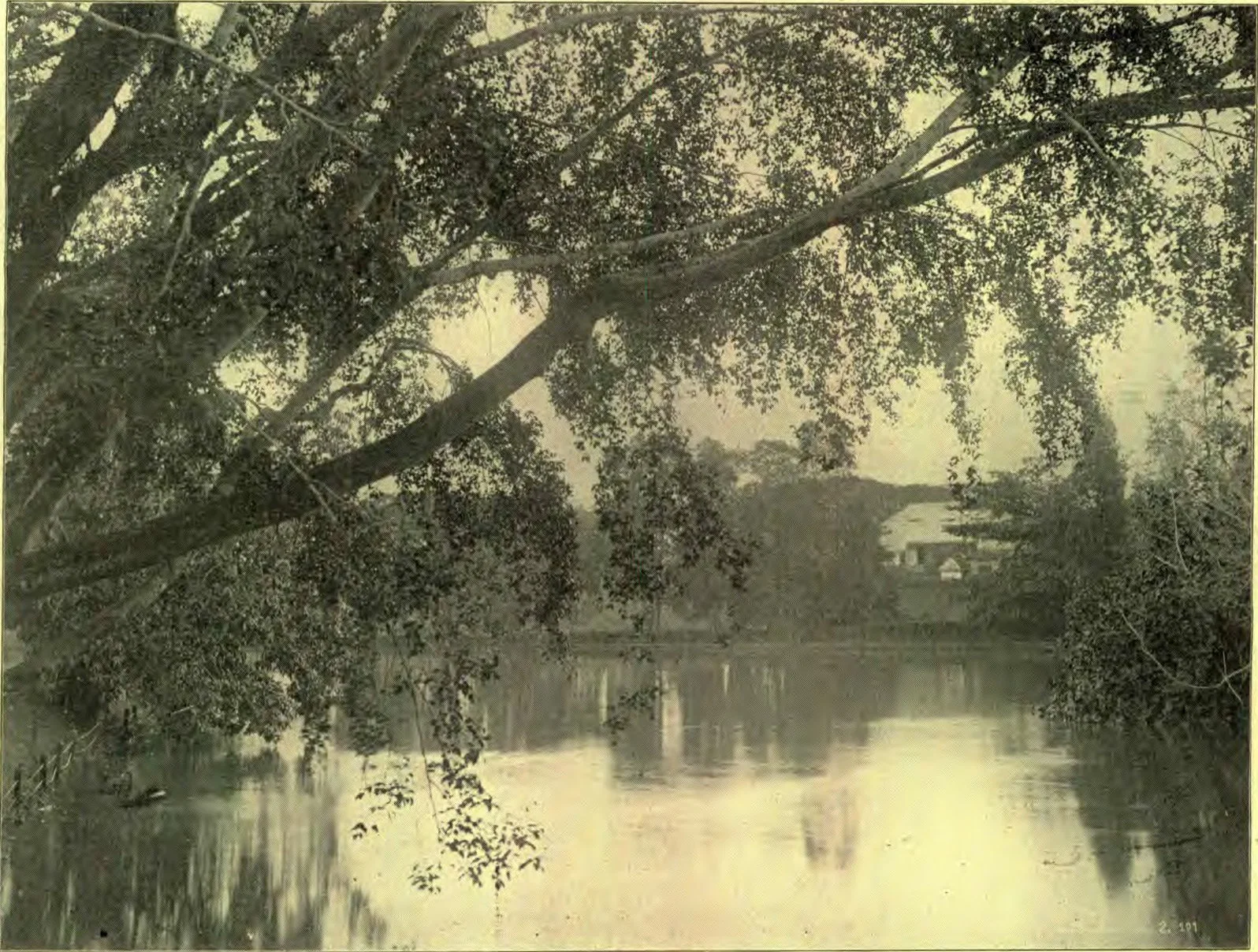
SCENE IN THE BOTANICAL GARDENS, SINGAPORE.
Aguinaldo and his confederates came to Singapore, and endeavored to secure the friendship and co-operation of the American government through our consul-general, and so far succeeded as to involve that gentleman in considerable trouble through the too generous promises that he ventured to make without proper authority for so doing, their object being the overthrow of the Spanish power in the Philippines and the establishment of their own authority.
From a knowledge of the country and the class of people to which Aguinaldo and his associates belong, we are inclined to believe that they were ambitious rather than patriotic men, and therefore did not scruple to resort to any measures that promised them success in their revolutionary enterprise.
The “Straits Settlements” is a name given to a few small strips of land at different points along the West Coast of the Malay Peninsula, beginning with the Prince of Wales Island on the north, and ending with the Island of Singapore on the south, and including between them the district of Malacca and the Dinding Isles. The actual land area of these red-colored portions on the map would not exceed one thousand square miles; yet their importance is so great, from a commercial standpoint, that this colony ranks third in importance, if the different sections of Australia are considered separately. India ranks first, Canada second, and the Straits Settlements third; but the importance of the Straits Settlements is measured also by the fact that the entire Malay Peninsula and a goodly portion of Siam are, actually or tacitly, under the protection of the British crown; and it is only a matter of time when the whole peninsula will be colored red, and Siam will become a mere dependency of the British Empire. This colony was founded in 1819, by Sir Stamford Raffles, who was one of the ablest statesmen that Great Britain has ever produced through her colonial policy.
During the Napoleonic wars in the opening years of the century, the whole of the Netherlands Indies, and the District of Malacca on the mainland, were in possession of the Dutch, but were seized by an expedition in charge of Mr. Raffles. When the settlement was finally made, in 1819, this territory was restored to Holland. Sir Stamford Raffles then proceeded down the Straits of Malacca in quest of a suitable location for the establishment of a colony. He reached the harbor on the south side of the Island of Singapore, and decided to settle there. He pitched his tent ashore, then paid his respects to the t'mungong, brother of the sultan, who represented that dignitary in the382island. After considerable parleying, a satisfactory understanding was arrived at; and in a few days, when the sultan himself had been interviewed, a treaty was signed, giving the British government equal authority on the island with the sultan, and guaranteeing to the kingdom of Johore an annual subsidy in consideration of the rights secured to the English. Mr. Raffles, being a wise man, saw that a free port and adequate protection in so favorable a location would undoubtedly attract trade as well as population.
Valuable lessons were learned in the early days of this colony, and some serious dangers averted; but eventually this small ship of state was successfully launched on the high seas of national life. The Straits Settlements has steadily increased in influence and power to the present time; and the little pebble which Raffles dropped into the sea in the harbor of Singapore has sent its wavelets to all the surrounding shores. The population of Singapore is about two hundred thousand, while that of the entire colony would scarcely exceed a million; but including its sphere of influence, it would probably exceed five million.
The policy of the British government here, as in other parts of the world, has been to guarantee protection and equal rights to the native population. This assures quietness and prosperity, and thus quickly secures rich returns in revenue to the government, besides extending her protecting arm of power over the native races. Whatever Great Britain's faults as a ruling power may be,—and that she has faults is undeniable, and some of them are of a serious nature,—her presence has ever contributed to the general uplifting and betterment of the native races over which she has extended her rule. Such, at least, has been the case in India and the Straits Settlements. Her judges are incorruptible, her laws are impartially enforced, and oriental and occidental stand on the same footing before the law. To this I attribute largely the success of England's colonial policy.
Situated as the Straits Settlements are, in the mid-tropics, nature has lavishly bestowed upon the landscape her richest shades and her brightest colors. It is a paradise of beauty. The stately palms, the wonderfully beautiful traveler's-tree, the slender areca-nut, the feathery bamboo, and the crimson “flame of the forest,” together with the exquisite ferns and superabundant vegetation, always in a state of vernal freshness, make this region Edenic in its beauty. The soil is fertile; and beautiful plantations of pineapple, coffee, tea, pepper, and other tropical products are seen on every hand. The forests of stately trees, whose wood is of great value; the jungles filled with the rattan of commerce, not to mention tigers, pythons, and monkeys; and the mineral resources of the peninsula, make it attractive to miner, trader, and hunter. It is a region of the highest value to any state. The tin-mines of the peninsula supply sixty per cent. of the tin handled in the world's markets.