I’LL STUMP YOU TO

6%

S. D. A. Publishing Association · Battle Creek, Mich. · Dec 26, 1895

FromThe Youth’s Instructor, Vol. 43, No. 52.

Read the full edition

“I’LL STUMP YOU TO.”

“You dasn’t.”
“I dast.”
“Well, I say you dasn’t.”
“And I say I dast.”
“Well, I’ll stump you to.”
And that was enough. No boy with any spirit would dare take a “stump.” It was altogether out of the question for John to take a stump, as he was one of those lads who delighted in being called brave; and he would do anything rather than be called a coward.
Of course when Harry said, “I stump,” that meant that Harry was to go first—and go Harry did.
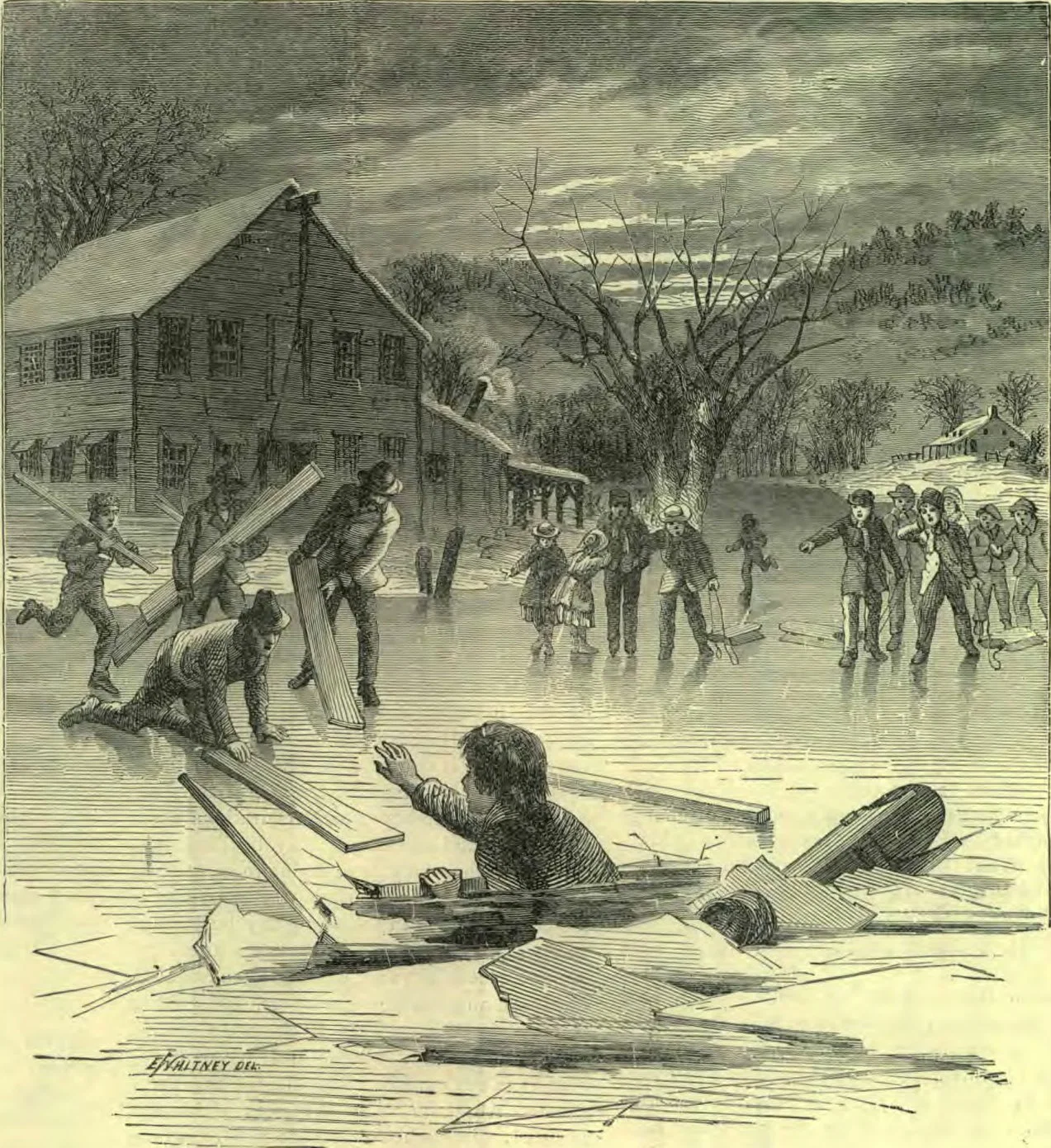
It was by the side of a small stream in one of our inland towns, on a day in February. The ice had been frozen quite thick, and then broken into cakes about three or four feet across; and a light freeze had put a thin cement between the larger cakes. It was not far from the school-house, and the boys delighted to run down there at noon, and skate or play upon the ice.
John and Harry were about the same age,—twelve years,—and worked together most of the time. As a rule there was a good-natured rivalry between them, but in the present instance it was manifesting itself in foolhardy attempts to cross the river on the ice-floes. They and the other boys had crossed and recrossed, until there was not a place in which the thin films of ice had not been broken, and the large cakes were bobbing about in the current. But there always must be some narrow escape before boys will let such things alone. John had been particularly warned this morning that he must not go near the river, and, with a thoughtless toss of the head, had said, “I won’t, mother,” and straightway began to forget that he had said he would not.
The boys had been at this kind of sport until both began to see there was considerable danger in it, and the climax had come when Harry had stumped John to go again. Harry succeeded in getting across; for, of course, in giving the stump, that one must do the thing himself. And now John must go or be called a coward,—and that would never do. Stepping back about a rod from the edge of the river so as to get a good start, with a quick eye he placed his steps in the centers of the ice-floes, until he was within ten feet of the opposite bank. Feeling sure that he was going to get across, the thought of how well he was doing went through his head, when his foot slipped to the edge of the cake, he could not spring to the next, and into the river he went. The boys on the bank pushed out a pole, and he arrived safely on shore with his teeth chattering, and the thought all the while pressing upon him, “You told your mother you wouldn’t.” There was about as much loss of prestige in failing to do what he had attempted as in being called a coward; while the knowledge that he had disobeyed his mother weighed upon his mind with even greater force than did his wet clothes or his danger of taking cold.
He arrived at the school in the midst of laughter at his expense, and the teacher decided it was best for John to go home; so there was a half day of school lost, a sorrowful heart at home for his disobedience, and the loss of that for which he had striven and refused to be stumped.
John is a sample, so to speak, of a large number of boys. There are very few that do not have those childish ambitions to be considered a leader; to be just as smart as some one else; to be considered one that is worthy to be looked up to in matters of prowess or daring. But now, boys, is it not true that many times when you thought you were doing so well and performing such brave feats, some accident or circumstance would show you that you were worse off than all the rest put together?
The average boy of twelve desires to be thought manly, and wishes to grow into a man very much quicker than nature thinks that he should. That desire to be a man is all right, and the earnest purpose of your heart to be one is certainly honorable; but don’t you think that there are different ways in which one can become manly? and would it not be well for you to stop to think whether a certain action that you contemplate, or a certain enterprise that is suggested to you by your playmates, will really place you in a manly position, or put you ahead of others, or increase your popularity?
I believe, boys, that if you would only take time to consider these things, you would be spared many of the embarrassments which come to you during your boyhood days. I can look back now at what John did, for it was my own experience; and a flush of shame goes all through my being as I consider what my motives and desires and ambitions were in performing certain acts. In future years you will often regret such early experiences, as I now regret mine. Then stop a moment and think: “Would it be best? Is it right? Am I adding to my manliness, or am I following some foolish impulse? Is the honor of my playmates worth more to me than my parents’ approval? If I were in trouble, who would come to me first, my father and mother, or a school-boy friend?” If you once acquire the habit of stopping to think, you will never be stumped to do a thing that your mother has said not to do, and no amount of coaxing will cause you to forget that your father’s counsel, as a rule, is better than that from those of your own age.
J. GRANTELLE.