POONA TO GOA

8%

S. D. A. Publishing Association · Battle Creek, Mich. · Mar 14, 1895

FromThe Youth’s Instructor, Vol. 43, No. 11.

Read the full edition

POONA TO GOA.

Poona, the capital of the Decan and seat of the Bombay government during the monsoon season, is located on the mountains one hundred and nineteen miles east of Bombay. Goa, the capital of the Portuguese territory of the same name, is located on the western coast of India, three hundred miles south of Bombay.
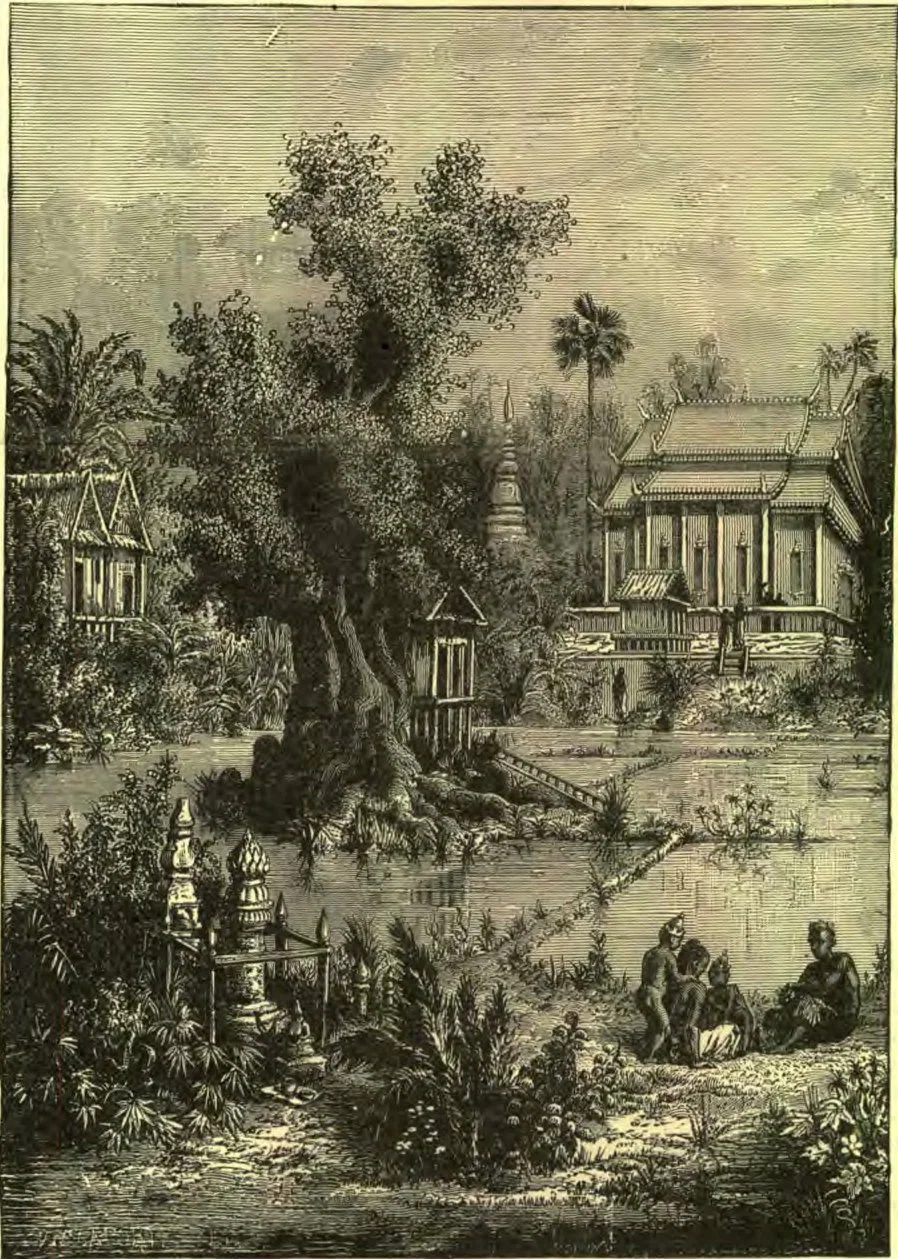
A GARDEN IN INDIA.
A GARDEN IN INDIA.
On the twenty-fifth of November, I left Poona en route for Goa, traveling via the Southern Maharatta Railway, which is a narrow-gage road with accommodations such as would not be recommended by a western traveler, and it would really be better for him to make sure of a well-filled lunch basket before starting on this journey. Our iron horse, fed on a poor quality of wood, went slowly puffing over a tortuous road, which wound and twisted through a great variety of landscape,—verdant fields, desert wastes, and jungle. We also passed several abrupt, rugged, and curiously-shaped mountains. The large fields of sugar-cane, red pepper, and chillies gave unmistakable evidence of the fertility of the soil. Sweets of all kinds and peppers of several varieties are favorite articles of diet with the East Indians. The Indian is so fond of his pepper that I dare say, should any of the readers of this ever dine with a native East Indian, they would think their mouths on fire at the very first mouthful of food.
Every few miles our cheval de fer, as if to take a rest, stopped at some one or other of the numerous small native villages on our way, which have the appearance of being built of mud. At times a substantial stone building greeted the eye, only to make the contrast between it and its neighbors more lastingly impressive for the beholder. In these mud villages are many little wild boys and girls. I call them “wild”; for they are as a rule wholly nude, and should they see you approaching, they would run away as fast as they could, and hide in their mud huts. I have been told by missionaries that should I go far into the jungle, the grown-up people even would run and hide in like manner. A missionary who has spent much time laboring for these inhabitants of the jungles, told me that for about four dollars a year a person could feed, clothe, and school one of these wild children, and that should a small farm or garden be connected with the school, the cost would be much less still. He said that though for months at a time he never saw a white man, he loved his work.
Are there not some of our young readers who will prepare to give their lives to this much-needed labor? Who will carry the blessings of the gospel to these children of the jungle, who have not been blessed with Christian parents and school privileges? “They shall all be taught of God,” and what is our duty during these last days of the world’s history? The gospel will be carried to them, and the question to each of us is, Shall I have a part in carrying it?
After a journey of twenty-four hours, we arrived at what are called the Ghauts, or Ghats (mountain-ranges). Just then the approaching king of day was flooding the landscape with a halo of crimson light, making the view very beautiful. The ascent of the Ghauts at all times is interesting; but during the monsoon season it is most beautiful, as the hills and valleys are then running with miniature waterfalls and rivers. The road through the Ghauts, nearly twenty miles in length, contains twenty-one tunnels and a number of viaducts. After passing through the second tunnel of the Ghauts, we came in sight of a group of large gray monkeys with black heads and faces, which had collected on the trees near by. As we passed them, they set up a shrill and lively chatter, which was plainly heard above the rumbling of the cars.
Some of the tunnels through which we had to pass are very long, and the slow speed of the train made us wish for the light of day. One of the viaducts, nearly eighty rods long, not far from Castle Rock, is deserving of special mention. After passing Castle Rock, an immense block of stone, having the appearance of a beautiful castle when viewed from the opposite side of an intervening chasm, and before reaching this viaduct, one of the waterfalls of no small volume greatly enhanced the charm of the surroundings. This volume of water rushes over the side of the mountain, and with one bound, the wind being favorable, makes a leap into the chasm hundreds of feet below, clearing the train, which is sheltered behind this continually falling curtain from the burning rays of the sun. The mild beams of light piercing this translucent volume, the roaring of the falling waters, more or less broken up into a silvery spray, together with the knowledge of the fact that we are, as it were, in a niche cut out of the side of the mountain with hundreds of feet of stone above and an abyss hundreds of feet below, gives a sensation not soon to be forgotten.
Passing slowly over this crescent-shaped viaduct, which at one time, when we looked out of the windows on either side, seemed to suspend us in mid-heaven, we were soon opposite Castle Rock, where we had a most beautiful view.
On arriving at Calém, the border village of the Portuguese territory, the customs officials, all dressed as soldiers and heavily armed, greatly to the annoyance of the passengers entered the cars, and examined all of their luggage, charging duty on everything they possessed, from the smallest and most worthless toy to articles of greatest value. The officials seemed to be so glad to have an American visit their country that their hospitality let me pass with my luggage unexamined, and no duty to pay.
Upon my arrival at Marmagoa I was informed that I could not cross the bay to Goa until the next morning, as there were but few boats that ventured to cross during the monsoon season. That night I spent at the Dak bungalow, and I shall never forget it. The rain fell in torrents, and the roaring of the sea, as the waves dashed upon the shoals and rocks, was something that would drive sleep from the most weary. Next morning, in a boat seemingly very unseaworthy for such a high sea, I was taken across the bay, and felt no little relief when I set foot on land once more.
WILLIAM LENKER.