THE STORY OF A FIG

5%

Review and Herald Publishing Company · Battle Creek, Mich. · May 17, 1900

FromThe Youth’s Instructor, Vol. 48, No. 20.

Read the full edition

THE STORY OF A FIG

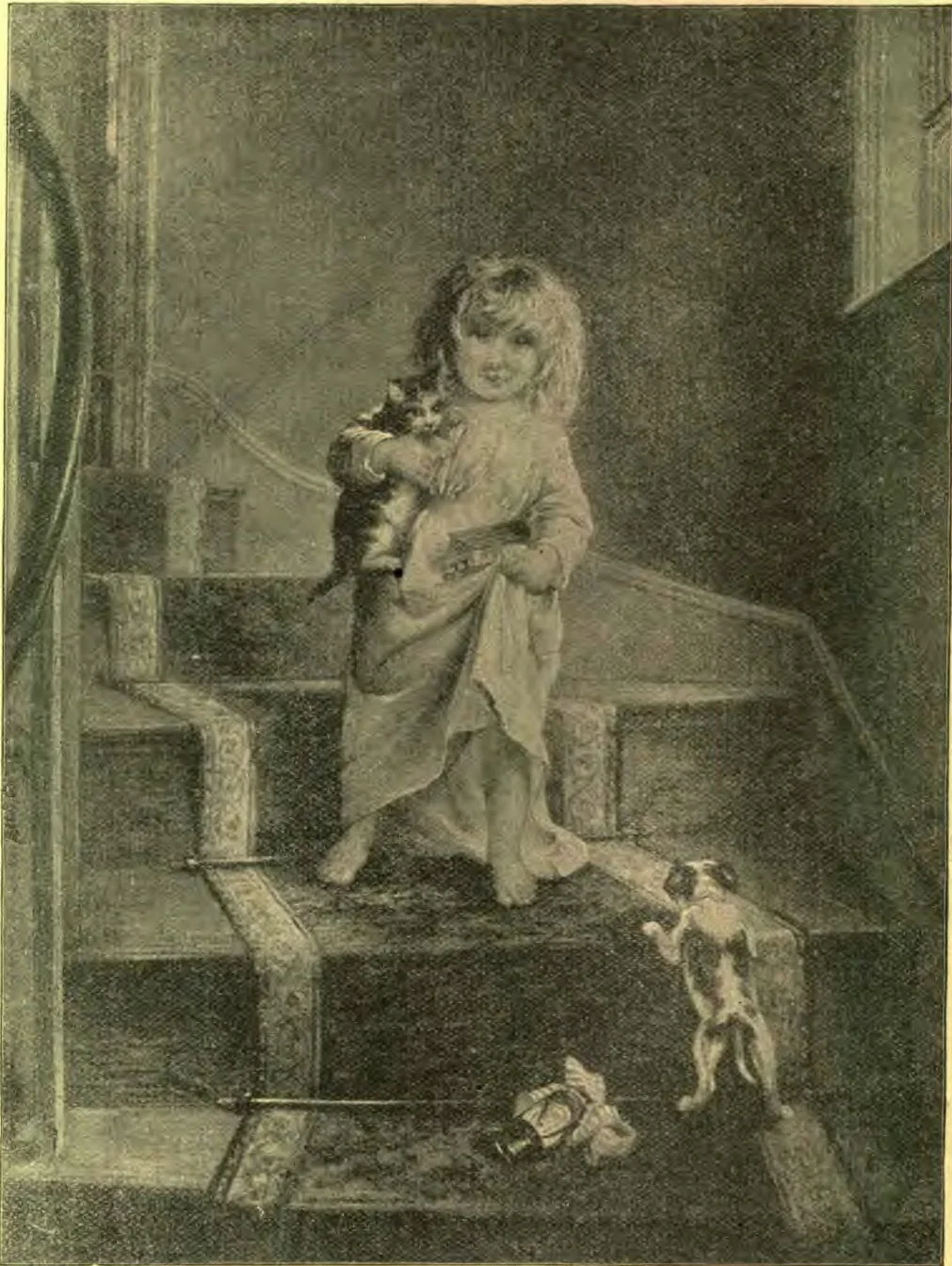
“Won’t you buy one, auntie?” pleaded a little girl, as she reached out toward some small, block-shaped packages, neatly wrapped in thin white paper, and tied with baby-ribbon. “Just o-n-e, auntie!” and the chubby hands soon grasped firmly the “just o-n-e” package of figs.
It was not long before the little block was “poiled,” as baby termed the process of unwrapping it. How good the figs tasted! She would pick one up, and turn it over and over before eating it. By and by she ran to auntie’s side, and holding up a fig, asked her to “tell a story” about it.
“We’ll play the fig is telling its own story,” said auntie, as she put down her work, and lifted the little one to her lap. “Listen to what it says:—
“Eat me up! eat me up! Boston is a cold place, and I’ve been used to hot weather. I was born and raised and steamed and packed where things are warm. My first view of this world was a host of little twigs and branches covered with hard green bulbs, not so large as the tip of your little finger. The sun shone so bright that very soon a snug green roof grew just over my head. I felt proud of my little home, but soon discovered that all my brother figs were just as fortunate as I. The big tree was covered with leaves.
“I had a fine time at the end of a long branch. The little birds swung me to sleep, and the breezes kept me cool. Finally I and all my brothers and sisters grew so large that the branch bent low down, and one day I jumped to the ground.
GOOD MORNING!
GOOD MORNING!
There I had to lie in one spot, while bugs and ants and bees came to sip my sweet nectar.
“‘There comes the crew,’ said one of my brothers; ‘they’ll take care of us;’ and sure enough I was soon tumbled into a basket, from which I was poured out into a box about three feet long and two feet wide. When the teamster drove by, he called out, ‘That sweat-box here boys!’ and then hauled us away.
“Next day we were dipped in boiling salt water, spread out on trays, and shoved into an air-tight box filled with sulphur smoke. We suffered so there for three hours that we turned from green to white. I’ve heard some one say that this was to kill the germs, so perhaps we ought not to complain. Anyway, that was only the beginning.
“For days and days we lay baking in the sun,—and remember, that was where the sun really shines, away over on the other side of Uncle Sam’s farm, in California. Looking around one day, we saw some clouds, and presently it began to sprinkle. Then there was a great bustle, and we were crammed into boxes in a twinkling:
“About the next thing I knew we were tossed into a large wagon, and hauled away, boxes and all, to a packing-house in Fresno. I can’t remember how long we stayed stacked up on its wide porch, before they placed my box, with seven others, on a hand-truck, wheeling us away and piling us up inside.
“While stacked up in the packing-house, we could hear a loud rumbling, whizzing, sissing noise, and after awhile we were plunged into a boiler of bubbling water, salty too. When you eat me, and call me sugared, you are mistaken. I’m salted; all the sweetness I have came from my mother tree. Well, I swam down near the bottom, looked through the screen, and saw some pipes with steam-holes in them. Then the screen flew up with a jerk, and out we slid into some small boxes. Almost before I reached the box, a man jerked it up, shouldered it, and ran into a—, well, it wasn’t a bee-hive, no! bees couldn’t make such a humming, buzzing noise. The man carrying us ran down an aisle between two long tables lined with girls and women, some of them busy, but most of them crying out, ‘Fruit here! fruit here!’ And such longing glances followed us as we were hurried on to where the man thought he ought to pour us into another box! The pleasant girl who received us smiled, then began to work in regular machine fashion, picking us up one by one, slitting each of us down the side, and cramming most of us into a little space about an inch deep and three inches long. There were four of these spaces in one block, called a ‘form.’ She jerked me up, slit my side, pulled and pressed me into a flat, round cake, and dropped me into a little box at one side, where the larger figs were saved for ‘layers.’
“When the four little spaces were all filled, she handed them to the waiter, who took them up to a machine called a press, where a wooden block jammed them together so tightly that they stuck together in one solid cake. The waiter then took my lady’s ‘form,’ together with six or seven others, and started down the aisle, handing them back to the packers.
“We large figs were then placed on the top as layers. Being on top, I could see all that was going on. My lady pressed us down with a block dripping with cold water, and just the size of the open space. All the wooden fixtures were wet, so as to keep us from clinging to the form. Then we were shoved out of the form, wrapped in fine white paper, and placed in a box just large enough to hold ten of us. Each block weighs about a pound, and is called a ‘carton.’
“While all this was going on, I heard a score of voices all shouting at once, ‘Fruit! Fruit! FRUIT! Empty boxes! Paper! Fruit here! Facings! Press, me! Press, here!’ etc. I wondered that the poor waiter didn’t lose his head, but somehow he didn’t.
“When our box was filled, my lady placed us on the floor under the table; still I could hear all that was said.
“The work went on until twilight; then the women went away. Presently the whistle blew, and only the men were left. They soon gathered us up, wheeled us to the next room, and stacked us up; then they cleared off the tables, swept the floor, and made everything tidy.
“The next day found us at the ‘ribbon’ table. There the cartons were emptied out of the boxes, and tied with gaily colored baby-ribbon. When a little maiden picked us up, I heard her say, ‘You’re solid enough;’ then she pulled some ribbon from a huge spool, wrapped it around us, tied a little bow, clipped it from the spool, and put us back into the box. Then we were ready for the nailer, who fastened a cover on the box, and shut the outside Fresno world forever from our view.
“At seven o’clock the whistle blew again, and several men who were willing to work after supper came with hand-trucks, and wheeled us into a freight-car. We all went to sleep, and were only awakened when the Boston fruit dealer uncovered our box, and put us in his bright show-case.
“Think a moment of all our experiences,—that is, if you’re not hungry, and in a hurry to eat me. But if you are hungry, just think of my tempting sweetness, and eat me up without a thought of my wide-spreading birthplace, of the burning sun that ripened me, of the birds and bees that tasted me, of the sulphur-box, the sweat-box, the seething dipper, the fig-room, the perplexed waiter, the press, the labeling machine, the ribbon table, or the box-maker.”
William Yarnell.