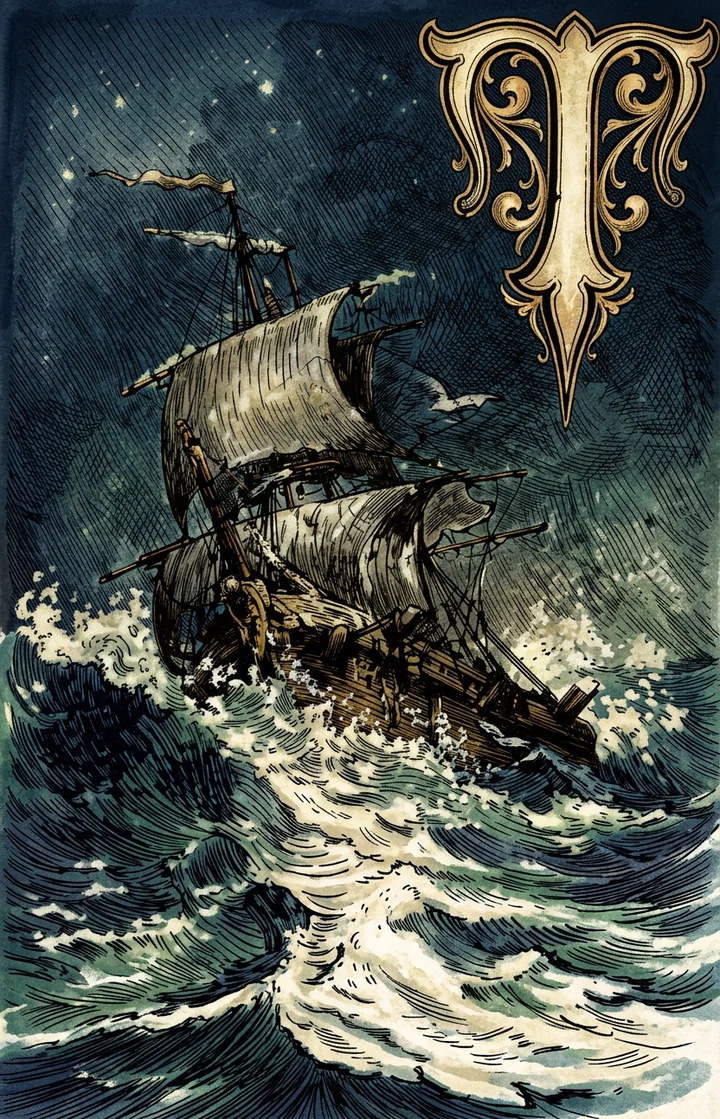
THE government of every nation is particular about having light and fog-signal stations erected at every point along its seacoasts where vessels are liable to be wrecked. The erection of these stations involves large expense and some wonderful feats of engineering.
The height of the light-tower depends on the relative surroundings of the location. The Point Arena (Cal.) tower is two hundred feet high, being the highest on the Pacific Coast. Its base is about twenty-five feet in diameter, the tower tapering gradually to the top, which contains the lamps, lens, etc. The walls are about five feet thick at the base, growing thinner toward the top. The means of ascent is by steel spiral stairs on the inside. The whole structure is built of brick and steel.
Different lights are used, to help the mariner easily to locate the position of his vessel on the coast. Some lights are fixed, or have a steady flame: others are revolving; that is, dark and light shades revolve around the light, so that at one moment the light is visible, and the next it is not: others have a colored fixed light: and still others flash different colors every few minutes.
“Light up,” as the keepers call it, is at sunset; and lights are turned out at sunrise, not before.
The light is the next most interesting part of the station, and, with the lens, is the most expensive. The size of the lamp itself, which is made of brass, with a circle wick, surprises a visitor who has never seen one before, as it is small compared with the lens and tower. Indeed, it is not much larger than an extra-size home lamp. It is the lens that makes the light; that is, it magnifies the small light in such a way that its rays can be seen, in some instances, forty miles out at sea.
The lens is made with great care, and costs several thousand dollars; it is about seven feet high, and completely encircles the light. The space inside the lens is sufficient to allow the keeper to move about. The lens is enclosed by one-fourth-inch plate-glass. At night numerous ducks and other large birds are attracted by the powerful rays of the lens, and fly directly at the light, many times with such force that they go through the thick plate-glass, and up against the lens itself. Each time this happens, the lens is more or less damaged. Ducks are frequently picked up at the base of the tower, not having struck the plate-glass with sufficient force to break it, but quite hard enough to stun them. In this case the keepers have roast duck for dinner.
The fog-signal, or siren, looks like an immense fish-horn, and its mournful blasts can be heard from six to ten miles. It projects over the water, and is operated by steam. The machinery is so arranged that the siren blows automatically every thirty seconds; and its warning is very sweet music to those aboard ship during a heavy fog, when it is impossible to see ten feet ahead of the vessel, even during the day.
It is arranged that during time of war, when war-ships of other nations might be expected to bombard our coasts, the lights shall be ordered out, and fog-signals stopped. Of course this would result in grave danger to vessels of our own flag, but this is somewhat lessened by a code of signals, which both station-keepers and officers of American war-ships have in their possession. These signals will be promptly answered, and assistance rendered, either by light or siren. If the enemy is known to have passed, this information can also be signaled.p. 464
Regardless of the care taken by the government to afford protection against wrecks, many occur, and sometimes within a stone’s throw of lighthouse stations. This was recently the case near the Point Arena light, where a vessel went ashore during a storm, and was broken completely in half. The crew took refuge in the rigging, and remained there all night and part of the next day, with breakers constantly dashing over them. Although these unfortunate sailors were within sight of shore, little could be done for them. Some became exhausted by the cold and exposure, dropped into the ocean, and were drowned; a few attempted to swim ashore, but only two were successful. Finally the keeper of the light-station, Mr. J. M. Brown, with the assistance of an Indian, who volunteered (the only one out of one hundred men on the beach who would go), launched a small boat, after securing a line to boat and shore. The attempt was unsuccessful, on account of the storm; but each of the brave men will receive a gold medal for the “attempt to save.” The sailors were rescued by a steamer that opportunely passed by.
On first-class stations there are four keepers, — the head keeper, and the first, second, and third assistants. H. L. CARLISLE.