MAN'S PLACE IN NATURE

10%

Review and Herald Publishing Company · Battle Creek, Mich. · May 4, 1899

FromThe Youth’s Instructor, Vol. 47, No. 18.

Read the full edition

MAN'S PLACE IN NATURE.

Man’s Relation to Light.
In our study this week we will consider man in his relation to light. We have already seen that light bears important relations to the air, the water, the plants, and the lower animals; it also has its relation to man. When God made light, on the first day of the week, he had in mind the man Adam, whom he was to create on the sixth day. The light was to be a means by which man could recognize the wonderful creations that God had made on the six days; so God made the eye, the window which allows light to pass into the human soul. Not only can we see, by means of the sense of sight, the objects that are about us; but “truly the light is sweet, and a pleasant thing it is to behold the sun.”
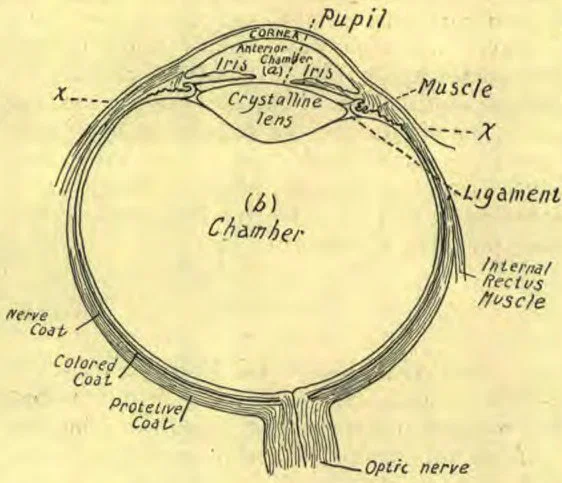
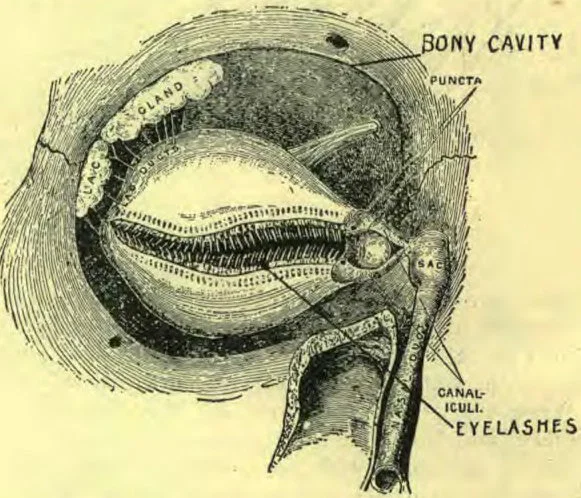
The eye is set into a socket, or bony cavity, thus being protected against accidents which might otherwise result from external objects striking it. The eye is surrounded with a dark coating, which absorbs the light; inside of this is a lighter coating; and inside of the second coating is a third, consisting of an expansion of the optic nerve. This third coating is called the retina. The part of the eye which first admits light is a transparent, horny layer; and just inside of this is a watery fluid. Back of this fluid is a crystallin lens. Back of the lens is another fluid, which is glassy in appearance. You will remember that in the study of light, we studied the lens,—the instrument used to magnify the fly and other objects. It is used in microscopes and telescopes for magnifying very small objects. The Creator has placed in the eye a lens made of living tissue, which focuses the light in the same way that the glass lens does in the microscope and telescope. You will remember that the object appears magnified when we look through the lens, because the rays of light are bent. As the rays of light pass into the eye, through the crystallin lens, they are brought to a focus on the retina. The image thus produced is carried through the optic nerve to the brain; and thus it is that we behold the objects about us. By studying the eye, we see that the Lord constructed a lens before lenses were invented by man. I will now name the different parts of the eye, and you may see if you can find them in the illustrations given.
The rays of light enter the cornea, pass through the aqueous humor, pupil, crystallin lens, vitreous humor, and finally reach the retina. The cornea is somewhat rounding, and bends the rays even before they pass through the crystallin lens. The choroid coating of the eye is black, and allows no light to pass through it into the interior of the eye. The sclerotic coating is light in color, and forms a background upon which the retina is spread out in a very thin layer.
We should be careful how we treat our eyes, which the Lord has given us to use in obtaining a knowledge of his ways and works. Many spoil their eyes by studying where the light shines directly into the eye. They should sit with the back to the light, and let the direct rays of light strike the page instead of the eye.
Human beings and many of the lower animals have two eyes; but there are many creatures, especially among the insects, which have anywhere from a hundred eyes to a thousand or more. This enables them to see all about them, without turning the head. A few animals have but one eye.
Next time we will take up the study of man as related to heat. M. E. CADY.