THE MANIA FOR GOLD

13%

Review and Herald Publishing Company · Battle Creek, Mich. · Aug 23, 1900

FromThe Youth’s Instructor, Vol. 48, No. 34.

Read the full edition

THE MANIA FOR GOLD

Man’s intense greed for gold is well illustrated by the almost superhuman efforts that he will put forth to secure this valuable metal from its hiding-place in the earth. In the early days, when gold was first discovered in California, the long wagon-trail across the American continent was almost literally marked out by the graves of those who failed to complete the perilous journey. Modern methods of travel have reduced to a minimum the majority of these old-time difficulties; yet many of the gold-hunters who fearlessly wound their way a few years ago to the then almost unknown Klondike region suffered untold privations.
This year the procession of gold-adventurers has been directed toward Cape Nome, in the far-away North, near our Russian neighbor; so that what, a little more than a year ago, was nothing but a bleak beach now has a population of forty or fifty thousands. If newspaper reports are to be fully credited, oranges are selling there for a dollar apiece, and other foodstuffs in proportion. Nothing is cheap except whisky; and that sells at twenty-five cents a drink. But whisky is costly, even when given away. Almost every day there are some who become heart-broken as a result of their unsatisfied ambitions, and end, by their own hands, their sad career. Murders are common. When men will face such difficulties to secure precious ore, the luster of which will perish, how much more ought we to be willing to pass through in order to win for the Master those precious jewels that are to shine brighter and brighter throughout all eternity.
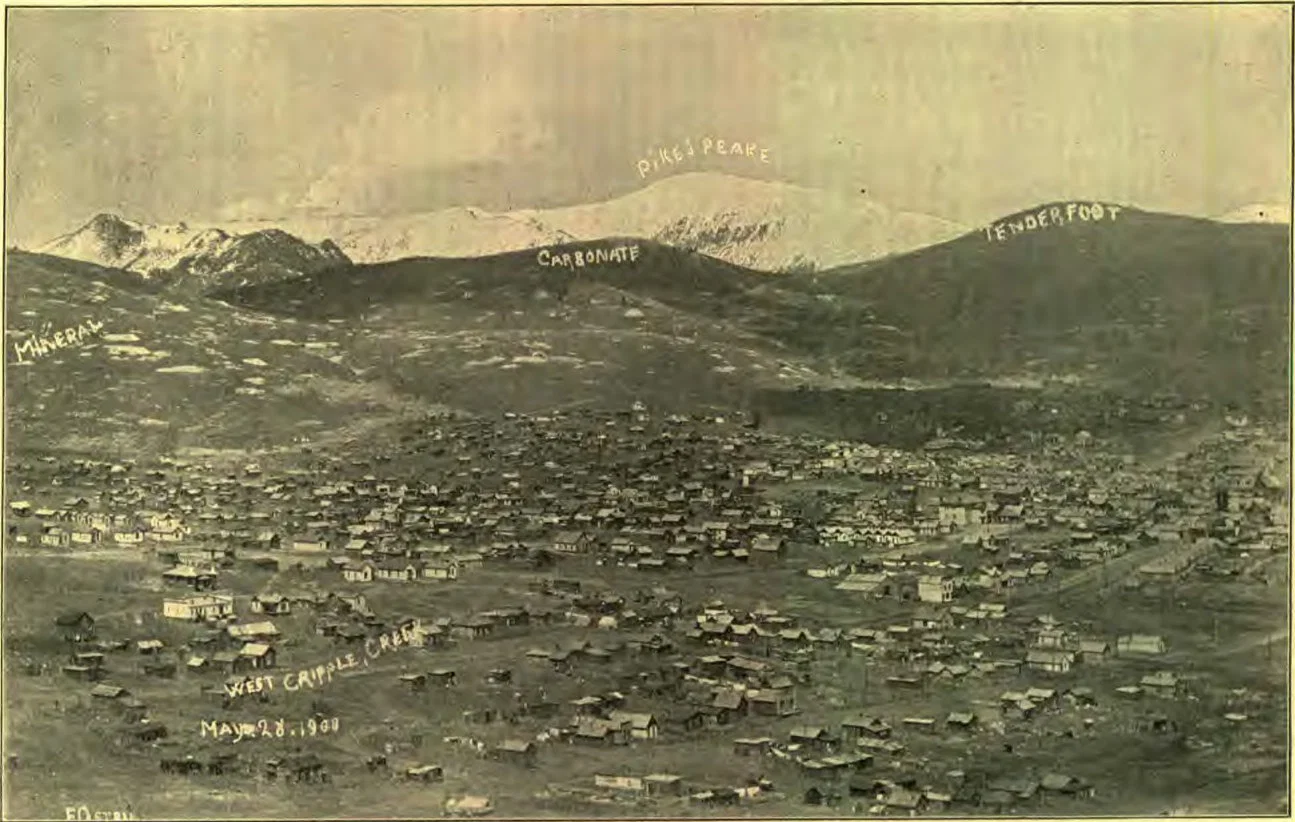
In addition to these gold-fields, which, under ordinary circumstances, are more or less temporary in the value of their output, there are others that seem to be permanent in character, and can be worked year after year, and still yield more and more valuable returns. This is apparently the nature of some of the mines in the famous Cripple Creek district, in the State of Colorado.
Although it is but a few years since gold was found there in paying quantities, this city with its suburbs already contains about fifty thousand inhabitants. The valley in which it is situated is about ten thousand feet above the level of the sea. Immediately overlooking it, on one of the mountain peaks, is the highest incorporated village—twelve thousand feet above sea-level—in the United States. Owing to the unusually rich gold finds that have been made in this vicinity, thousands of prospectors have literally honeycombed the mountain-sides with prospect-holes. As the average expense of sinking one of these is about five hundred dollars, it has been estimated, by those competent to judge, that more millions have actually been expended in searching for gold in the Cripple Creek region than have been secured from these remarkably well-paying mines.
After noting the great perseverance manifested by these men in their constant search and earnest endeavors to find gold, the admonition to “search for truth as for hid treasures” has a new meaning to me. Under ordinary circumstances, miners do not expect to find gold lying on the surface, ready to be scooped up with a shovel. They are willing to wear out their lives in dark tunnels in order to secure it. Is it not possible that in our Bible study we expect to get its valuable truths by simply skimming over a few chapters each day, and a few more on the Sabbath, instead of putting our minds to the task of sinking our shaft deep into the mine of truth?
DAVID PAULSON, M. D.