Answers to Questions in “Instructor” of January 18
Part I
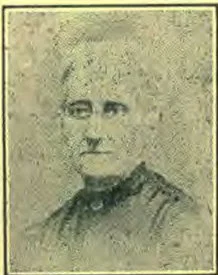
Dr. Clara A. Swain
1. “In all Asia there was no hospital for women until Jan. 1, 1874, when Dr. Clara A. Swain opened a hospital for women in Bareli, India. When Dr. Swain went to India as a missionary physician, people in America thought that the women of India would be too superstitious to take treatment from a woman, but she treated in the first year one thousand two hundred and twenty-five patients. She at once opened a medical college, and three years later thirteen girls were granted certificates to practice medicine. A Hindu woman said, ‘Your God must be a very kind, good God to send a doctor to the women. None of our gods ever sent us a doctor.’”
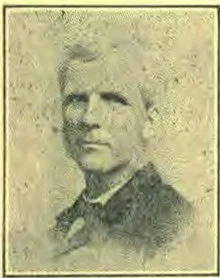
Gen. Samuel Chapman Armstrong
2. “Jan. 30, 1839, was the birthday of Samuel Chapman Armstrong. His early home was in the Hawaiian Islands, where his parents had the Hilo Manual Labor School. The boys paid their expenses by carpentering, housework, gardening, etc. At the close of the Civil War in the United States, General Armstrong said, ‘We must have a school like the Hilo school, for these colored boys,’ and he started the famous Hampton Normal and Agricultural Institute of Virginia. Among the most noted pupils of this school was Booker T. Washington, who later founded a similar school at Tuskegee, Alabama.”
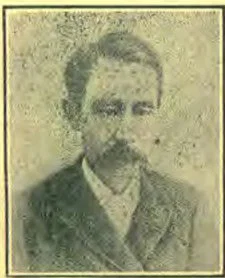
Joseph H. Neesima
3. “Jan. 14, 1843, was the birthday of Joseph Hardy Neesima. At that time no Japanese was permitted, under penalty of death, to leave his country, nor was any foreigner allowed to land on the shores of Japan. But young Neesima heard of the schools and the learning of other countries. He found a Bible, which he read at the risk of his life. He managed to escape on a ship, and arrived in America. Alpheus Hardy and his wife, of Boston, took the boy to their home and sent him to school. After graduation he returned to Japan, where he was gladly received. Joseph Hardy Neesima founded the great Doshisha University, the first Christian university in Japan.”
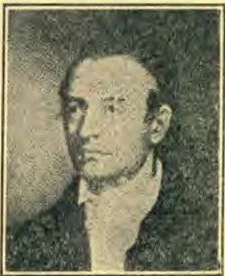
Adoniram Judson
4. “‘At last, it is done,’ said Adoniram Judson on Jan. 31, 1834, at Moulmein, Burma, after he had completed the translation of the Bible into Burmese. He and his wife, Ann of Ava, had left the United States twenty-two years before. During all these years his main work had been the translation of the Bible. For a time he was in prison. To save his manuscript from being lost, his wife sewed it up in a pillow. The pillow was so hard that no wicked jailer stole it, and after several years the manuscript was printed. His contribution to literature is immeasurable.”
Part II
1. Cover the table with a silence cloth, which is usually made of double-faced Canton flannel or felt. On the silencer lay a pure-white damask cloth. A well-laundered cloth is a matter of prime importance; it should be ironed almost without starch, and in as few creases as possible. When spread, its long central crease should divide the area of the board exactly in half, and it ought to be wide enough to hang in folds to within twelve or eighteen inches of the floor.
Place a service plate in the center of the space allowed for each person, allowing from twenty-five to thirty inches in length and fifteen inches in depth for each cover. The plate, as well as all cutlery and silver, is set about one-half inch from the edge of the table.
Place knives at the right of the plate, with the cutting edge toward the plate; spoons to the right of the knives; and forks to the left of the plate, with the prongs up. Bread-and-butter plates (not used at formal dinners) are placed at the upper left-hand of the service plates, and the glasses at the upper right-hand, near the knives.
2. Men’s cards are smaller than those of women, being both narrower and shorter.
3. A gentleman is always to be introduced to the lady, never the lady to the gentleman, except in case of one greatly superior in rank or age.