FROM an obscure beginning, a few despised but dauntless men working against the odds of prejudice and long-established custom, the temperance movement has developed into what has been described as a “temperance wave.” But a wave must recede. The temperance movement is a growth, a living thing, and can neither recede nor stand still.
The movement began as a moral reform, the first efforts being to save the individual from a destructive habit and a hopeless end, and the appeal was personal and educational. Determined men sought, through the lodge, the public platform, and the printed page, to win fallen men to sobriety and usefulness; and their work was, in a measure, successful.
But the first great strategic move was the education of the children in temperance principles; for it is out of the Bands of Hope of earlier days that our strongest temperance workers have come.
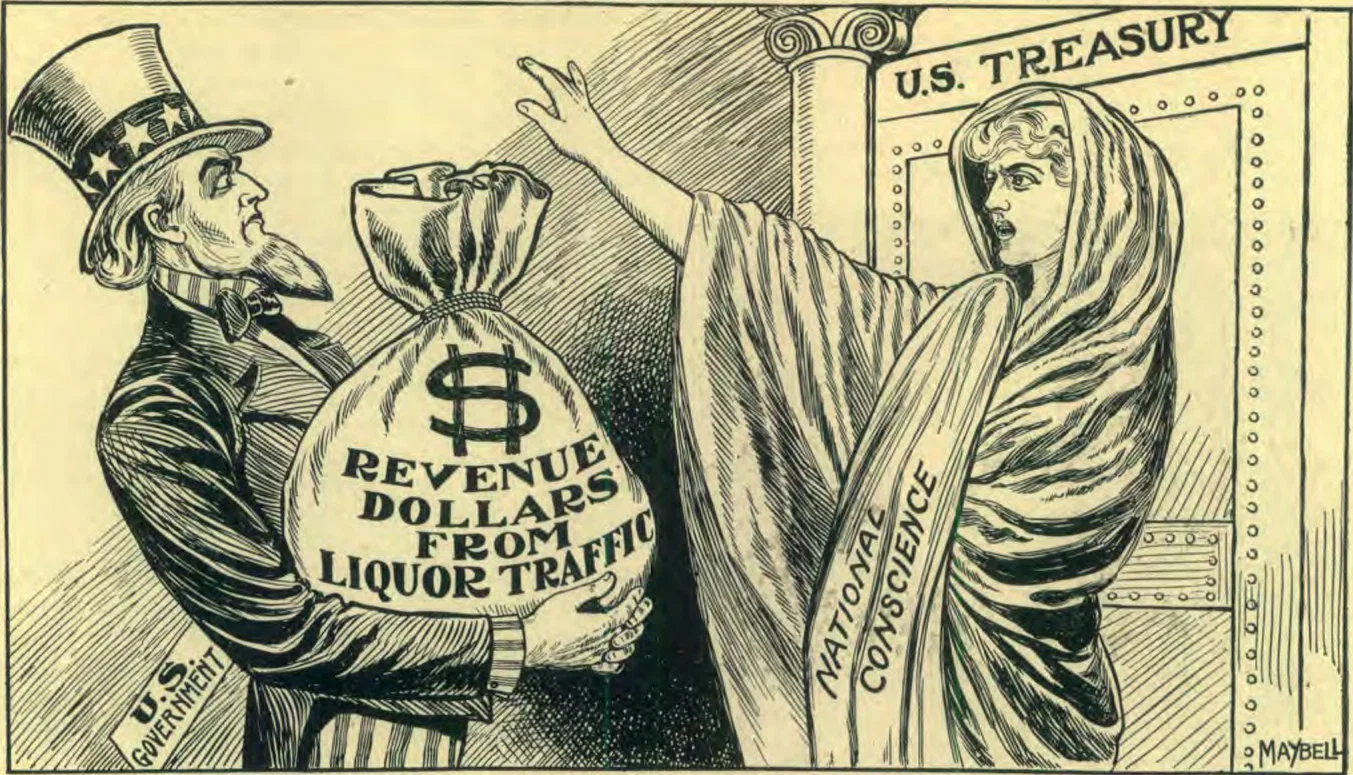
Realizing that the process of personal appeal is necessarily slow and only partially successful, some conceived the idea that the law could be invoked as a mighty weapon against the liquor traffic; so alongside of the personal appeal to live a wholesome life, there has been a steadily increasing agitation for prohibitory statutes and amendments. The result has been local prohibition in some places, county prohibition in others, and State-wide prohibition in still others; so that now the larger part of the United States is under some form of prohibitory law, and the agitation is on for national prohibition. And a strong factor in the movement is the fact that the liquor interests, paying a revenue to the federal government, are in a position to circumvent the local statutes. Nevertheless, the prohibitory laws are beginning to show results in that the per capita consumption of alcohol, as shown by the internal revenue report, is now decreasing, notwithstanding the increase in population.
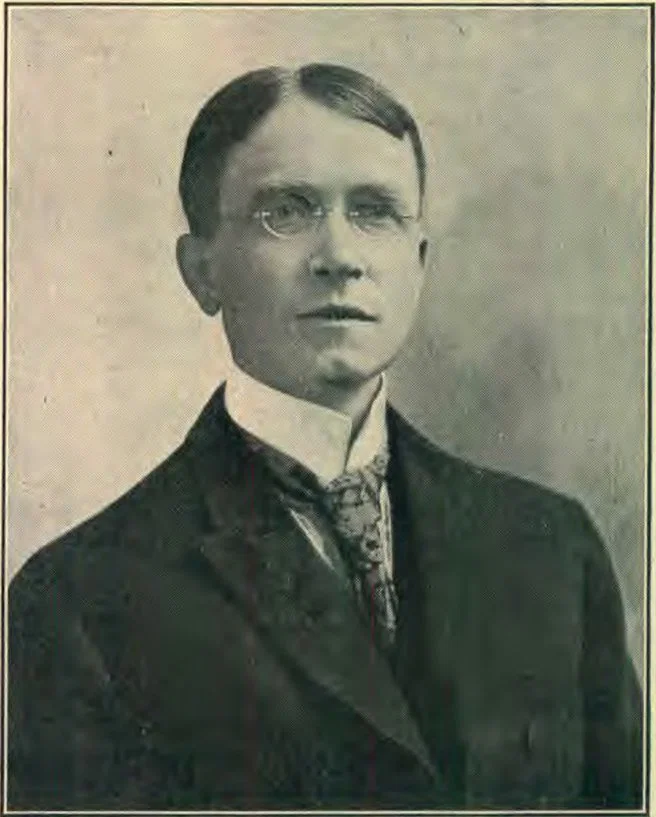
DR. WILLIAM C. WOODWARD
Health Officer of the District of Columbia
Beginning as a moral reform, the temperance movement later attracted the attention of the leaders of industry and transportation and trade, who, convinced that the liquor devotee is an unreliable and expensive employee, have gradually12barred him from positions of responsibility and trust; and in some establishments (the number is increasing) men who drink are not wanted in any capacity.
“It is not lawful for to put them into the treasury, because it is the price of blood.” Matt. 27: 6.
A great change has come over the attitude of the insurance companies. In the forties of the last century, a man who was an abstainer was considered a dangerous risk. Life insurance men did not care to issue policies to men who refused to use “stimulating” and supposedly healthful beverages. The result was that temperance men organized their own insurance company; and it later became apparent that the abstainers were actually better risks than the nonabstainers; and now a man who is a total abstainer can get better rates than even the very moderate drinker.
Finally the temperance movement became a part of the great public health movement. For a long time, physicians here and there, in gradually increasing numbers, have been convinced that alcohol is a poison more potent for harm than good, even when taken as a medicine; and physiologists have added proof to proof, through animal experiment, through the study of human groups, and in other ways, that the general effect of alcohol when taken internally is evil, and only evil. The accumulation of this information has convinced public health officers that they are not doing their entire duty when they look after flies and mosquitoes, dirt, spoiled goods, and bad housing, if they do nothing to lessen the greatest of public health menaces, the drink evil. So Dr. Goldwater, health commissioner of Greater New York, the greatest municipality but one in all the world, has begun a work of education, issuing for the people of the city of New York a series of warnings against the drink evil; and he has since been upheld in his work by health officers elsewhere, and by prominent physicians and scientists.
One indication of the changed attitude of physicians to drink is that in hospitals, during a generation, the bill for liquors has been steadily diminishing to almost nothing, and the bill for milk has been steadily increasing. The modern policy is to nourish patients rather than to drug them.
Another indication is the omission of whisky and brandy from the latest edition of the United States Pharmacopoeia (the official list of drugs and medicines, made the standard by the Food and Drugs Act), and the enactment of laws making it necessary for druggists who handle alcoholic liquors to take out liquor dealers’ licenses. This means, in fact, that alcohol is no longer classed with drugs, even with morphine and cocaine, but is considered an indulgence.
As the antislavery movement began with a few intrepid men and women who were willing to suffer martyrdom for their faith, and grew until a nation was willing to enter a death struggle in order to rid itself of the blight of slavery; so the temperance movement, from a very small and apparently insignificant beginning, is increasing in volume and momentum, and is destined to meet the “vested interests” in an encounter which, though bloodless, will result in as great a victory as was the abolition of slavery.