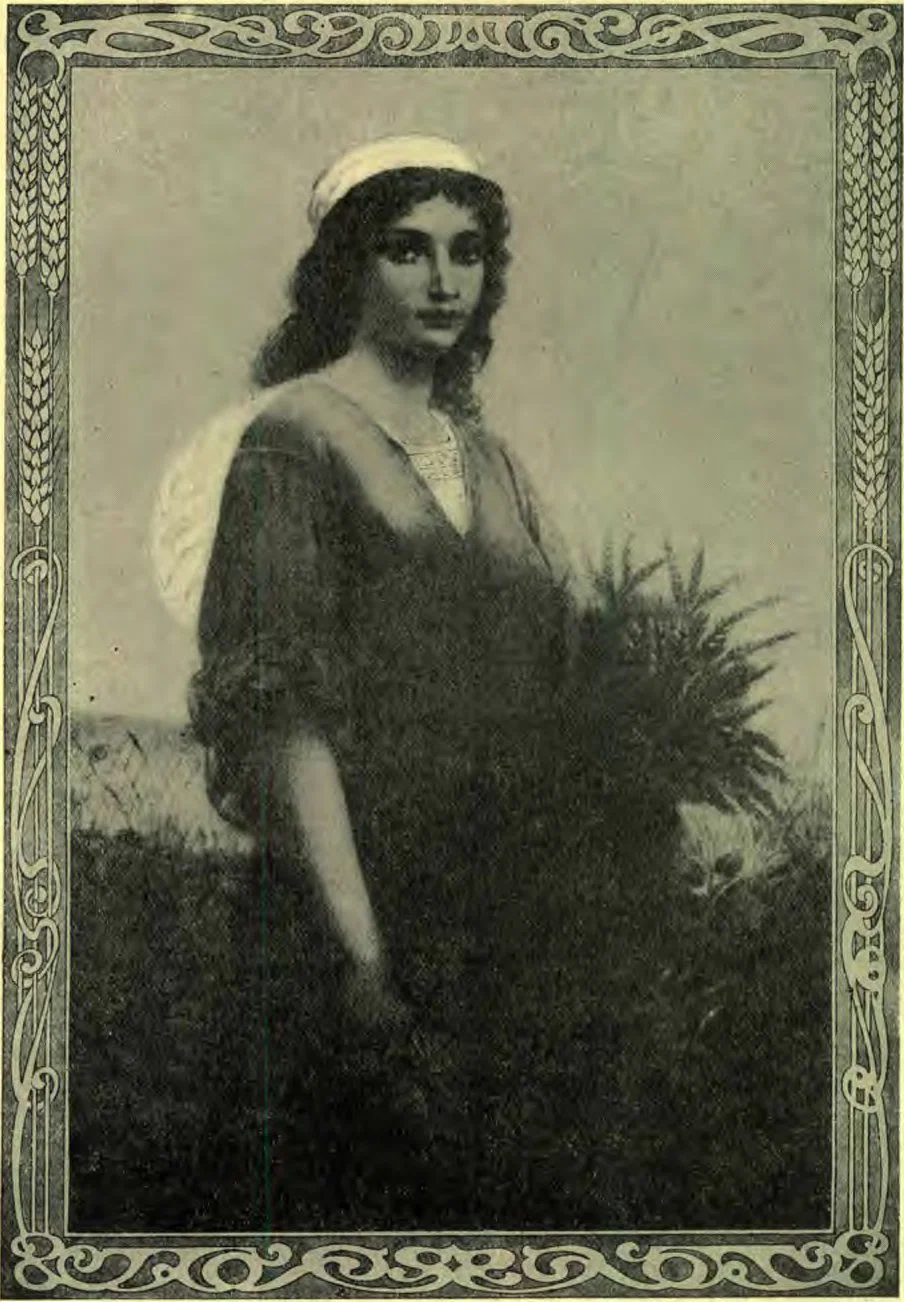
Bible Heroines

8%

Review and Herald Publishing Assn. · Takoma Park Station, Washington, D. C. · May 29, 1917

FromThe Youth’s Instructor, Vol. 65, No. 22.

Read the full edition

Bible Heroines

ARE you acquainted with the heroines of the Bible? If not, you have missed reading some of the most beautiful stories in the English language. And if you have thought that men alone did great things in Bible history, you will, after having read some of the stories of Bible heroines, want to include them with Noah, Abraham, David, Daniel, and others, in the roll of truly heroic characters.
Perhaps, in general, they have not performed such great, outstanding acts of heroism as the great men of the Bible have; but though more quiet and unassuming, their acts are none the less worthy of the name heroic, and their characters are none the less noble and great. There are, however, some women of Bible history whose fame rests on the fact that they have heroically met a great crisis. Among this class is Queen Esther.
Suddenly raised from the lowly life of a conquered people and made queen of Persia, Esther did not become vain because of her beauty and position. Neither did she, while surrounded by the wealth and luxury of the royal court, forget her own people, and the God in whom she had been taught to believe. And when the crisis came, and the wicked Haman seemed about to execute his vengeance upon her cousin Mordecai, and the destruction of all the Jews in the realm seemed evident, Esther proved herself.
Putting aside all fear for her personal safety, she bravely appeared, unbidden, in the presence of the king, to request that the wicked decree of Haman be thwarted in its execution. A less heroic person might have refused to risk so much for results which seemed so uncertain. Esther's greatness consisted in unselfishly doing what her duty required. In this, true greatness ever lies. And every one who always nobly performs each duty as it comes, be it small or great, has the elements of a really heroic character.
Another type of heroine is portrayed in the beautiful pastoral story of Ruth. An English literary man was once asked by a group of girls to read to them the most touching story he had ever seen. Substituting modern names for the original ones, he read to them the story of Ruth. The girls were delighted with the story and asked who the author was.
Ruth was a shepherdess, and a member of that despised race, the Moabites. The test in her life came when, weighed down by sorrow, she had to decide whether she would cast her lot with her heathen relatives or with the people of God. In making her decision she cannot be said to have done any great thing, yet that act has been deemed worthy of a place in the Book of books. It takes courage and determination to do right when the way is dark and uncertain. Ruth possessed these elements of heroic character, and in her declaration to Naomi that “where thou goest, I will go; and where thou lodgest, I will lodge: thy people shall be my people, and thy God my God,” she showed a purpose no less firm because gently expressed.
Quite another type of woman is found in the strong-minded Deborah. In a time of national crisis, she arose to the occasion, and led the forces of Israel in the battle against the Canaanites. In accordance with her position as servant of the Lord, Deborah had told Barak of the Lord's purpose to deliver Sisera into his hands. But the faint-hearted Barak refused to go against Sisera unless Deborah would go with him. The prophetess complied with his wish, and went herself into the battle. Sisera, with his hosts, had encamped on the plains of Esdraelon, on the banks of the river Kishon. Deborah's army was upon Mt. Tabor, from whose summit they could see the camps of the enemy. When all was ready, Deborah bade Barak rise, and “silently down from the mountain crown the great procession swept.”
A less dauntless spirit than Deborah's would have quailed before such an undertaking, but the prophetess would not be discouraged in the carrying out of a work which involved the welfare of the people whose ruler she was, and upon whom God had set his approval. God honored her courage by giving her victory over her enemy. In the fifth chapter of Judges is recorded Deborah's wonderful song of victory in which she tells us that the battle was not won by human strength, but “the stars in their courses fought against Sisera.”
Other heroines, not less worthy of mention than these three, are found in the narratives of both the Old and the New Testament. Some of them are among the nameless women of the Bible, but the stories of their heroic lives have nevertheless had their influence for good, and even yet bid us live nobly in our present world.
LAURA PATTERSON.