A HUNDRED years ago there were not so many books in the world as there are now; but some of those which were printed had very long titles. Here is the name of one which was published in 1822 on the nearness of Jesus’ coming: “He Will Come Again, the Son of Man in the Clouds of Heaven.”
The man who wrote this book was a converted Jew, Joseph Wolff. He was born in Germany, but while yet a young boy he left home, and started out to make his own way in the world. In early manhood he joined the Catholic Church, but later he left that church and became a Protestant missionary to the Jews.
As Mr. Wolff read his Bible, and studied the prophecies, he saw that the time was near when Jesus would come the second time. He began to preach this doctrine, and to write it in books.
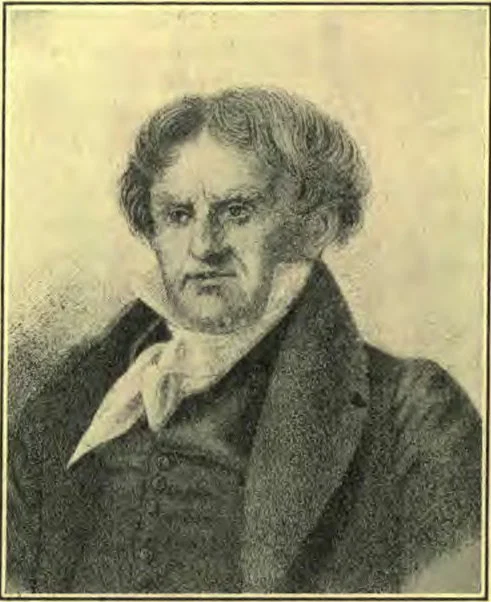
JOSEPH WOLFF
He also taught it in many lands in the Old World and also in the New. For Joseph Wolff was a great traveler. He went about from one place to another so much, especially in the old Bible lands, that the people called him a “dervish,” which means wanderer.
Before beginning his missionary travels, Mr. Wolff had studied many languages. Of course he learned Hebrew in his home when he was a boy, but he added to this Greek and Latin and Chaldee, besides Arabic, Syrian, Persian, and English. Thus he was able to speak to the people in the lands where he traveled, and make himself partly understood by them.
To understand what led Mr. Wolff to make these hard and dangerous journeys, we must go back a long way in Jewish history. You remember that after the death of Solomon the kingdom of Israel was divided. Two of the tribes had one king, and the other ten tribes had another king. These separate kingdoms were kept up for many years; in fact, the people were never reunited.
At last, in the days when Ahaz was king in Jerusalem over the two tribes, and Hoshea was king in Samaria over the ten tribes, a heathen king called Shalmaneser came against Samaria, and besieged it. Hoshea gave presents to Shalmaneser, and tried to buy his favor; but it was all in vain. The Assyrian king shut Hoshea up in prison, and finally subdued his kingdom, and took great numbers of the people away captive. Not content with this, he brought a large number of his own heathen subjects into Samaria, and gave them the lands and houses that belonged to the Jews.
Do you wonder what became of the ten tribes who were carried off? Where did they go? How did they live? Did they like their new home?
A great many persons have asked these questions, and Joseph Wolff was one who was very much interested in the ten lost tribes, as they are sometimes called. He thought that if he should travel all through those ancient Eastern lands, he might find some trace of them; but he never did, though he had many interesting adventures, and wherever he went, he told the people that the second coming of the Lord was near at hand. Though he did not know it, the Lord raised this man up to do this special work at this very time.
Two special expeditions or visits to Bokhara, in Turkestan (locate it on your map), were made by Mr. Wolff in 1830 and 1843.
Met by a Band of Robbers
On the first trip, he went by way of Armenia and Persia. Near one village a band of robbers met the caravan with which he was traveling, and stripped the men of all their clothes, and tied each by a long rope to a horse’s tail. Some of the men were also beaten, Mr. Wolff among them; but after a time he was allowed to ride, and a few rags were given him to shield him from the bitter cold.
“After traveling some time along a road covered with snow and ice they encamped in a forest, where they made a large fire. Then the robbers, reckoning up the value of their booty, proceeded to set a price on the prisoners they had taken. Wolff’s servant was valued at ten tomans (equal to about $25); but when they came to Wolff and looked at him, they said, ‘We don’t like this fellow at all; he stares at us so.’ On examining his effects, they found several important letters addressed on Wolff’s behalf to Abbas Mirza, the governor of Khorasan. This frightened them, and they debated whether it would not be better to kill him and put him out of the way.
“But before setting out on this stage of his journey, Wolff, foreseeing that something of the kind might happen, had taken the precaution of writing to Abbas Mirza at Nishapur, so that if he should fail to arrive there, he might be inquired for. Accordingly, he went up to the robbers, and said: ‘I have understood all you have said, and the resolution to which you have come. Your reasoning is very good, but it has one fault, and that is, you are too late; I also knew how to calculate, and have laid my plans accordingly.’ He then told them of his having written beforehand to Abbas Mirza, and promised that if they would let him write to the principal Jews in Torbad-Hydarea, whose acquaintance he had made on a former journey, he would be ransomed for one hundred tomans.”
Of course the robbers wanted more money; so “they let him write to the chief Jews in Torbad-Hydarea, whither they were journeying. In the meanwhile,4Wolff had succeeded in making six of the robbers his firm friends by promising to recommend them (if they remained faithful to him) to Abbas Mirza, whose soldiers they wished to become.
“Thus they arrived safely at the gates of Torbad-Hydarea. Wolff’s Jewish friends came out to meet him, but strongly objected to his paying any ransom. All the robbers had had dealings with them, and owed them money, and they insisted that Wolff should be allowed to go to the house of one of them for the night, leaving everything else to be settled in the morning.
“Such a crowd of Jews came round Wolff and his friends that they adjourned to the synagogue, where, although in rags and shivering with cold, the dauntless missionary preached to them, and was listened to with profound attention.”
Cast into a Dungeon
“In the morning, however, the robber chief seized him again, and put him in a miserable dungeon, chained with fifty other captives. The chief seemed to have formed the design of starving him to death, for he passed Wolff over when apportioning bread to the other captives. However, after he had been about two hours in the dungeon, the thunder of cannon was heard, and a voice exclaimed, ‘Muhammad Izhak Khan has arrived!’ This was the khan of Torbad-Hydarea, and a Persian officer of his took summary measures with the robbers, and, coming to the door of the dungeon, inquired if there was not an Englishman there? Wolff shouted, ‘Yes, yes!’ and was forthwith released, along with his companions, who gratefully attributed their escape to him.”
The “Justice” of the Khan
“He was now brought to the palace of the khan, where he saw hundreds of miserable wretches with their eyes put out, and their ears and noses cut off. Muhammad Izhak was a tyrant of great bodily strength, and was said to have killed with his own hand his father, mother, brother, sister, and son-in-law. The khan, who was eating his dinner when Wolff was brought into his presence, said, ‘Abbas Mirza has written to me that thou goest about to show the nations the way of truth. For my part, I have no religion. I have one good quality, and that is, I am a man of justice; and therefore tell the truth, and you shall see my justice. How much money have these rascals taken from you?’”
“Wolff said: ‘They have taken from me eighty tomans.’”
“He repeated, ‘Eighty tomans?’”
“Wolff said, ‘Yes!’ and he answered, ‘Now thou shalt see my justice.’”
“So he ordered the robber chief and his followers to be flogged until they paid the whole sum. This he counted, and said again, ‘Now thou shalt see my justice.’ Then he put the whole into his own pocket, and, turning to the unfortunate missionary, said, ‘Now, you may go in peace.’”
“I Will Not Tell a Lie”
“Wolff remained a few days longer with the Jews, and then set out with a large caravan for Meshhed. On the way he had an unpleasant adventure with one of his companions, a bigoted Mohammedan, who took hold of Wolff’s foot, and beat it with his stick, saying, ‘Infidel! say, “God is God, and Mohammed is the Prophet of God.”’”
“Wolff replied, ‘I will not tell a lie!’”
“The man put his arms akimbo, and exclaimed, ‘Imagine the boldness of this infidel, who, in the midst of Mohammedans, and before the city of Meshhed the Holy, declares our religion to be a lie! What a fool he is!’”
“A respectable Mohammedan who heard this, said, ‘Well, let the fool alone.’ This quieted the man, who went on his way without molesting Wolff any further.”
“At Meshhed Wolff lodged with one of the principal Jews, and had prolonged religious discussions both with Jews and Mohammedans. He arrived at Bokhara without further mishap, but during an examination before the ameer’s prime minister, he was brought into some danger by a Jew who accused him of being a Russian spy. Wolff, however, succeeded in disproving the charge, and the prime minister informed him that he might hold religious discussions with the Jews in Bokhara, but not with the Mohammedans. He accordingly did so, with the happy result that he was able to baptize twenty converts, whom, on his return fourteen years later, he found steadfast in their discipleship.”
Mr. Wolff spent three months in Bokhara, and then set out on his journey homeward. He had many narrow escapes, and was often in peril of his life; but he finally reached home safely. Not long after this he spent some time in the United States. In 1843, hearing that two Englishmen had been imprisoned in Bokhara, he decided to revisit that distant city, and to preach to the Jews and Mohammedans whom he should meet on the way.
A Warning
As he neared Bokhara, some of his friends came to him, and said, “Joseph Wolff, Joseph Wolff, you are the son of death as soon as you enter Bokhara.”
But Mr. Wolff had not come so far, only to turn back now. Even when told that the men whom he had come to help had been shot, he said: “I shall go on. I must be more certain as to this.”
A few days later he reached the city. Here is what he says about his arrival:
“Shouts of ‘Salaam Aleikoon’ (Peace be to you) rang upon my ear. It was a most astonishing sight; people from the roofs of houses, the Nogai Tartars of Russia, the Cossacks and Girghes from the deserts, the Tartars from Yarkand or Chinese Tartary, the merchants of Kashmir, the grandees of the ameer on horseback, the Afghans, the numerous water carriers, stopped still, and looked at me; Jews with their little caps—the distinguishing mark of the Jews of Bokhara, the inhabitants of Khokand politely smiling at me, the mullahs from Shikarpur and Sind looking at me and saying, ‘Inglese Sahib;’ veiled women screaming to each other, ‘Inglese eljee’ (English ambassador); others coming by them and saying: ‘He is not an eljee but the grand dervish of Englistau.’”
The ameer, or ruler of the city, who was a wicked and cruel man, received Wolff kindly, and listened to him read and explain the Bible. After Wolff went away, the ameer said:
“How wonderful! I have in my empire two hundred thousand Persian slaves, and no soul ever came from Persia to ask after any one of them; and here I have killed a few Englishmen, and Joseph Wolff comes with a Bible in his hand, and enters my capital without a sword and without a gun, and demands those two Englishmen. I wish Wolff could make them alive again; his coming here has inflicted on me a wound which will never be healed.”5
Brave in the Face of Danger
However, the ameer was not a true friend to Wolff, who was finally shut up in the very room the two Englishmen had occupied before their execution. The Jews were allowed to visit him, and they told him all about the two Englishmen who had been killed.
One day a mullah, or learned man, came to Wolff from the ameer, and asked him if he would become a Mohammedan.
“Tell the ameer, Never, never, never!” said Wolff. “Have you not a more polite answer for the ameer?” asked the mullah.
“No,” replied the fearless missionary.
So the mullah went away, and by and by the executioner who had killed the two Englishmen came to the room, and said: “Joseph Wolff, to thee it shall happen as it did to them.”
Saved from Death
But almost by a miracle the life of Wolff was saved. That very day a message came from the Persian ambassador, asking the ameer to release Wolff. This he finally did, saying, “Well, I make a present to you of Joseph Wolff. He may go.”
So, guarded by an escort, Mr. Wolff went to the Persian embassy, and laid plans to return to England. Before leaving Bokhara, however, he must, according to the custom, call again on the ameer—though we may be sure he did not enjoy the prospect of visiting this man who was so eager to take his life. The Persian ambassador went with Wolff, and the ameer gave him “a robe of honor, fifty ducats, and a Persian manuscript with the ameer’s autograph.”
When Wolff came to leave the city, the people crowded the narrow streets, and said, “Thou hast been born again!” to show their surprise at his narrow escape from death. “He was not yet altogether out of danger, however. The caravan in which he traveled was a large one, and before he left Bokhara his Jewish friends informed him that it included ten assassins who had been hired to murder him. But the Persian ambassador, who accompanied the caravan and was friendly to Wolff, kept a vigilant watch over him, and baffled the conspirators.”
When Wolff reached England this time, he settled down as pastor in a quiet little village, and made no more journeys.
With thousands of other men, not so well known as he, Joseph Wolff did his part in giving the great message, “Fear God, and give glory to him; for the hour of his judgment is come.” Let us not forget that we today have each a part to do in giving the second advent message to the world. A. B. E.