MR. BENJAMIN LEFEVRE, ex-Congressman from Ohio, on his return from a tour around the world, gave the following unique elephant story:—
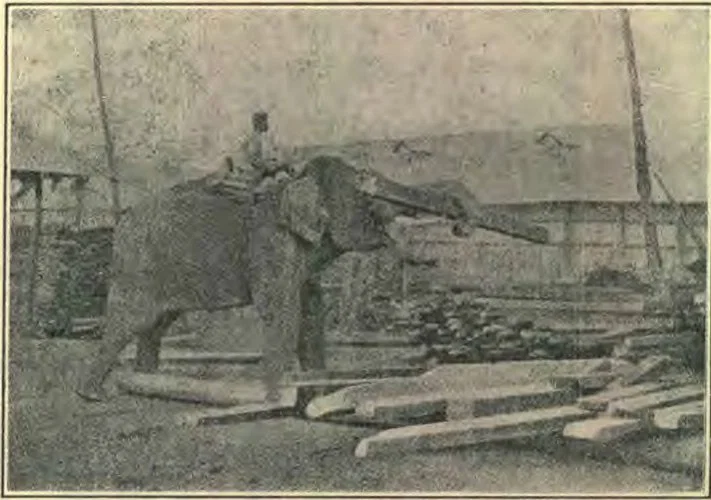
ELEPHANT STACKING TIMBER
“From Rangoon are shipped the huge teak logs that are floated down from the interior. They are so heavy that they can be handled only by elephants trained for the purpose. One of these will pick up a great log, and, balancing it delicately on his tusks, will carry it to the proper pile, and push it carefully and neatly into place.
“Most of the elephants are owned by native Burmese, who hire them out to lumber merchants. Several years ago, an English firm, finding the native, whose elephants they hired, careless about keeping his contracts, bought a herd of young elephants and trained them in the work of log piling.
“Now the native Burmese has no special day of rest, as does the Jew, the Christian, and the Turk, but rests whenever he feels like it—which is much more frequently than once in seven days. His elephants, therefore, are accustomed to work whenever they are called on. At the yard of the English firm, however, Sunday was strictly observed as a day of rest by men and elephants.
“Now it happened that one Saturday afternoon the river began to rise rapidly, and early Sunday morning the news from the interior told of still greater floods above. The firm had thousands of dollars’ worth of logs piled on the river bank, and it became necessary to move them early Sunday morning, if they were not to be swept out to sea.
“At daybreak the manager ordered out his own herd, and told his men to hire every available elephant from native owners. As the Burmese drivers came hurrying up with their animals, word was given to the beasts in the firm’s corrals, to fall into line.
“But not an elephant moved. It was Sunday, and they didn’t work on Sunday. The drivers coaxed and cajoled; the herd stood blinking their little eyes in scorn at the hurrying native beasts. Then the drivers borrowed an old tusker from the Burmese and tried to lead them with him. Still not an elephant moved.
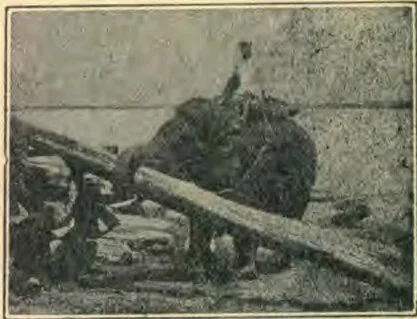
HAULING LOGS, BURMA
“The frantic drivers dug their goads into the necks of their charges, whereupon, as if by preconcerted signal, each elephant swung his trunk, seized his driver about the waist, and put him gently but firmly on the ground, as much as to say, ‘You mustn’t do that, you know! We’ll work faithfully on week days, but we don’t work on Sunday.’
“At length the head driver, in desperation, seized the ear of his elephant with the ankus, or hook, used to subdue fractious beasts. Conscious of the indignity, the elephant picked him up in his trunk and flung him against the side of the corral, twenty feet away, then resumed that clumsy swaying that marks the elephant well satisfied with himself. The injured driver was in the hospital for six weeks.
The firm had to relinquish their efforts, and the elephants had their Sunday rest. Several months afterwards Mr. LeFevre, on returning to Rangoon, asked about the Sunday-keeping elephants.
“It was no mere whim,” replied the manager. Twice since that time we have tested them to see if they actually kept an accurate account of work days, and once again I got the Burmese to trot their beasts by. But in spite of all I can do, my animals will not work on Sunday.
“There does not seem to be any conspiracy; each brute has figured out the situation for himself. They have arrived at a rudimentary conception of individual rights to their services on week days, and they do not intend that we shall dispute their right to a day of rest.”