Winter is the best time in the world to learn interesting stories at first hand. Now that there is snow in most parts of the United States, the children will find it both invigorating and instructive to wrap up warm, put on leggings, and overshoes, and go outdoors, and use their eyes. We will take a little tramp to-day. First we will go into the fields, and see where the mice have been printing their dainty lacework on the snow. If we look sharp, we may be rewarded with a real story. We shall find where there are families of little folk living out in the snow, and learn where they go to get the greens and other relishes that they like to add to their winter fare.
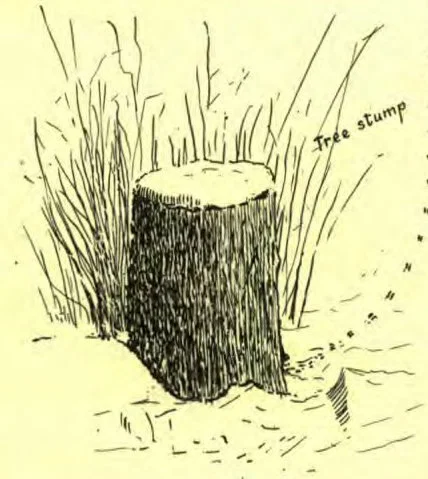
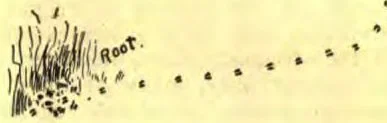
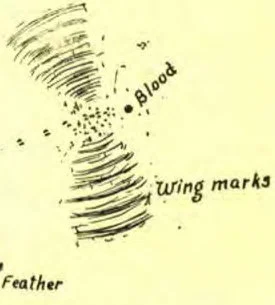
About a shock of corn is one good place to look. And if there is an owl in the neighborhood, or a mink, we shall very likely see some of his work, too. The other day I saw the story that is illustrated on this page. A mouse had come out of the hole in the base of a stump, and had run along on the snow for twenty feet, and stopped to eat an acorn. Then he went a little farther, and found another rare bit, which he devoured. Growing bold with success, he had ventured twenty yards from any shelter, broad daylight though it was. A crow had been coming that way; and now the wing-marks in the snow, and a drop of blood, were all that was left to tell the story. If an owl had carried him away in his talons, that drop of blood would not have been there. A crow would have pecked the mouse with his bill.
Now we will go into the woods. Do you see where a squirrel has come down from a tree, hopped out a few jumps, and, guided either by a wonderful scent or a no less remarkable memory, has digged up a nut? He did not dig here and there till he found one, as you and I would have to do, but went straight down to it the first time. Perhaps if you look sharp, you will see where he has hidden a nut in the lichens that grow on a stump.
Soon we shall see where there were some berries, or perhaps some edible roots, that a blue jay has scratched away the snow to eat. If you have learned the art of going softly and not treading on sticks or leaves, you may be so fortunate as to see him digging. I am sure you will like him better when you see how he can make the snow fly.
Go about some old bridge, and you will see the double row of tracks made by a skunk as he waddled about hunting for mice or other prey. He is an enterprising fellow, as you will learn if you go out on a day following a snow, and follow his tracks made in a single night. You will also be surprised to see how readily he has detected every worm that lay dormant in a stump within reach of his sharp claws, and to notice how he has tracked the birds to their sleeping places in the snow, and perhaps caught one that was sleeping too soundly.
If you can find a place where there are a few bunches of buck brush, you will not have to watch long before you will see the brilliant little cardinal grosbeaks flitting about and eating the berries. No matter how cold it is, they will be chirping as happily as can be, and their merry little song is wonderfully cheering on a cold winter day. As you watch them crack the shells of the seed in the berry, and eat the kernel, and then eat one yourself, you will wonder why they are so happy over their meager fare.
Perhaps you will see a titmouse creeping over the limbs of the tree hunting for worms, or hear the jolly sapsucker as he goes about in the woods, trying to make his living, and dolefully squeaking out, C-a-n-'t! c-a-n-'t! c-a-n-'t! and yet proving by every action that he “can.”
Take a note-book along, and make notes of what you learn. Make sketches of the most interesting things. You may not be able to draw well, but the sketch will help you remember better. If you take a long tramp on a sharp, crisp day, and do not come home satisfied that you have learned more than you would have learned from reading a book on nature study, write me a letter, and tell me about it. Besides, you will find that you are feeling ever so much better than you do after a day in a close room.
As you pass an old hickory tree, pull off some of the loose, shaggy bark, and it will be a miracle if you do not find half a dozen kinds of insect eggs that have been snugly hidden away until the warm days of spring. If you don't find them under one piece, look under another; for they are surely there. If you can't find them, Mr. Titmouse or Mr. Sapsucker certainly will. Then, if you look sharp, you may see something very brilliant and beautiful shining in the snow; for this is the time of year for the beautiful crimson berries of the Jack-in-the-pulpit.
If you climb a few hollow trees, you will be rewarded by finding the screech owl, or perhaps even a barn owl. These birds go very softly these days, and are careful not to leave marks in the snow that would betray their hiding-place.