19. THIS is one of the largest and most important families of the vegetable kingdom. The scientific name, Ranunculaceae (ra-nun'ku-la'-se-e), is derived from the Latin word rana, meaning a “frog,” from the fact that many of these plants grow in the water. By most botanists the plants belonging to this family, or natural order, are regarded as the most highly developed of all plants.
20. There is no one characteristic by which it may be determined positively that certain plants belong to this group; but, as is usually the case with brothers and sisters, or others who are nearly related, there is a general family likeness by which they may, in most cases, be easily recognized.
21. They all agree in having colorless, acrid juice; but this of itself is no certain evidence that they belong to this family, for there are other plants that have juice of the same kind. If you break the stem of any one of these plants and taste its juice, you will find that it has a sharp, hot, or biting, taste. In some species the juice is so strong that it will cause blisters if applied to the skin. This acridity is the prevailing characteristic of the family.
22. Doubtless you will say that it is a very unpleasant characteristic to possess, but let us learn a lesson from it. Often boys and girls, and men and women, manifest this same bitter, stinging property, by speaking unkind, and even cruel, words of others.
23. These plants do not show their disagreeable nature until they are broken or crushed. It is much the same with us. So long as no one crosses our path, or does anything to displease us, we can keep good-natured; but if something is done to irritate us, we very soon show our unpleasant dispositions. Would it not be much better, and make life sweeter and happier, if we should meet the trials of life in the long-suffering spirit of the meek and lowly Jesus, and, like the rose when bruised and crushed, only shed forth the more fragrance?
24. If the plants of the Crowfoot family are dried, or subjected to a high temperature, this property disappears. We sometimes find those among the human family who are ever discontented and complaining about one thing or another, until the fires of affliction drive off their unpleasant qualities. When the blessings of life cease to fall as freely as before, and they are hard pressed by care, grief, and perplexity, or sickness lays them low upon beds of pain, then they learn patience and charity for others, and are divested of that irritating, stinging property which they previously carried about with them.
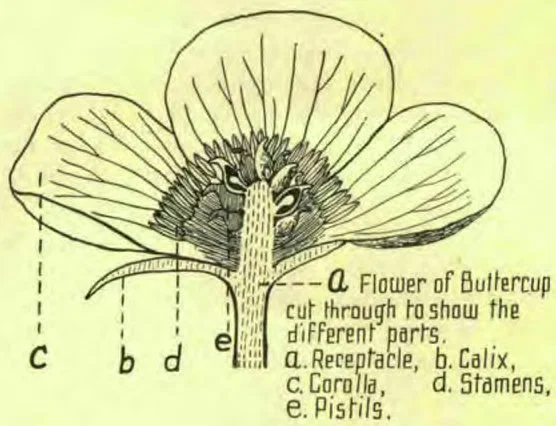
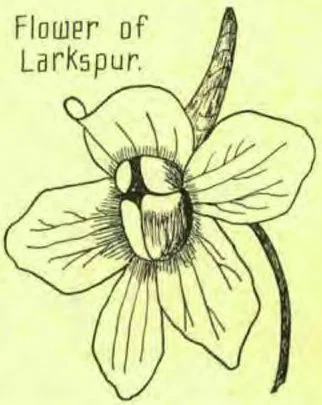
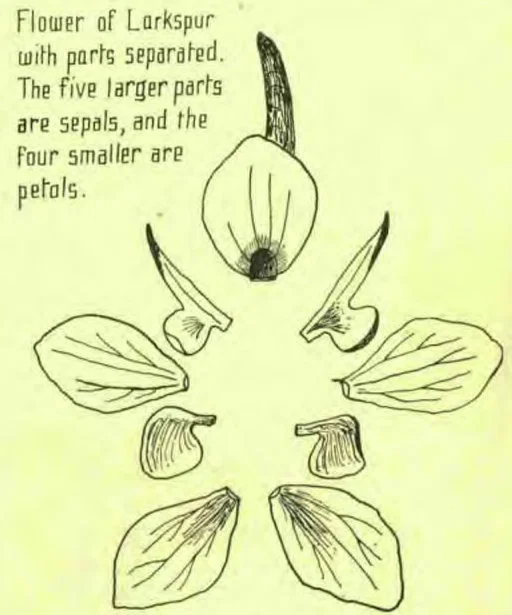
25. All the plants of this family have the parts of the flower separate, and inserted on the receptacle. The calyx is formed of from three to fifteen sepals, and the corolla is formed of from three to fifteen petals, varying in the different species. The corolla is sometimes absent, in which case the calyx is colored like a corolla. The numerous stamens are also a help in recognizing this group.
26. Among these plants are some that are narcotic and poisonous; and some are used in medicine, such as aconite and hellebore.
27. Most of the species are herbs, but a few are shrubs. In general they are natives of cold, damp climates. Some grow in the tropics, but almost exclusively upon the mountains. While the different members of the family are most abundant in Europe, one or more representatives occur in nearly all parts of the world.
28. To this group belong the clematis, or virgin’s bower, the anemones, hepaticas, marsh-marigolds, columbines, larkspurs, and peonies. Among these are many of our cultivated ornamental plants. The different varieties of clematis, with their profusion of snowy flowers of various sizes and colors, are becoming the favorites of all climbing plants. The anemone, with its red, white, blue, or variegated flowers, is another favorite. The peony has luxuriant foliage and magnificent double flowers of enormous size and rich colorings, which make it a favorite to-day, as it has been for many years.
29. While it is true that plants of the Crowfoot family have a disagreeable acrid juice, many of them produce large and showy flowers of great beauty, which we delight to gather from the woods and fields, or to cultivate in our gardens.
B. E. CRAWFORD.