Birds of Early Spring

11%

Review and Herald Publishing Company · Battle Creek, Mich. · April 3, 1902

FromThe Youth’s Instructor, Vol. I, No. 14

Read the full edition

Birds of Early Spring

THERE are a number of birds you will not be likely to see after March and April; therefore you should be on the lookout now, to see them before they are gone for another year. Last spring I told you about them; but perhaps you have forgotten; so I will call your attention to them again.
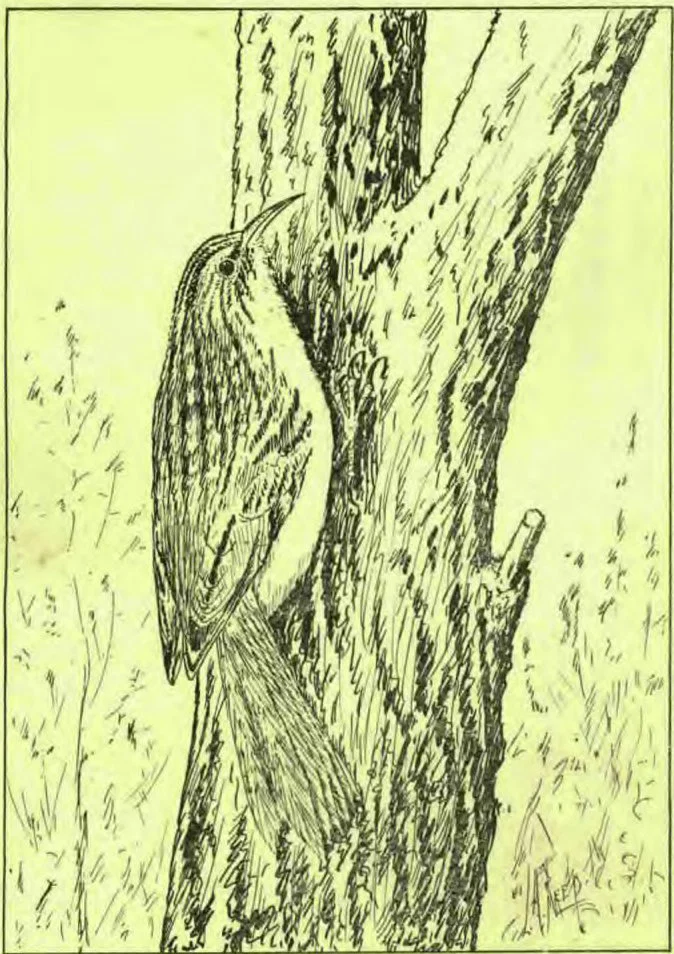
THE BROWN CREEPER
THE BROWN CREEPER
First, there is the white-breasted Nuthatch. This bird has a peculiar note; and if you fail to see him, you ought surely to hear him. Only a few days ago I passed a tree where there were two Nuthatches, seeing neither of them. But just as I had passed, I heard them call to each other, Yank, yank, yank! and looking about, discovered them on the trunk of a maple, walking, head downward, like flies on a wall.
The Red-breasted Nuthatch is a more northern bird than his white-breasted cousin. He is also smaller, and may be easily distinguished by the stripes on his head and the red on his breast. This bird is said to be quite common in the Adirondacks.
At the same time that I saw the two White-breasted Nuthatches of which I have just spoken, I saw on another tree only a few feet away, that other interesting winter bird, the Brown Creeper. It also walks on the side of tree trunks, in its search for insects and larvae, but I have never seen it walk downward on the trunk, as the Nuthatch frequently does. True, it will now and then turn with its head downward toward the foot of the tree; but it quickly turns back again, and moves upward in its peculiar jerking way. When it has gone high enough, it flies to the foot of another tree trunk, and works its way up that; and so on continually as long as you choose to watch it.
Then there are the Kinglets. You have only a little time left in which to become acquainted with these charming birds. The kinglets are olive-green above, whitish beneath, and about four inches long. The Ruby-crowned Kinglet has a scarlet patch on the top of the head, which can be seen only when the bird lifts its crest. The Orange-crowned Kinglet has a reddish-orange crown, bordered with black and yellow. In fall, winter, and spring these little birds travel in flocks.
Be on the lookout this month for the Kingfishers; they arrive the first week in April. And here is a list of other birds that will come North the latter part of March and in April. Surely you will be kept busy if you study them all. I name only a part of the host: Whippoorwills; Chimney-swifts; Humming-birds; Kingbirds; Least Flycatcher, or Chebec; Crows; Rusty Blackbirds; Purple Grackles; Vesper-sparrows; Grasshopper Sparrows; Tree-sparrows; Chipping Sparrows; Field-sparrows; Swamp- and Fox-sparrows; Chewinks, or Towhees; Martins and Swallows; many of the Vireos and Warblers; Catbirds; Brown Thrashers; House-wrens; Wood-thrushes; Veeries; Hermit-thrushes; Robins; Bluebirds. At this time, also, the Juncos, Northern Shrikes, and Winter Wrens leave us on their way North.
Of course a late, backward spring will keep the birds from arriving as early as when the season is more open. But during April the arrival of birds will be constant. L. A. REED.