The fig tree has a history, not only as a tree, but also as a representative of character. From the very beginning it has played so important a rôle that the development and degeneration of this tree are the development and degeneration of a nation. That nation was Israel. Let us follow the story through, as we find it written in the Bible.
In the garden of Eden we first find the fig tree, its leaves beautiful, and its fruit very sweet. God created it, and for a good purpose was it put in the garden; for the Lord God had made to grow every tree that was “pleasant to the sight, and good for food.” Adam and Eve also were beautiful to look upon; for they were clothed with light and glory.
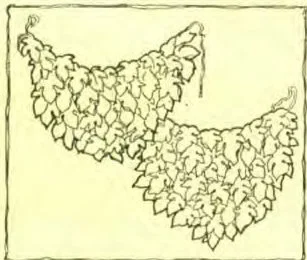
But sin made a change; our first parents lost their beautiful garments, and made themselves fig-leaf aprons to cover their nakedness. “This is the covering that the transgressors of the law of God have used since the days of Adam and Eve’s disobedience. They have sewed together fig-leaves to cover their nakedness, caused by transgression. The fig-leaves represent the arguments used to cover disobedience. When the Lord calls the attention of men and women to the truth, the making of fig-leaves into aprons will be begun to hide the nakedness of the soul. . . . A fig-leaf apron will never cover our nakedness. Sin must be taken away, the garment of Christ’s righteousness must cover the transgressor of God’s law.”—Mrs. E. G. White.
To Adam and Eve were given better garments than they themselves had chosen. God made coats of skins and clothed them, but the experience which they had begun, was so often repeated among God’s people that when Christ came, he found the whole nation naked and barren, covered with “nothing but leaves.” God never made fig-leaves to cover up a barren and naked tree; on the other hand, the fruit of this tree begins to develop before the leaves, and hence a tree in full leaf should have abundance of fruit.
The fig tree once took a very noble stand. When God brought his people out of Egypt, Israel was a clinging, dependent vine. The Heavenly Father planted it upon the hills of Palestine, where it took deep root, and filled the land. Finally “the hills were covered with the shadow of it, and the boughs thereof were like the goodly cedars.”
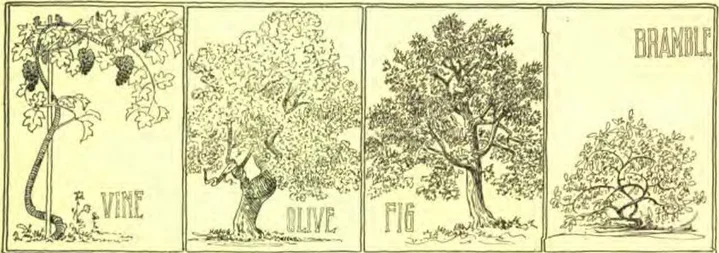
Then Israel became independent, and, wishing to be like the surrounding nations, the “trees went forth . . . to appoint a king over them; and they said unto the olive tree, Reign thou over us. But the olive tree said unto them, Should I leave my fatness, wherewith by me they honor God and man, and go to be promoted over the trees? And the trees said to the fig tree, Come thou, and reign over us. But the fig tree said unto them, Should I forsake my sweetness, and my good fruit, and go to be promoted over the trees? Then said the trees unto the vine, Come thou, and reign over us. And the vine said unto them, Should I leave my wine, which cheereth God and man, and go to be promoted over the trees?” (For illustration of the trees represented in this parable, see heading.)
This parable is found in Judges 9, and if you read the remaining verses of it, you will see that the trees finally got the bramble to be their king.
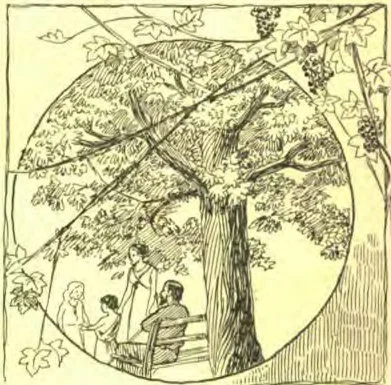
Alike the olive, the fig, and the vine refused. They each knew that God had given them a work to do, and they would not forsake it. The fig tree said, “Should I forsake my sweetness, and my good fruit, and go to be promoted over the trees?” No, indeed! And if God’s people had continued to think likewise, O Fig Tree! they would always have been a fruitful nation.
During the reign of David, and also of his son, Israel grew to be a very prosperous people. The land was well cultivated, and the fruit of the olive and fig was plentiful . The vine spread itself like a goodly cedar, yielding thousands of baths of wine. The cultivation of the land had the closest connection with the domestic life of the Israelites, their trade, and even their religious services; and all the days of Solomon, “Judah and Israel dwelt safely, every man under his vine and under his fig tree.”
Ever afterward among the Jews, “to sit under one’s own vine and fig tree” was a proverbial expression of peace and prosperity; even among the heathen was this proverb spoken and understood.
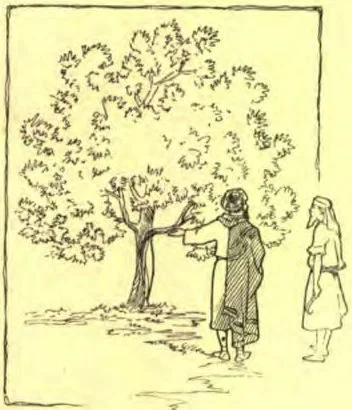
When the time of the captivity came, the Jews were described by the prophet as both good and evil figs. The good figs were those who obeyed the Lord, and went to Babylon as he had commanded; the evil, Zedekiah, his princes, and all the residue of Jerusalem that remained in the land, and would not go until finally the Lord sent a sword and drove them away. “Like these good figs,” saith the Lord, “so will I acknowledge them that are carried away captive of Judah, whom I have sent out of this place into the land of the Chaldeans for their good.”
Before this vision was given to Jeremiah, he had prophesied of a time when there should be no grapes on the vine, nor figs on the fig tree, and that even the leaf should fade. The prophet Joel also, two hundred years before Jeremiah’s day, looked into the future, and saw the vine dried up, and the fig tree languishing. “Even all the trees of the field are withered,” said the prophet, “because joy is withered away from the sons of men.” But there were a few good figs left in Israel, and although they saw the time coming when “the fig tree shall not blossom, neither shall fruit be in the vines,” yet they determined to “rejoice in the Lord, and joy in the God of their salvation.”
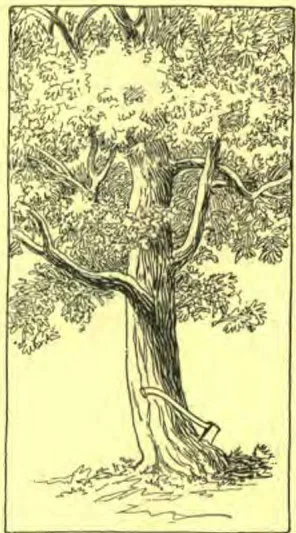
This was the experience of Nathanael when praying under the fig tree near his home in Cana of Galilee. He had received the baptism of repentance; and John’s message, “Behold the Lamb of God,” was now the subject of his prayer. “Is this Jesus the Messiah?” thought Nathanael. The answer came, “Come and see;” and as he came, he heard the blessed words of the Lord, “Behold an Israelite indeed, in whom is no guile.” “Whence knowest thou me?” said Nathanael. Jesus answered, “Before that Philip called thee, when thou wast under the fig tree, I saw thee.”p. 402 This was enough: Nathanael believed; and although, as John the Baptist had said, the ax lay at the root of the tree to cut it down, because the nation brought forth no fruit meet for repentance, yet Nathanael did “joy in the God of his salvation.”
For three years the Lord sought fruit from his fig tree. It had been planted in his vineyard; but “he found no fruit thereon.” “Cut it down; why cumbereth it the ground?” he said to the dresser of his vineyard. “And he answering said unto him, Lord, let it alone this year also, till I shall dig about it and dung it: and if it bear fruit, well: and if not, then after that thou shalt cut it down.”
The rest of the story is beautifully and impressively told by Mrs. E. G. White:—
“The entire night Jesus spent in prayer, and in the morning he came again to the temple. On the way he passed a fig orchard. He was hungry, ‘and seeing a fig tree afar off having leaves, he came, if haply he might find anything thereon: and when he came to it, he found nothing but leaves; for the time of figs was not yet.’”
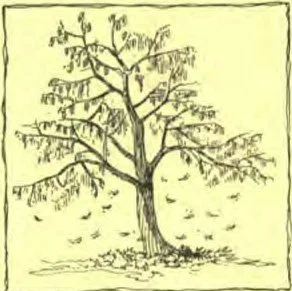
“It was not the season for ripe figs, except in certain localities, and on the highlands about Jerusalem it might truly be said, ‘The time of figs was not yet.’ But in the orchard to which Jesus came, one tree appeared to be in advance of all the others. It was already covered with leaves. It is the nature of the fig tree that before the leaves open, the growing fruit appears. Therefore this tree in full leaf gave promise of well-developed fruit. But its appearance was deceptive. Upon searching its branches, from the lowest bough to the topmost twig, Jesus found ‘nothing but leaves.’ It was a mass of pretentious foliage, nothing more.”
“Christ uttered against it a withering curse. ‘No man eat fruit of thee hereafter forever,’ he said. . . . The cursing of the fig tree was an acted parable. That barren tree, flaunting its pretentious foliage in the very face of Christ, was a symbol of the Jewish nation. The Saviour desired to make plain to his disciples the cause and the certainty of Israel’s doom. For this purpose he invested the tree with moral qualities, and made it stand the expositor of divine truth. The Jews stood forth distinct from all other nations, professing allegiance to God. They had been especially favored by him, and they laid claim to righteousness above every other people. . . . But like the barren tree, they spread their pretentious branches aloft, luxuriant in appearance, and beautiful to the eye, but they yielded ‘nothing but leaves.’ The Jewish religion, with its magnificent temple, its sacred altars, its mitred priests, and impressive ceremonies, was indeed fair in outward appearance, but humility, love, and benevolence were lacking.”
“All the trees of the fig orchard were destitute of fruit; but the leafless trees raised no expectation, and caused no disappointment. By these trees the Gentiles were represented. They were as destitute as were the Jews of godliness; but they had not professed to serve God. They made no boastful pretensions to goodness. They were blind to the works and ways of God. With them the time of figs was not yet. They were still waiting for a day which would bring them light and hope.”
That day has come. One fig tree only was cursed by the Saviour; but the others, whose time of figs was not yet, are now in leaf, and the fruit is ready to be gathered. Shall we not “call every man our neighbor under his vine and under his fig tree,” and help gather the fruit of the earth? GRACE E. AMADON.