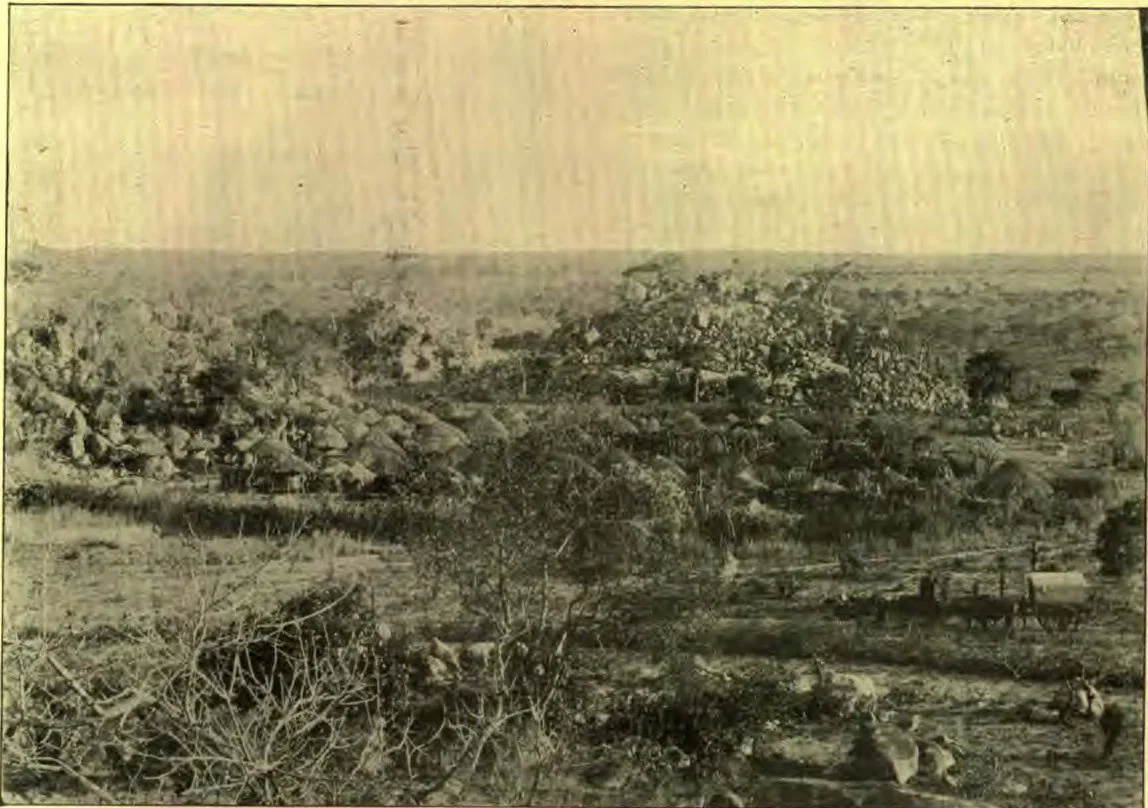
In less than an hour and a half after the oxen had reached camp, the journey was again begun. But at nine o’clock the party outspanned, went to bed, and slept soundly until one in the morning, when they again started. During this day they passed through some beautiful country, with splendid roads, fine grass, and plenty of good, cold water. They crossed two streams—the Reedfountain and the Malapo. The former is a lovely stream, clear and swift, like the mountain streams of the West; but the Malapo was muddy, yet it was good compared with some water they had been compelled to use on the trip.
Here they came in contact with plenty of natives who needed help—apparently lazy and shiftless, yet susceptible to good if kindly taught. This seemed a good opening for the missionary farmer who would come and live among these people, teaching them how to till the soil and provide for themselves, and at the same time pointing them to the way to heaven.
At five o’clock Wednesday morning, on the bank of the Mafeking River, one mile from the city, the company outspanned for breakfast. What did they eat?—Usually porridge and bread for breakfast. If they were in camp long enough, they might have beans, or some fowl or partridge or other game, if they were fortunate enough to find any. Often the food was smoked and burned, and almost invariably seasoned with plenty of ashes and dust. But vigorous exercise sharpened the appetite, and the food was usually taken with a relish.
But little time was devoted to breakfast this morning. Only one mile lay between them and letters from loved ones left behind, whose prayers, of which they had many evidences, were following them daily. Indeed, in every Seventh-day Adventist home throughout the colony, morning and night at worship, this company was remembered in prayer; and whenever the people met in their Sabbath worship, their prayers were united in seeking God’s blessing upon the little band now in the wilderness, that he would lead them and open the way for them to establish a mission among those who knew not God.
ON THE WAY TO MATABELELAND
Mafeking was at that time a clean, neat little Kafir city of about four thousand inhabitants. The houses were all built in circular form, and each had a veranda around it. There were both churches and schools. The Church of England was the most prominent denomination engaged in missionary work. The chief residing here, whose name was Kgamane, was more than ninety-three years of age.
Here the members of the mission company received the first word from home since leaving the railroad at Vryburg. Letters from friends, and a number of papers for each one, were highly prized. They made a number of purchases, and were surprised to find in this Kafir city many things just as reasonable as they purchased at Kimberly. In returning to the wagons, instead of going by the bridge as they had come over, they went by the ford, where they could wade across; and one of the brethren was left to care for the purchases until they should come back with the wagon. He was soon surrounded with scores of natives; but as only one of them understood English, and as he did not understand their language, he could talk but little with them.
While he waited, he witnessed an amusing scene. Two Kafirs came across the river riding on bullocks. Each had a bag, or bottle, of milk. The bottles were made from the skin of a goat. The skin had been taken off without cutting, only a hole being made where the head was cut off, so it retained the shape of the animal. One of the bullocks stopped to drink, and in an instant his boy rider had fallen off, bottle of milk and all, into the river. Quick as a flash he was out of the water, his bottle of milk fished up, and, mounted on the back of his ox, he was soon across, amid the shouts and cheers of the crowd.
Soon the wagons arrived, and the missionaries passed through the city on their journey. To their surprise, they had learned in the morning that since they had started from the Cape, the telegraph had been carried to this point, and they could send a message to their friends, telling them where they were. A message of good cheer also awaited them, announcing all well at home, and that mail awaited them at certain points on ahead.
They had traveled scarcely twelve miles when it began to rain, and they were compelled to outspan. There was no water, except what244they caught by making a dam across the road. This added a new experience; for the drinking-water and that used for cooking must come from this pool.