THE GREAT SUPPER

3%

Review and Herald Publishing Company · Battle Creek, Mich. · January 2, 1902

FromThe Youth’s Instructor, Vol. L, No. 1

Read the full edition

THE GREAT SUPPER

(January 11)
(January 11)
16. Then said he unto him, A certain man made a great supper, and bade many:
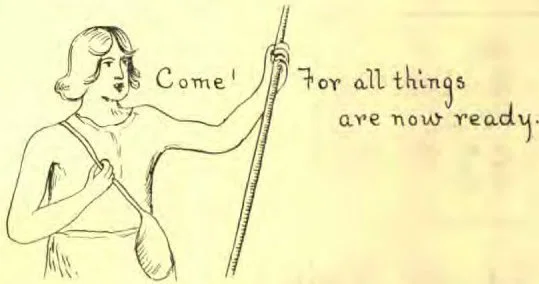
17. And sent his servant at supper time to say to them that were bidden, Come; for all things are now ready.
18. And they all with one consent began to make excuse. The first said unto him, I have bought a piece of ground, and I must needs go and see it: I pray thee have me excused.
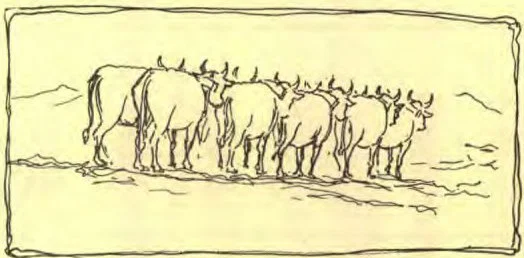
19. And another said, I have bought five yoke of oxen, and I go to prove them: I pray thee have me excused.
20. And another said, I have married a wife, and therefore I can not come. Mark 14.

Questions

1. To whom did Christ speak the parable of the Great Supper? What had this man just said?
2. Who made the supper?
3. What kind of supper was it?
4. How large a number were bidden?
5. At supper time to whom did he send his servants?
6. What were they to say to them who had been bidden?
7. How was the invitation received?
8. What excuse did the first offer?
9. Instead of coming to the supper then, what had this first man in mind to do?
10. What excuse did another man offer?
11. Although he had already bought the oxen, yet what did he plan to do?
12. What excuse was offered by a third man?
13. What, therefore, did he say that he could not do?
14. Could this man have come? What then did he mean by “I can not”? Please read the first quotation.
15. What is represented by the “Great Supper”? Rev. 19:9. Please read the second quotation.
16. In the parable what things absorbed the attention of the invited guests so that they would not come?
17. How is it in the days of the coming of the Son of man? Luke 17:26–28.

Quotations on the Lesson

1. “None of the excuses were founded on a real necessity. The man who ‘must needs go and see’ his piece of ground, had already purchased it. His haste to go and see it was due to the fact that his interest was absorbed in his purchase. The oxen, too, had been bought. The proving of them was only to satisfy the interest of the buyer. The third excuse had no more semblance of reason. The fact that the intended guest had married a wife need not have prevented his presence at the feast. His wife also would have been made welcome. But he had his own plans for enjoyment, and these seemed to him more desirable than the feast he had promised to attend. He had learned to find pleasure in other society than that of the host. He did not ask to be excused, made not even a pretense of courtesy in his refusal. The ‘I can not’ was only a veil for the truth,—‘I do not care to come.’” —“Christ’s Object Lessons,” page 222.
2. “By the great supper, Christ represents the blessings offered through the gospel. The provision is nothing less than Christ himself. He is the bread that comes down from heaven; and from him the streams of salvation flow. The Lord’s messengers had proclaimed to the Jews the advent of the Saviour; they had pointed to Christ as ‘the Lamb of God, which taketh away the sin of the world.’ In the feast he had provided, God offered to them the greatest gift that Heaven can bestow,—a gift that is beyond computation.” —Id., pages 222, 223.
In “Early Writings,” page 15, is given a description of the Lord’s supper table spread for his people.