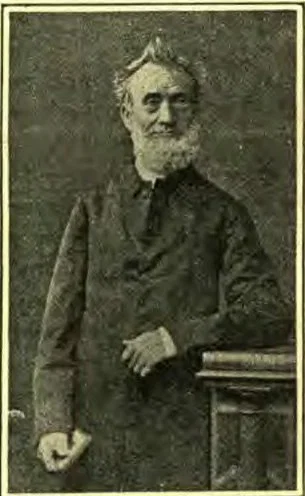
THE Bible emphasizes the value of a study of the experiences of men of God. Since the Lord still lives, and works through man as of old, it is quite possible for the Christian to receive help and encouragement from the study of the lives of men in this generation who have devoted their strength to the service of God.
George Muller, of Bristol, England, was a man called of God for a definite work, and signally directed by him in it. His biographer divides his life into five periods, or epochs. The first is the lost days of sin, in which he learns the bitterness and worthlessness of a disobedient life. It covers a period of twenty years. The second reveals the steps by which God prepared him for the work of his life. This covers the next ten years. The third period embraces the working out, during forty years, of his great mission. The fourth compasses the seventeen years devoted to missionary journeys in various countries. The fifth period covered the six years of well-earned quiet at the sundown of life.
His Early Life
George Muller was born in Prussia in 1805. He had no proper parental training. His father's favoritism and indulgence were a decided injury to him. Before he was ten years old, he was an expert at cheating and lying. When eleven, he went to Halberstadt to be fitted for the university. His father wished to educate him for a clergyman, even though he knew the boy's evil habits and tendencies. Novel reading, card-playing, drinking and other vicious indulgencies were sadly mixed with his school studies. The night his mother lay dying, her boy of fourteen was reeling through the streets drunk. The loss of his mother caused no change in his downward course. He became so calloused that on the evening of his confirmation he indulged in vicious sins.
Later on when placed in a responsible position, he collected heavy dues from his father's debtors, spent the money, and concealed the fact that it had ever been paid. When away from home, he would stop at costly hotels, run up heavy bills, then go away without meeting them, or have his clothes kept as security. Once he was caught and imprisoned. His father, hearing of his disgrace, sent the money to pay the bills, and also for his return home. For a time he promised a reform.
Then he left home to attend school. He made his father think he was going to a certain school, but he chose another of less rigid discipline. During two and one-half years he was a hard student, and rose in favor with teachers and students.
When dissipation, as it often did, dragged him into debt, he would borrow until no one would lend. Once in his extremity he pretended that the money he had spent in riotous living had been stolen from him. Having forced the locks of his own trunk and guitar case, he ran into the directors' room half dressed, feigning fright, and declared that he was the victim of a robbery. He excited such pity that friends made up a purse for him; but his deception was later discovered, and he became conscious that it was not relished by his friends. On returning to his father during vacations, he resorted to a chain of falsehoods to account for his allowance. Thus nearly twenty years of his life was spent in absolute viciousness. His various attempts at reformation and his signal failures proved conclusively that there was no power within him to make even a respectable citizen. But the dawn of a better day came. George Muller was converted.
One afternoon as he and a friend were returning from a walk, the young man remarked that he was going to a meeting. George Muller at once felt a desire to go, though he could not have told why. He did go; but on arriving at the meeting place, he found himself in a strange company. He felt uncertain as to his welcome, so made an apology for being there. The good man in whose home the meeting was held, replied, “Come as often as you please! house and heart are open to you.” All present sat down and sang a hymn, then a brother fell upon his knees, and began to pray for God's blessing. The kneeling before the Lord in prayer made an impression upon Mr. Muller that was never lost. He had never before seen any one on his knees praying, the Prussian habit being to stand. A chapter was read from the Bible, and then a printed sermon.
Mr. Muller found a new joy was coming into his heart, and he remarked on his way home, “All I saw on my journey to Switzerland, and all my former pleasures, are as nothing compared to this evening.” A strange peace and rest somehow found him that night as he lay in bed. The change was wrought quietly, but surely. A relish for divine things came to him, so that three times during that week he visited Mr. Wagner's home, where the meeting was held, and studied the Bible with him.
“There came also a distaste for wicked joys and former companions; the frequenting of taverns entirely ceased, and a lying tongue felt new and strange bands about it. A watch was set at the door of the lips, and every word that went forth was liable to a challenge. Though weak and often vanquished in his fight against sin, he did not habitually continue in sin, nor offend God without a godly sorrow.” He took his stand boldly for the Saviour, though he was ridiculed by his old associates. The Bible soon became to him a very precious book; because of the great love it revealed. During the last twenty years of his life, he read it through carefully four or five times each year. It early became to him the basis of all his actions; and his carefulness to follow strictly its teachings, whatever might be the teaching of the Christian world, made him the unique man he was.
Courageous, Conscientious Acts
His first act of marked self-denial in surrender to the voice of the Spirit was the burning of a French novel, in manuscript, that he had translated into the German language, with the hope of gaining means from its publication to visit Paris.
Another step in self-surrender was taken while still a university student. His father did not sympathize with him at all in his Christian work, but insisted on his son's following out the line of work that he had chosen for him—that of clergyman in the state church, a lucrative position. Mr. Muller decided that, by using his father's money, he was placing himself under obligation to do as the father desired. So in order to be wholly free to follow the leading of the Lord, he refused to take any further help from his father. He did not know how he would be able to finish his school work; but an opportunity of tutoring American students soon came to him, so that he easily paid his expenses. Another act that cost him a struggle was to give up an alliance with a young woman, which he had every reason to believe would not allow him to carry out successfully his desire to be a foreign missionary. Some years later he married a devoted Christian young woman, who was of very great help to him in his life-work. The union proved a happy one in every way.