5—Some Pioneers In the Modern Revival of the Sabbath Truth
ALL through the Dark Ages witnesses for God’s Sabbath were protesting against the lawless rule of the papacy. History gives us only a glimpse here and there of these early Protestants. We know that about the year 600, the pope was pronouncing curses upon Sabbath-keepers in Rome itself. While Queen Margaret in Scotland was pressing the Culdee churches to give up the Sabbath, the agents of Pope Gregory (about 1054) were fighting against the Sabbath in the regions about Constantinople.
All along the centuries the Waldenses had among their numbers those who went to the root of the matter and kept God’s Sabbath instead of the papal Sunday, amid their mountain retreats in the Alps. They were missionaries. Even the young people braved persecution and death in going forth as workmen, teachers, or peddlers to carry the light to other places. Like witnesses for the truth were found in those times in Bohemia and far Hungary. Not long after the Reformation had spread over the continent of Europe, there began in England the distinct Sabbath revival which has continued to our own day.
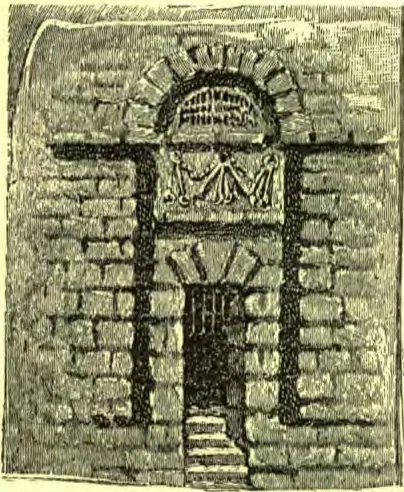
ONE ENTRANCE TO OLD NEWGATE
About the time the Pilgrim Fathers were landing in New England, to find religious freedom, John Trask was stirring up the church authorities by preaching the Sabbath in London. He was brought before the old star-chamber court, where the clergy of that time had it all their own way in trying men for heresy. For “scandalizing the king, the bishops, and the clergy,” by preaching that they ought to obey the fourth commandment he was put in the pillory at Westminster. Standing on a platform, with head and hands through holes in the boards of the pillory set upright before him, he was made a spectacle to the crowds. Afterward he was publicly whipped to Fleet prison, near the Ludgate Circus. The Memorial Hall, a headquarters for the dissenting churches in London, now stands on the site of the old Fleet prison, where so many dissenters suffered. The distance from Westminster is about a mile and a quarter, perhaps. It is only a short penny ride on a ’bus now, down through bustling Fleet Street and the Strand, by way of Charing Cross. But it was doubtless a long road to Trask that day, whipped at the tail of a cart, followed by the curious crowd, and cursed by the clergy. After keeping him imprisoned for one year, they broke him down, and he gave up the Bible Sabbath.
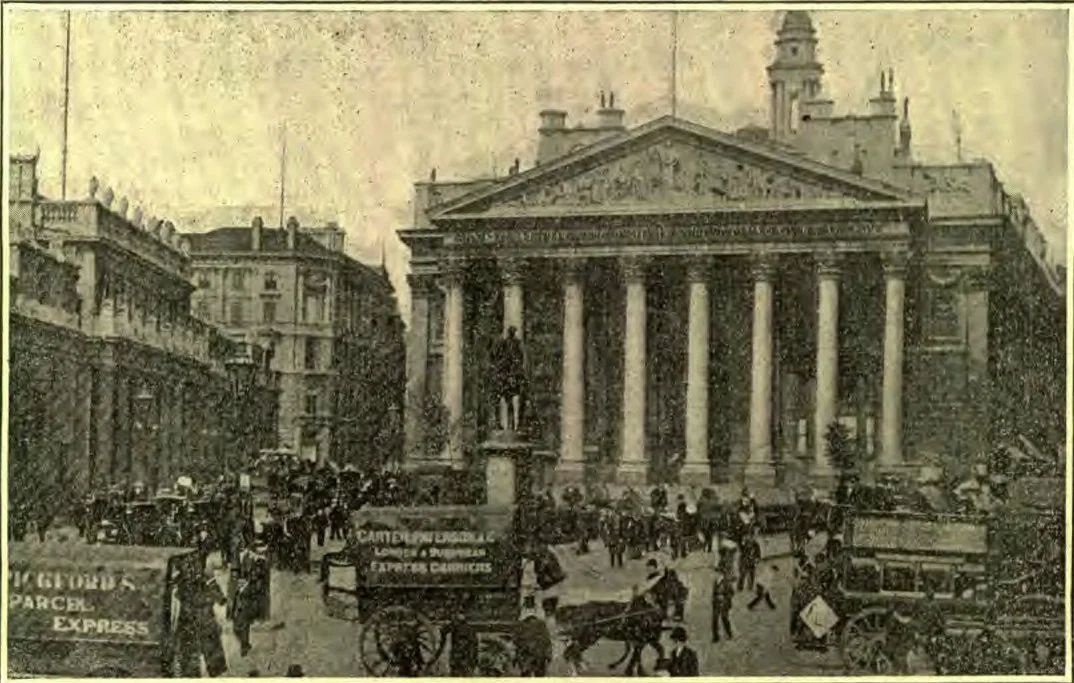
MANSION HOUSE PLACE, LONDON
His wife was made of sterner stuff. A mild little woman, the Lord showed in her case how, out of weakness, the child of faith is made strong.
Amid the struggles that her husband had as a preacher of the Sabbath, she helped to keep the home going by school-teaching. She had no school on Sabbath, of course, and none on Sunday. Any Sunday-keeper might have done the same thing without occasioning remark; but it was different with a Sabbath-keeper. An old writer, Pagitt, who lived at that time, says that, “for teaching only five days in the week, and resting upon Saturday, it being known upon what account she did it,” Mrs. Trask was sent to prison.
No doubt those who broke her husband down, thought soon to quench her little light. Old Pagitt writes that she was noted for her kindness to the poor, and “endued with many particular virtues, well worthy the imitation of all good Christians,” but he adds that a strange “obstinacy in her private conceits spoiled her.” She would be true to the Sabbath of the Lord her God, though all the world were against her. For nearly sixteen years she was kept a prisoner, loving not her life unto the death; for death only released her at last.
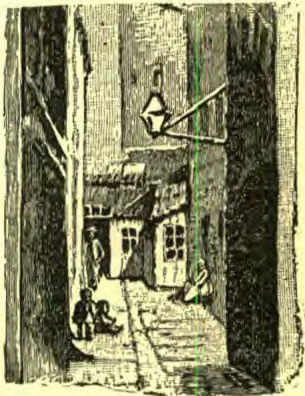
BULL-STAKE ALLEY
One October Sabbath, about the year 1661, a congregation of Sabbath-keeping Baptists were meeting in their house of worship in Bull-stake Alley, off the Whitechapel Road. This was doubtless well on the outskirts of London in those days. Now it is in the busy heart of the East End. John James was preaching that Sabbath afternoon, when officers and soldiers rushed in and dragged him to prison.
He was tried for treason. Some witnesses, who were shown to be false and unreliable men, testified that they had heard him utter words against the king and government. It is evident that the basis of their lying witness was the fact that John James preached the second coming of Christ as well as the Sabbath. He believed that Christ’s kingdom was near at hand, and that all the kingdoms of this world would give place to the everlasting kingdom of King Jesus. In the trial, the conduct and manner of James won general sympathy. But those were unsettled times politically, and the clergy were harshly dealing with all who had separated from the church.
James was sentenced to be hanged, and his body cut up and exposed on the city gates.
He was not at all dismayed. He met the judge’s sentence with the words: “Blessed be God; whom man condemneth, God justifieth.” While lying in prison, awaiting death, many tried to secure his pardon, having been won over to him by his Christlike bearing. But at last he went to Tyburn tree, the place of execution, now well within West London, near the Oxford Street corner of Hyde Park. On the scaffold he prayed for his people and country, for the false witnesses against him, for the executioner, and for the coming of Christ. Hearts were melted at the scene. The executioner begged his forgiveness for what he was about to do. A friend, observing his freedom in God, said to him, “This is a happy day.” James answered, “I bless God it is.” Then with the prayer, “Father, into thy hands I commit my spirit,” this Sabbath-keeping witness overcame the powers of darkness by the blood of the Lamb and the word of his testimony; for he, too, loved not his life unto the death. His head was set up on a pole in Whitechapel Road, in front of Bull-stake Alley.2
Mansion House Place, by the Bank of England and the Royal Exchange, is the heart of London. The main thoroughfares running out from it are like great swollen arteries, through which throbs the life of that vast city. Near this center, just off Broad Street, now all too narrow for the traffic rushing through it, there is a short alley leading to a low building which still bears the name “Pinner’s Hall.” In this hall Francis Bampfield ministered to a congregation of Sabbath-keeping Baptists. He had been a clergyman of the Church of England. One historian says he was “a celebrated preacher, and a man of serious piety.”
One Sabbath in February, 1682, the under sheriff and his officers came into the meeting hall and ordered him in the name of the king to cease preaching. He replied that he had orders from the Head of the church and the King of kings to preach the word. They arrested him and brought him to trial. He was sentenced to imprisonment for life in old Newgate prison. He died after about a year, being seventy years old, and unable to endure the hardships suffered. The old historian says he was followed to his grave by “a very great company of factious and schismatical people.”
We must close this story of men and women of olden time who kept God’s Sabbath when it meant persecution and suffering, and sometimes the sacrifice of life itself. But they counted God’s truth far more precious than life. Despised of the world, counted obstinate and factious, their names are nevertheless on God’s great honor roll of the heroes of faith in all ages—men and women of whom the world was not worthy, who suffered and bled and died for the truth as it is in Jesus. Now that the last days have come, and the closing conflict is on, may we also learn to value the truth of God above all else. We live in stirring times. Witnesses are needed still, in all the earth, who will do and dare for the word of God and the glory of his cause.