A Parable

11%

Review and Herald Publishing Assn. · Washington, D. C. · December 8, 1903

FromThe Youth's Instructor, Vol. LI, No. 49

Read the full edition

A Parable

EARLY one morning two men, walking along the dusty highway, chanced to spy a book lying by the roadside. The place was remote from any dwelling, and the way was unfrequented by many travelers. Both men stopped when they saw the book. The question arose in the mind of each, “Where did it come from?” After some thought, one of the men said, “See how beautiful and clean the binding is. No dust from the road has clung to it, nor are there any marks upon it of the heavy dew last night. The road has not been traveled by any one since yesterday. There can be but one explanation,—an angel from heaven brought the book, and placed it in the road that we might find it.”
“Not so,” returned the other. “That answer does not satisfy me; for while you were speaking, I have been examining the road more carefully, and I have discovered faint traces of steps. Clearly, some person has been here. It is a beautiful book, as you say, and we ought not to leave it in the dust.”
The first speaker was not pleased with the way his fellow-traveler had received his argument, and he replied somewhat shortly, ridiculing the thought of any one’s having been along the road before them that morning. One argument was answered by another in quick succession. Every moment the debate became more heated, and the two men were in danger of coming to blows.
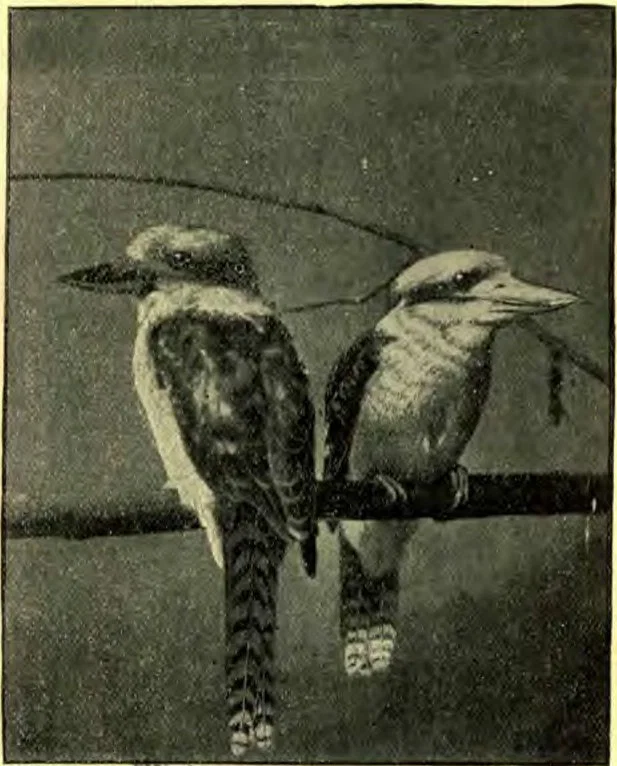
LAUGHING JACKASSES
LAUGHING JACKASSES
While each was speaking with excited gesture, in his endeavor to prove to the other that he was right, a third traveler approached them. He was carrying a heavy load, and had found the way hot and dusty. Coming up to the two men, he stopped to watch them. They had closed with each other now, and the struggle was one of physical force. The dust in the air was so thick that the stranger did not see the book lying where the others had found it. He called to the men, inquiring the cause of the trouble. They stopped their struggle long enough for each to explain his position. “The book,” said the stranger, “what book?” They pointed to where it lay, sadly soiled, and nearly covered with the dust they had raised. During this interruption they had stood glaring at each other, and now they rushed together again, each with the determination of proving himself right.
The stranger, seeing that interference was useless, turned to the book. He picked it up and examined it. The language was one he understood, and he fell to reading. The farther he read, the more interested he became. He seated himself upon a stone by the roadside, and was soon too deeply immersed in his reading to notice what was passing around him.
For an hour the man with the burden sat reading. Then he rose to go. Such a strange sense of rest had come to him that it seemed as if he must have lost his load. He had not been so refreshed since he had started on his journey. Looking around, he found that he was alone. The sounds of high words and sharp strife, borne faintly to his ears by the wind, told him that his two strange acquaintances had gone, leaving the book with him.
The man with the burden looked at the volume in his hand more carefully, but found no name in it,—nothing, in fact, that revealed the owner. Then he reasoned with himself: “Those men did not want the book. They were interested only in deciding the question where it came from. I want the book. Never in all my life have I had anything affect me as this has.” Forgetful of the burden he carried, eagerly scanning the open page, he continued his journey,—Sunday-School Times.