The Creation of Light

8%

Review and Herald Publishing Assn. · Washington, D. C. · December 8, 1903

FromThe Youth's Instructor, Vol. LI, No. 49

Read the full edition

The Creation of Light

Part I

IN the beginning the earth was without form and void, and darkness was upon the face of the deep. Then amid the darkness, God spoke. This was the entering of that word which gives light. Ps. 119: 105, 130.
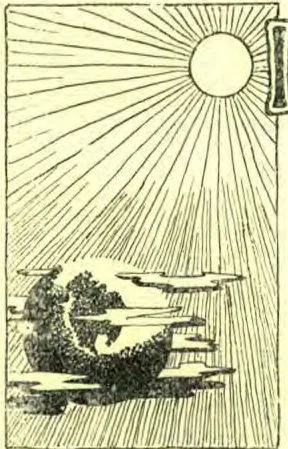
God said, “Let there be light: and there was light.” This was the dawn of earth’s first morning. And as the light sprang into existence, as it divided the light from the darkness and illumined the chaotic world, it was but light from the Word that spoke it into being. Its power is the power of the word. Its life is the life of the word. Its manifestation then, and through the ages since then, is the manifested energy of the word.
It is self-evident that like begets like. The universal testimony of all experience teaches us the great law of conformity to type. Something does not come from nothing. Only life begets life. Thorns and thistles do not produce grapes. The mortal begets only the things of mortality, and the Spirit begets ever the things of the Spirit.
Anything which does not possess a given quality can not impart that quality to something else. Like begets like. The gospel is built round this great truth. By the fall Adam lost his righteousness; therefore he could not impart righteousness to his children, but, instead, he imparts his own sinful flesh. “As is the earthy, such are they also that are earthy.”
But Christ has perfect righteousness, even the righteousness of God, and to his children he imparts this righteousness. Since he has no sin, it is evident that he can not impart sin to his children. “As is the heavenly, such are they also that are heavenly.”
Light came into being from the word of God; and since like begets like, this light which is begotten by the word must partake in all its qualities of the nature and character of the word from which it came. The word gives to light that which the word has to give. Hence light must be like the word, and, furthermore, light is a revelation, or manifestation, of the word: it is a portion of God’s word made visible!
It follows from this that a study of light in its full sense must be a study of the word of God. A study of the nature of light is a study of the nature of the word; a study of the character of light is a study of the character of the word.
Consequently, he who studies light only for light’s sake,—and this is the only way it is studied generally,—is not studying it for all that it is worth. He who has seen no farther than this has not seen, by any means, so far as he ought.
It is well to study light; it is well to study it carefully, scientifically, to learn all we possibly can about its many wonderful properties. But above all things, we should not stop in our study of light until we there have found a revelation of God. Sometimes we can with difficulty see wherein light reveals the character of God and of his word. But even then we should continue our study of light, knowing that in time we shall see farther; that sooner or later, behind every property of light, we shall be able to see the love and the goodness of God.
Many books are given to a study of light for light’s sake, but I know of none that are given to a study of light for the soul’s sake. But if you will follow patiently, I think we shall find in the sunbeam some marvelous revelations of God’s own wondrous character. L. A. REED.