Some Boys I Have Met

4%

Review and Herald Publishing Assn. · Washington, D. C. · February 14, 1905

FromThe Youth’s Instructor, Vol. LIII, No. 7

Read the full edition

Some Boys I Have Met

I saw a small boy stealing a ride on the back of a street-car, says a writer in an exchange.
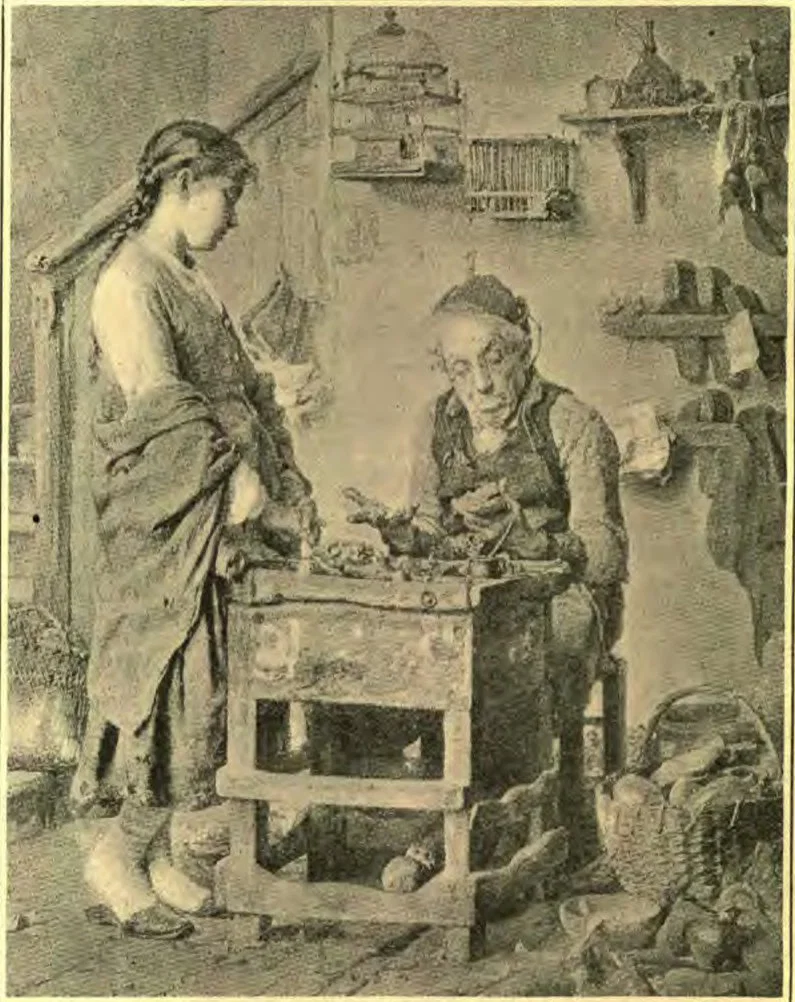
IT'S PAST MENDING
IT'S PAST MENDING
“Not much harm in that?” Well, it is cheating.
One boy I have seen I would not recommend for any position whatever. He is bright and energetic, he has winning manners, but he is dishonest.
What does he do? He cheats in little, mean ways — and thinks it’s smart. He writes a note on the corner of a newspaper, and mails it at newspaper rates; he holds his railway ticket in such a way that when the conductor punches it, the boy gets three rides where he should have but two, and then boasts of “getting the better” of the railway; he borrowed a pencil when he entered an office on trial, and the pencil went away in his pocket. He has no keen sense of honor; he has lost his self-respect, and, worse still, he does not know it.
“John,” said a lady in the office where John was employed, “don’t you live near the corner of Fifth Street and West Avenue?” “Yes,” he said. “Then will you take this parcel around there on your way home?”
John did not dare to say “No,” but he grumbled out after the lady had turned away: “There’s no money in working overtime.” He never knew that one listener might have recommended him for a better position, nor that his surly remarks lost him the chance.
“What he wants,” two men were saying of a third, “is a truck that will come right up to the job and load itself.” Tom was that kind of a boy. He would do his work—yes, but in a grudging sort of way, and never in the way he was told to do it if he could possibly devise another. Unless constantly called to order, he would tip back his chair in his leisure moments, put his feet on the top of the table, and drum with his fingers. Tom lost his place after a very short trial, and so will every boy who takes no pains to do as he is told or to be courteous.
“Across the lake? Take you over for one cent. Just as cheap as the bridge.”
“No, thank you. I want to go down to the pavilion.”
“Take you down there for five cents.”
“All right! That’s cheaper than walking,” and I stepped into the boat, leaned back at my ease on the cushioned seat, and watched the young oarsman. He couldn’t have been more than twelve years old. He had a frank, clear face, and he managed the oars as if used to them.
The camera in my hand gave the clue for opening conversation, and I soon learned that he owned one, and could use it, too. But he had discovered that “it costs a great deal to keep up a camera,” and, being fond of music, he had agreed to a proposal by his mother to change it for a mandolin.
“Can you swim?” I asked.
“Oh, yes! Mother wouldn’t let me out with the boat if I couldn’t.”
Our ride was all too short for the talk with the active young American who had an eye for business, who believed in his mother, and whose mother trusted him.
Coming from an office to which business occasionally calls me, I met a newsboy with the evening papers under his arm. Selecting one from the big bundle, and folding it with care as he spoke, he said, “Mail and Express?” in the confident tone of one who knew what the answer would be.
Smiling and taking out my purse, I asked, “How did you know I wanted a Mail and Express?”
“Oh, you’ve bought it from me two or three times,” he replied, quickly.
“Well, you remember me better than I do you,” I said.
“It’s worth while to remember your customers,” was his answer.
One of these days that boy will be a treasure to an employer, and his customers will come again and again, and buy of him something more valuable than the daily papers.—Selected.