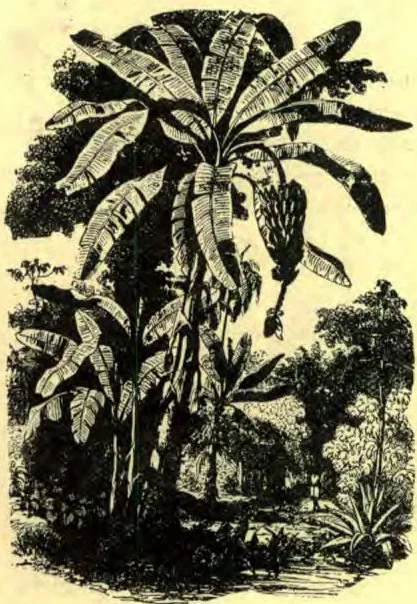
MUCH has been told about the versatility of the bamboo, that grass of the tropics which rivals the oak in height and surpasses the pine in utility. As much may be told in the future about the banana, that great tropical lily which circles the world in the torrid zone, and feeds lazy millions of mankind who have nothing to do but pluck and eat. The potato is not bad as a producer, but the banana outvies it in the ratio of forty-four to one, and wheat in that of one hundred thirty-three to one, one acre of ground yielding banana food enough for fifty men. A piece of land of one hundred twenty square yards will produce four thousand pounds of fruit, while the same area rarely produces more than thirty pounds of wheat or eighty of potatoes.
No books are written in the tropics on “Five Acres Enough,” for two acres there will feed a company of soldiers, and with only a fraction of the labor, and the value of the banana is not alone in bulk; for its nutritive value is very high, being twenty-five times greater than our ordinary white bread and forty-four times greater than the potato. There are various other uses to which the banana plant is put,—the invaluable Manila hemp comes from one species of it,—but we shall confine ourselves here to its food uses. From every part of the neighboring tropics the great green bundles, weighing at times more than a hundred pounds, pour into the United States, till we receive annually about ten million dollars’ worth. But these are eaten merely as dessert.
Only recently have steps been taken to adapt the banana to more varied uses. The dried banana is one of the latest innovations. By getting rid of its abundant water, a great saving in transportation is affected, and vast quantities of overripe fruit can be utilized, in addition to the small bunches not deemed worth shipping. Mr. A. F. Spawn, a distinguished adapter of vegetable food to human uses, tells us that fifteen different dishes can be made from the banana, first dried and ground into flour. These include breakfast food, crackers, biscuits, cup cake, fruit cake with banana raisins in it, etc. Indeed, a ten-course dinner, from soup to coffee, has been served, made wholly of variations of the banana.
Banana bread has been voted excellent. Then we have “banana figs” and “banana raisins,” not unlike the real article, and “banana coffee,” which tastes a great deal like real coffee, and has none of the nerve-wracking effects claimed for coffee by those who are opposed to it.
Banana coffee is one of the many discoveries of Mr. Spawn, who is an enthusiast on the utilization of the banana, and is turning out a ton a day of this product from his plant at Woodbury, N. J. He has evaporating machines in Mexico, in which the fruit is thoroughly dried and prepared for roasting into artificial coffee. These new uses of the banana point to a greatly widened employment of this prolific and nutritious fruit.—Search-Light.