A lad was making mud pies by the roadside, and a lady coming along said to him, “My little man, wouldn’t you like to be an angel in heaven?” “No,” he answered, “I want to be an angel here in the mud.” There is a great deal of philosophy in what the little fellow said as related to the great work of world evangelization. What the world, this great sinning, suffering world wants is not angels up in heaven, but men and women with the angelic spirit here upon earth. Your business and mine, then, is to bring the forces and power and influence of the divine life to bear upon the darkness and the ignorance, the squalor and the wretchedness, and the dirt and the sin of this earth. And God knows the mud is deep, and the darkness is dense, and the sin is appalling; but there is a fountain for the world’s foulness, there is light for the world’s darkness, there is a Saviour for the world’s sin. And it is for us, for you and me, to bring the divine provision to meet the human need; we must become the channels by which the divine provision meets the human need.
In these words of the apostle we have three facts brought before us very clearly; the fact of the great need, the fact of a divine provision ample to meet that need, and the fact of a great trust committed to those who recognize the need, and have themselves experienced the provision. No word of mine is needed to tell you that the world is desperately in need. We see it on every hand in life’s pathway, and I quite agree with the man who says there is plenty to do at home. There is plenty to do at home, ah, yes! Human need crowds us in the mart and in the social circle; everywhere it stares us in the face, and the question with us is simply, Are we the channels by which the divine provision can meet the need of this great sinning, suffering world?
This need is manifested in various ways. First, on the subjunctive side. We behold the strenuous efforts of men the world over to meet the need of their hearts; for go where you will, whether amid the palaces of splendor in our home land, or in the meanest jungle hut in Central Africa, you will find that men are conscious of God; they are conscious also that there is something wrong within themselves, and the inevitable sequence of it is that men strive in some way to find a meeting place with God. So we have the explanation of the myriad forms of religion in heathen lands; for every heathen religion, every superstitious rite and ceremony of heathendom, every idol before which millions are bowing down in abject slavery of spirit, every horrid orgy that racks the world with pain and deluges it with blood, is but a testimony to the universal God-consciousness, the universal need, the universal utterance of that great question, What must I do to be saved? I have seen the African women dance hour after hour, day after day, until one after another fell in convulsions at my feet. Why?—Simply the blind, deluded effort of these denizens of the Dark Continent to find an answer to that imperious question which will not down in spite of some men’s efforts in that direction.
I wish I could give you a glimpse of the real conditions that prevail in that land without the knowledge of Jesus Christ. Go with me into Central Africa. You find a people absolutely naked in body. Go with me into one of their huts, circular in form, in shape like a beehive, the only opening into which is a little hole two and one-half feet high by a foot and a half wide, into which you crawl on your hands and knees. When you have gotten in, and your eyes have become accustomed to the semi-darkness, and your nostrils to the almost overpowering stench, if they can become accustomed to it, a scene of filthiness indescribable greets you. You will understand when I say I have counted at night, upon being called to attend their sick, as many as eleven persons and seventeen goats in a hut fifteen feet in diameter. Is it any marvel to you that, living thus with their beasts, they become beastly,—beastly in thought,—beastly in conversation,—beastly in appearance? For the same law works in Africa as in America,—the man becomes what his associates are. Is it any wonder that amid the putrefying atmosphere of such moral conditions love is throttled to death? Is it any wonder that in some tribes when any one is sick, they take him to the bush, and build a fire beside him, and leave him? In others, where we are, they take the sick into the bush near the village, and fasten a rope about the neck of the man or the woman, as the case may be; the other end of the rope is fastened somewhere in the village enclosure. Each morning some one deputed for the purpose shakes that rope. If there is an answering shake from the poor fellow in the bush yonder, they conclude he is alive, and carry him a little food. Morning after morning this goes on until there is no answering shake. Then they go forth, tie a rope about his ankles, and drag him farther into the bush. At night there is a horrid carnival of wild beasts; in the morning a few scattered bones tell the tale of what has become of a human being. And, my friends, if that Book is true, Jesus Christ died for that soul as truly as he died for your soul and mine. Jesus Christ did not die for the African, he did not die for the Indian, nor for the Chinaman, nor for the American, as such; there are no national boundaries to the love of God. He did not die for the black man, nor for the white man, nor the yellow man, as such; there are no color lines in heaven. Jesus Christ died for men, and wherever there is a man, there is one for whom the Son of God gave his life.
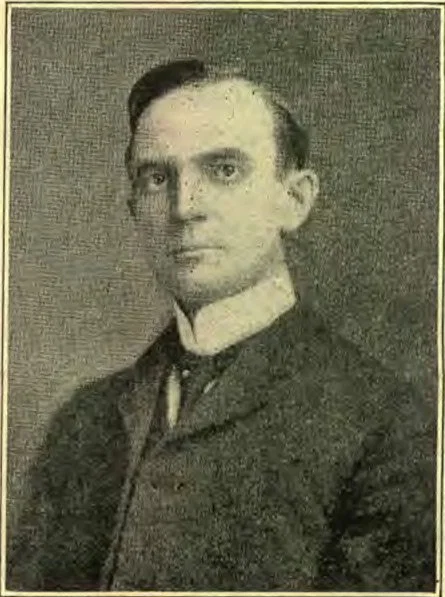
WILLIS R. HOTCHKISS
It was a wonderful thing when Abraham Lincoln signed his Emancipation Proclamation, and four million slaves in our country went free. But it was a vastly more wonderful thing when a greater Man than Abraham Lincoln signed the World’s Emancipation Proclamation with his own blood, and that proclamation he placed in your hands and mine with the injunction: “Go now, go and tell the world’s captives I have set them free; go and tell the world’s slaves I have stricken the shackles from them.” But, God pity us, nineteen centuries have passed, and if we laid our ears to the ground to-night, we could hear the clank of the chains and the crack of the whip that tells of the bondage of eight hundred millions of our fellows who have never heard that God signed their emancipation.
These people did not want me there any more than the world wanted its first great missionary, Christ. They tried their best to get rid of me, held councils of war to decide what to do with me. I might say that I was absolutely alone. I went out with five companions. Three of them I buried; the other had to return home, so I was left for the greater portion of four years absolutely alone. Finally several of the natives came to me with the information that they had decided to kill me if I remained more than three days among them. I felt that I was in the place God wanted me to be, and that is the safest place in all the world, as it is also the sweetest. I would to God we could get rid of the notion of saying, “Thy will be done,” with a groan, as though it was necessarily a hard thing God asks of us. God’s will is in the sunshine as well as in the2shadow. God’s will is in the laughter, and the joyousness, and the gladsomeness of life as much as in the sorrow and the afflictions of life. I sent word back to them, “I am here to tell you about God. I expect to stay.” They threatened all manner of things. But at the end of the time they came to the conclusion that it was of no use, so they issued an order that any one found bringing any food to the white man was to be killed, and for nearly two months that order was rigidly enforced. It would have fared very ill with me if it had not been for a divine provision. An old woman used to pass my hut to and fro from her work in the fields. Every time she passed, she managed secretly to drop a root of cassava, the root from which our tapioca comes, before my door. I roasted that root, and it enabled me to eke out my slender supply of provisions throughout those months. God’s ravens are not dead yet.
The people then came to me. If I was determined to stay, I might do so if I would remove across the river. I went across the river, and built my hut on the very spot where, two months before, they had sentenced me to death. I might say I had to make brick with my own hands, and I laid every brick myself. They still kept up a petty persecution. One day I was attending to some patients. My native servant came up, and standing beside me, said, “Master, I have hit a native.” I looked up, and a great ragged gash in his head was pouring a stream of blood over his face.
I said to him: “Boy, it looks very much as though you were the one that got hit. What is the matter?”
“I went to the river to get a bucket of water, and the river bed is full of natives. They are going to kill us all. A man sprang on me and tried to kill me. I hit him. He broke his club over my head and got away.”
I said, “Will you go with me?” “Yes,” he answered, “I will go anywhere you will go.”
I went into the house, got a sponge with which to bathe the wound, came out in my shirt sleeves and started off. He looked at me, hesitated a moment, and then said, “Master, you haven’t taken your rifle with you.”
I said, “No, we are here on God’s business, and we shall be safer without the rifle.”
We went to the river, and sure enough the river bed was full of natives, twenty-five or thirty of them. There was no running water in the river at that season of the year, and they were bound upon mischief. I saw at once that either they or I must be master of the situation very quickly, so I did the first thing that presented itself to my mind,—leaped from the bank into the midst of them, began pushing them apart and talking to them as well as I could, asking them why they wanted to kill me. I asked them if I had cheated them in any way, if I had not paid them well for everything I had gotten from them. I asked them if I had not treated their sick and healed many of them and asked nothing for it. Gradually one after another who had his spear raised lowered it, and planted it in the river bed; another who had his arrow in his bow would withdraw it, and place the arrow in his quiver, and one by one they were subdued. Meanwhile I made my way to a water hole dug in the sand of the river bed, bathed the boy’s wound, and sent him out of the way. Then I caught the ringleader of the band, whose head the boy had cut open in their struggle, pulled him over to the water, though he struggled and protested, thinking I was going to take my revenge upon him, but they were so awed and so held in check by their superstitious notion that I must be in league with the spirits, that they did not attempt to stop me. I pulled the man to the water hole, and then to their amazement I began to bathe his wound. In an instant I could see the effect it had upon them. It was a new principle to them. They could understand why I should do such an act to my own servant, but why I should do a like act to my bitterest enemy, the man who had raised the mob to kill me, they could not understand. After having finished bathing his wounds, I said to him, “If you will go to the house, I will bind up the wound.” They all followed me, thoroughly subdued. I sewed up the wound, and from that time on had little difficulty with them.
The greatest difficulty of all in connection with the work of Christ in Africa is that which comes from the multiplicity of languages there. I had no word of their language, and no means of getting it except through actual contact with the people, as it had never been written. The first word I got was the word “nachow,” which means, “What is it?” And I flung that word at them, pestered them with it on every possible occasion, as I pointed to tangible things about me, and, listening carefully for their reply, would jot it down phonetically. In that way in the course of the years, I obtained a vocabulary and grammar of the language. But there was one word that after two years and a half, two years and a half of persistent effort, I yet had not been able to get,—one little word,—but as the days passed, and the weeks and the months, and the months lengthened into years, that word grew and grew and grew into mountain-like proportions to me,—Saviour. I never knew its meaning until I saw it in the face of the great need that encompassed me,—a need which I was powerless to meet until I discovered that key. I shall never forget the thrill of joy that came to me when finally the long search was rewarded. Sitting with my men about the camp-fire night after night, I listened to their stories, hoping against hope the word would come. One evening my head man began telling a story from which I hoped much. It happened that another missionary, a friend of mine, had been attacked by a lion some time before this, and had been badly wounded. Kikuvi was with him at the time, and was the means of his rescue. As he began relating this story, I said to myself: “Certainly he must drop that word now; I don’t see how he can get through it without.” I listened with two years and a half of disappointment in the eager concentration of my attention. But he went through the whole story without dropping any word I could construe to be the one I had sought. Sick at heart and disappointed for the thousandth time, I was about to turn away when he remarked casually, “Bwana nukuth-aniwa na Kikuvi.” “The master was saved by Kikuvi.” I could have shouted for joy. But in order to prove the precious possession I had gained, I turned upon him and began questioning him, and finally assured, I said to him, “Kikuvi, this is the word I have been wanting you to give me all these many months, because I wanted to tell you that Jesus, the Son of God, died for you.” The black face lighted up as he interrupted me in the midst of my sentence, and I can see that face still as in the lurid light of the camp-fire he turned to me, exclaiming, “Master, I see it now. I understand. This is what you have been trying to tell us all these moons, that Jesus died to save us from the power of sin.” Never did sweeter word fall from the lips of that black savage in Central Africa. I spent four years alone, burying three of my companions; I had fever between thirty and forty times; have several times been ambushed by the natives; three times attacked by lions, several times by rhinoceroses; for fourteen months I never saw a piece of bread, for two months I had nothing to eat but native beans and some milk; I had to eat everything from ants to rhinoceroses. Do not misunderstand me, now; I am not posing as a martyr; I enjoyed it. But let me say this, my friends. I would gladly go through the whole thing again with my eyes wide open to it if I could have the joy I had that night of bringing that word “Saviour” out of the darkness of oblivion, and flashing it into another tribe of Central Africa. And do you know, there are two hundred, possibly, such tribes in the Dark Continent to-day without a written language, much less a messenger of the cross? During the past year it has been my privilege to reduce yet another one of these languages to written form. I have in my room a little roll which contains all there is in existence in a tangible form of the language of a million people.
Here is the need. How about the supply? I went to explore a mountain one time. Up on the top of the mountain it was delightful, exhilarating, bracing to us, but to our native men it was torture. One of the men became ill during the time that we spent there, and finally word reached me which necessitated my return to the station. It was a twenty-mile walk, and the man could not possibly make the journey without help; so I left three men with him, carefully instructing them how to help him along the way, gave them food sufficient to last until they could get into the station, and charged them under no circumstances to leave him, because the bush swarmed with wild beasts of every description. They assumed the trust. I went on my way. The next day at noon I was sitting in my house when the three men came in, but without the sick man. I said to them: “Where is the sick man? Is he dead?”
“No.”
“Why haven’t you brought him in?”
“Oh, we ate up the food and then got hungry. We didn’t want to stay there and run the risk of being eaten by lions.”
“But don’t you know the sick man will be devoured? He can not help himself.”
“Well, it doesn’t matter, he is going to die anyway.”
I said: “That isn’t the way of the white man. I am going back immediately to see if we can not find him.”
I started back. All the afternoon we marched. I did not expect to find the man; I knew the bush too well for that; nor did I. But what I did find was the outline of a human form in the soft earth beside a little stream whither he had pulled himself, and in horrid suggestiveness around that imprinted form numerous tracks of lions and hyenas. And as that night I lay in my little open tent, and heard the roaring of lions all night, and as the next morning, five minutes’ walk from the tent, I came upon the fresh remains of a zebra that had been pulled down in the night and devoured by the lions, it did not require any stretch of the imagination to tell what had been the fate of the poor sick man.
You shudder at such an exhibition of man’s inhumanity to man, but let me say this, dear friends: in the face of the world’s great need, and in the face of the divine provision to meet that need, in the face of the ever-multiplying facilities, in the face of your knowledge and mine, I bring home to you the charge, “Thou art the man, thou art the man;” for by so much as heaven is higher than the earth, by just so much is it worse to withhold from men the bread of life than it is to deny them bread for their starving physical bodies. What is wanted, then?—Simply that we catch the spirit of Jesus Christ and translate it into life. What we want is not a gilded, jeweled cross as an ornament about our necks, but the spirit of the cross in our hearts, manifesting itself in a life of self-abnegation for the sake of others. What is wanted is not the story of Calvary and of the crucifixion in a book, but that crucifixion made real in your life and mine.
I said that for fourteen months I had no bread. At the end of this time I raised a little crop of