1 Kings 13:19
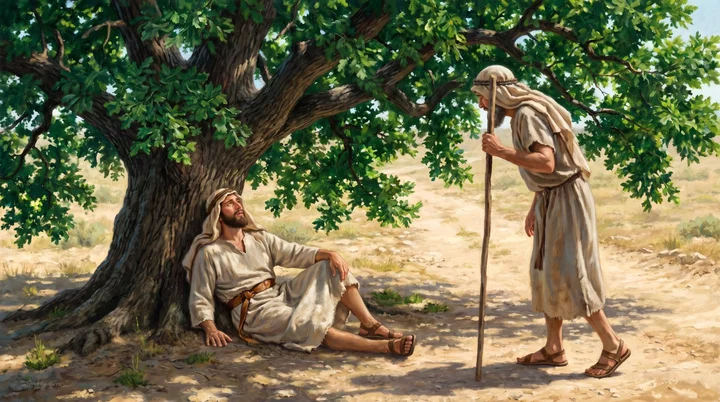
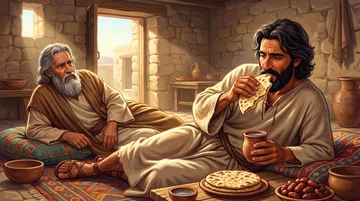
So he went back with him, and did eat bread in his house, and drank water.
Translations
American King James Version, King James Version, KJV Cambridge Paragraph Bible, Revised Version, American Standard Version, Rotherham's Emphasised Bible
So he went back with him, and did eat bread in his house, and drank water.
So he went back with him, and ate bread in his house, and drank water.
And he turneth back with him, and eateth bread in his house, and drinketh water.
Then he went back with him, and ate bread in his house, and drank water.
Berean Standard Bible, Majority Standard Bible
but the man of God went back with him, ate bread in his house, and drank water.
So he went back with him, ate bread in his house, and drank water.
So he went back with him, and had a meal in his house and a drink of water.
So he went againe with him, and did eate bread in his house, and dranke water.
Douay-Rheims (Challoner revision)
And brought him back with him: so he ate bread and drank water in his house.
Pictures
Cross-references
- 1 Kings 13:9
For so was it charged me by the word of the LORD, saying, Eat no bread, nor drink water, nor turn again by the same way that thou camest.
The Lord had forbidden the man of God to eat or drink there.
- 1 Kings 13:24
And when he was gone, a lion met him by the way, and slew him: and his carcase was cast in the way, and the ass stood by it, the lion also stood by the carcase.
A lion killed the man of God after he disobeyed God’s command.
- 2 Kings 23:16-18
And as Josiah turned himself, he spied the sepulchres that were there in the mount, and sent, and took the bones out of the sepulchres, and burned them upon the altar, and polluted it, according to the word of the LORD which the man of God proclaimed, who proclaimed these words.
Josiah’s actions fulfilled the man of God’s prophecy against Bethel’s altar.
- 1 Kings 13:26
And when the prophet that brought him back from the way heard thereof, he said, It is the man of God, who was disobedient unto the word of the LORD: therefore the LORD hath delivered him unto the lion, which hath torn him, and slain him, according to the word of the LORD, which he spake unto him.
The old prophet identifies the man’s death as the consequence of disobeying the Lord.
Commentary
Each commentary is drawn from primary sources: the writings of Ellen G. White and Adventist pioneers and periodicals. Each commentary is separate. Its own words are not a quotation; follow the references to read the source passages.
Ellen G. White
6 sources
The verse records the man of God turning back with the old prophet to his house at Bethel and eating bread and drinking water there.Ms 153, 1906, par. 3–6Ms 153, 1906PK 106.2RH Jul 24, 1913PK 106.1 In doing so he acted against the clear command he had already received from the Lord not to return there nor to eat or drink there.Ms 153, 1906, par. 3–6Ms 153, 1906RH Jul 24, 1913PK 106.1Ms 153, 1906, par. 14 He yielded because he trusted the old prophet's false and repeated claim that an angel had brought a contrary message from God directing him to return.Ms 153, 1906, par. 3–6RH Jul 24, 1913Ms 153, 1906, par. 14
While they sat together at the table, judgment was pronounced on him for disobeying that command.PK 106.2 That disobedience brought judgment upon him that cost him his life, namely that he would not be buried with his fathers.Ms 153, 1906, par. 3–6RH Jul 24, 1913
Sources
Pioneers and periodicals
22 sources
He turned back with the old prophet to his house in Bethel and there ate bread and drank water, in direct disobedience to God's clear command not to do so.ST Dec 2, 1880RH Mar 17, 1904ST Dec 24, 1885 He was persuaded to return by the old prophet's repeated false claim that an angel had spoken by the word of the Lord bidding him to bring him back, which he accepted as changing God's command.RH Mar 17, 1904ST Dec 24, 1885ST Dec 7, 1882 While they were eating judgment was announced against him, and he was slain by a lion on his way home and never reached the sepulcher of his fathers.ST Dec 2, 1880RH Mar 17, 1904RH May 13, 1875 Though deceived, he remained responsible to obey what God had plainly told him until God himself clearly revoked it, and no word from any man, not even a prophet, could justify turning from what he knew God had said.RH Mar 17, 1904ST Dec 24, 1885ST Dec 7, 1882ST Feb 7, 1911ST Dec 7, 1882 God means exactly what He says and requires unquestioning obedience, so His Word must be regarded above all others and personal responsibility cannot be shifted to another.RH Mar 17, 1904ST Feb 7, 1911ST Mar 31, 1898
Setting and Disobedient Return
The verse belongs to the history of the separate kingdoms of Judah and Israel, covering about eighty years from the revolt of the ten tribes to the death of Jehoshaphat.RH May 25, 1916 It stands in the graphic account in 1 Kings 12 and 13 of the separation of the ten tribes of Israel from Judah and Benjamin after their revolt against Rehoboam following his haughty answer that his little finger would be greater than his father's loins and that he would chastise with scorpions where his father had chastised with whips, with the election of Jeroboam as king of the ten tribes through prophecy, and with Jeroboam's defect of reverence in deliberately setting at naught the commands of the God who gave him the kingdom.ST Dec 7, 1882 The man of God had been sent from Judah to cry against and curse Jeroboam's altar and his worship of the two golden calves at Bethel and Dan.RH May 13, 1875 God had directly commanded him not to eat bread, not to drink water, not to stay with any man, and not to return by the same way, and at first he obeyed by speaking the curse and refusing to dine with the king.RH May 13, 1875ST Feb 7, 1911
The verse means that he consented to go back with the old prophet of Bethel to his house in Bethel and there did eat bread and drink water.ST Dec 2, 1880RH Mar 17, 1904ST Dec 24, 1885 That turning back with the old lying prophet to eat and drink on the way home violated God's positive, direct and clear command and instruction not to eat bread, drink water, or return by the same way.ST Dec 7, 1882RH May 13, 1875ST Feb 7, 1911 He took a step back without remission of the prohibition from the same authority that gave him the general message.ST Dec 7, 1882 He ate and drank in Bethel where the Lord had forbidden him.RH Mar 17, 1904ST Dec 24, 1885RH May 13, 1875
He was persuaded to return by the old prophet's repeated lie, a false, religious-sounding claim to inspiration that an angel had spoken by the word of the Lord telling him to bring him back.RH Jul 24, 1913ST Dec 24, 1885ST Dec 7, 1882 He believed that claim of a different message given by an angel and treated God's earlier command as changed.RH Mar 17, 1904ST Dec 3, 1894 He set aside that clear command which he knew and obeyed a human messenger instead, accepting from the mouth of a stranger who only professed to have it from an angel pretending to speak by the word of the Lord an apparent contradiction of what God had before delivered to him.ST Dec 24, 1885ST Dec 7, 1882 He was responsible for obeying the command God had given him unless God himself clearly revoked it, yet he accepted the stranger's claim to have received a contrary message even though deceived.RH Mar 17, 1904ST Dec 7, 1882 His hunger and thirst helped lead him to disobey.ST Mar 4, 1880 But hunger did not excuse obeying the old prophet's deceptive invitation, for he was to keep God's command.ST Dec 2, 1880ST Mar 4, 1880
Judgment and Doctrinal Lessons
The return to eat bread and drink water was followed at once by judgment, for while they were still eating the word of the Lord announced that his body would not come to the sepulchre of his fathers.RH Jul 24, 1913ST Dec 2, 1880RH Mar 17, 1904RH May 13, 1875ST Feb 7, 1911 He left the house and on his way home before he reached it he was slain by a lion, so that the next morning he was dead.ST Dec 2, 1880RH Mar 17, 1904RH May 13, 1875ST Feb 7, 1911RH Apr 6, 1905 His hunger did not excuse obeying the deceptive invitation, and the meal in Bethel contrary to God's direct command led to his destruction.RH Jul 24, 1913ST Dec 2, 1880RH Mar 17, 1904RH Apr 6, 1905
Though deceived by the false claim that an angel had given a different message, he remained responsible to keep and follow the command God himself had given him.RH Mar 17, 1904ST Dec 7, 1882ST Dec 7, 1882 He took a step back without remission of the prohibition from the same authority that gave the general message, when he should have had release from the word of the Lord himself.ST Dec 7, 1882ST Dec 7, 1882 As Abraham had release from the word of the Lord himself when commanded to offer Isaac, so this man should have waited for God himself clearly to revoke it and not accepted an apparent contradiction from the mouth of a stranger.ST Dec 7, 1882
The Lord would not give one person a command and then use another person to cancel it.ST Dec 7, 1882RH Mar 11, 1873 To treat God's earlier command as changed and to believe that God had changed his mind on the word of one who only professed to have it from an angel pretending to speak by the word of the Lord was sinful disobedience.ST Dec 7, 1882ST Dec 3, 1894RH Mar 11, 1873 His death was just punishment even though he had reason and precedent to believe it might be the will of God, and the chapter warns that a command given by God cannot be set aside on the claim of later divine direction.ST Dec 7, 1882ST Dec 3, 1894
No influence or word from anyone, not even a prophet, justifies turning from what a person knows God has said, and personal responsibility cannot be shifted to another.ST Dec 24, 1885ST Feb 7, 1911 A claim of later divine direction or divine authority, even with right motive and belief that he was obeying God, does not justify disobeying God's plain word.ST Dec 3, 1894ST Oct 23, 1884ST Dec 7, 1882 He knew God had forbidden him to eat or drink there, but he set aside that clear command and obeyed a human messenger instead, and the religious appearance of the deception did not make it trustworthy.ST Dec 24, 1885ST Oct 23, 1884ST Dec 24, 1885
God means exactly what He says and requires unquestioning obedience, and His Word must be regarded above all others.ST Feb 7, 1911ST Mar 31, 1898ST Dec 24, 1885 The lesson is not to regard prophets less, but to show the danger in every age of letting anyone lead a person away from God's word.RH Mar 17, 1904ST Feb 7, 1911 God's word must be obeyed despite pressure or the claims of religious teachers, and His commands must not be changed or disregarded, including the time He prescribed for Sabbath observance.ST Dec 7, 1882ST Dec 24, 1885ST Mar 31, 1909 The prophet was destroyed for trusting a fellow prophet instead of obeying God.RH Mar 17, 1904ST Dec 7, 1882ST Mar 31, 1909
Though a man of God in favor with God when sent to cry against Jeroboam's worship of the two golden calves at Bethel and Dan, he died in that sin of eating and drinking where the Lord had forbidden him.RH May 13, 1875 This proves that one in grace can fall, and according to Ezekiel 18:26 he must suffer the second death.RH May 13, 1875 His prophecy against Jeroboam was nevertheless fulfilled just as the Lord had declared centuries later in Josiah's reformation.ST May 10, 1910ST Jun 3, 1913 A disobedient prophet could nevertheless deliver a message from God, showing that inspiration does not depend on the messenger's obedience or moral character.ST Dec 26, 1892
Sources