1 Kings 13:18
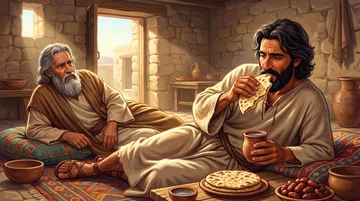
He said unto him, I am a prophet also as thou art; and an angel spake unto me by the word of the LORD, saying, Bring him back with thee into thine house, that he may eat bread and drink water. But he lied unto him.
Translations
He said to him, I am a prophet also as you are; and an angel spoke to me by the word of the LORD, saying, Bring him back with you into your house, that he may eat bread and drink water. But he lied to him.
He said unto him, I am a prophet also as thou art; and an angel spake unto me by the word of the LORD, saying, Bring him back with thee into thine house, that he may eat bread and drink water. But he lied unto him.
He said unto him, I am a prophet also as thou art; and an angel spake unto me by the word of the Lord, saying, Bring him back with thee into thine house, that he may eat bread and drink water. But he lied unto him.
He said to him, I am a prophet also as thou art; and an angel spoke to me by the word of the LORD, saying, Bring him back with thee into thy house, that he may eat bread and drink water. But he lied to him.
And he said unto him, I also am a prophet as thou art; and an angel spake unto me by the word of the LORD, saying, Bring him back with thee into thine house, that he may eat bread and drink water. But he lied unto him.
And he said unto him, I also am a prophet as thou art; and an angel spake unto me by the word of Jehovah, saying, Bring him back with thee into thy house, that he may eat bread and drink water. But he lied unto him.
And he saith to him, 'I also [am] a prophet like thee, and a messenger spake unto me by the word of Jehovah, saying, Bring him back with thee unto thy house, and he doth eat bread and drink water;' — he hath lied to him.
And he said to him, I am a prophet also as thou art; and an angel spoke to me by the word of Jehovah saying, Bring him back with thee into thy house, that he may eat bread and drink water. He lied unto him.
And he said to him-I also, am a prophet, like unto thee, and, a messenger, hath spoken unto me, by the word of Yahweh, saying—Bring him back with thee, into thy house, that he may eat bread, and drink water. He deceived him.
Berean Standard Bible, Majority Standard Bible
Then the prophet replied, “ I too am a prophet like you, and an angel spoke to me by the word of the LORD, saying, ‘ Bring him back with you to your house, so that he may eat bread and drink water.’”The old prophet was lying to him,
He said to him, “ I also am a prophet as you are; and an angel spoke to me by the LORD’s word, saying, ‘ Bring him back with you into your house, that he may eat bread and drink water.’” He lied to him.
Then he said to him, I am a prophet like you; and an angel said to me by the word of the Lord, Take him back with you and give him food and water. But he said false words to him.
And he said vnto him, I am a Prophet also as thou art, and an Angel spake vnto me by the worde of the Lord, saying, Bring him againe with thee into thine house, that hee may eate bread and drinke water: but he lyed vnto him.
Douay-Rheims (Challoner revision)
He said to him: I also am a prophet like unto thee: and an angel spoke to me in the word of the Lord, saying: Bring him back with thee into thy house, that he may eat bread, and drink water. He deceived him,
Pictures


Cross-references
- 1 Kings 13:9
For so was it charged me by the word of the LORD, saying, Eat no bread, nor drink water, nor turn again by the same way that thou camest.
God forbids the man of God to eat or drink at Bethel or return by the same way.
- 2 Kings 23:16-18
And as Josiah turned himself, he spied the sepulchres that were there in the mount, and sent, and took the bones out of the sepulchres, and burned them upon the altar, and polluted it, according to the word of the LORD which the man of God proclaimed, who proclaimed these words.
Josiah fulfills the prophecy concerning the altar at Bethel.
- 1 Kings 13:11
Now there dwelt an old prophet in Beth-el; and his sons came and told him all the works that the man of God had done that day in Beth-el: the words which he had spoken unto the king, them they told also to their father.
Introduces the prophet who later deceives the man of God.
- 1 Kings 13:24
And when he was gone, a lion met him by the way, and slew him: and his carcase was cast in the way, and the ass stood by it, the lion also stood by the carcase.
Disobedience ends in death by a lion.
- 1 Kings 13:8
And the man of God said unto the king, If thou wilt give me half thine house, I will not go in with thee, neither will I eat bread nor drink water in this place:
shows faithful refusal later abandoned
- 1 Kings 13:1
And, behold, there came a man of God out of Judah by the word of the LORD unto Beth-el: and Jeroboam stood by the altar to burn incense.
proves prior acceptance before the lie
- Numbers 23:19
God is not a man, that he should lie; neither the son of man, that he should repent: hath he said, and shall he not do it? or hath he spoken, and shall he not make it good?
God does not lie or change his word.
- Matthew 7:15
Beware of false prophets, which come to you in sheep’s clothing, but inwardly they are ravening wolves.
The old prophet’s deceptive religious appearance illustrates the danger of false prophets.
Commentary
Each commentary is drawn from primary sources: the writings of Ellen G. White and Adventist pioneers and periodicals. Each commentary is separate. Its own words are not a quotation; follow the references to read the source passages.
Ellen G. White
8 sources
The old prophet lied when he claimed to be a prophet just as the man of God was, and that an angel had spoken to him by the word of the Lord telling him to bring the man back into his house to eat bread and drink water.Ms 153, 1906, par. 3–6Ms 1, 1912, par. 13–14PK 106.2RH Jul 24, 1913PK 106.1 The claimed angelic message was a framed falsehood put into his mouth by Satan, asserting that God had spoken through him when God had not, and directly contradicting the clear command God had already given.Ms 153, 1906, par. 3–6Ms 1, 1912, par. 13–14Ms 153, 1906, par. 14Ms 153, 1906, par. 10–13 The Lord had passed him by and had given the message to a stranger from another place, so mere claim to prophetic authority did not make his word from God.Ms 153, 1906, par. 14
By repeating the lie and pressing the invitation he persuaded the man of God to believe him and to return contrary to the command, instruction, and duty the Lord had already laid upon him.Ms 153, 1906, par. 3–6Ms 1, 1912, par. 13–14PK 106.2RH Jul 24, 1913PK 106.1 That return violated God's command, and the man of God was held accountable for disobeying it.Ms 153, 1906, par. 3–6PK 106.2RH Jul 24, 1913 While they sat together at the table the word of the Lord came through the false prophet to announce the punishment for that disobedience, and the disobedience led to the man of God's death.Ms 153, 1906, par. 3–6PK 106.2RH Jul 24, 1913
A true prophet must not turn from the word the Lord has already given, and the episode warns not to rely on human claims of authority but to heed God's word.RH Jul 24, 1913Ms 153, 1906, par. 14Ms 153, 1906, par. 10–13 Rejecting a plain word from God leaves people open to counterfeit messages with serious consequences, showing the danger of abandoning God's word for a false message.RH Jul 24, 1913Ms 153, 1906, par. 10–13 The episode belongs to a biblical pattern in which faithful servants are blamed for bringing trouble while the real cause is disobedience to God, a pattern that will be applied when commandment keepers are accused of causing national calamities.4SP 408.1–409.2
Sources
Pioneers and periodicals
31 sources
The old prophet falsely claimed to share the same prophetic office and to have received word by an angel to bring the man of God back to eat and drink, and by that sheer lie he drew him into disobeying the plain charge to eat nothing and drink nothing there.ST Oct 23, 1884ST Dec 24, 1885RH Mar 17, 1904ST Feb 7, 1911RH May 13, 1875 The man of God had faithfully refused the king's invitation but turned aside at the lie, and for violating the command he was denounced at the table and afterward slain by a lion.ST Oct 23, 1884RH Mar 17, 1904ST Feb 7, 1911RH May 13, 1875ST Dec 7, 1882 God means what He says and requires exact, unquestioning obedience in every particular until the same God who gave the command revokes it with equal explicitness.ST Dec 7, 1882ST Mar 31, 1898ST Dec 3, 1894ST Dec 7, 1882ST Mar 4, 1880 His Word stands above every other word, so a claimed message from a prophet or even an angel must never turn anyone from what God has commanded, and a contrary report through another messenger must be rejected.RH Mar 17, 1904ST Feb 7, 1911ST Dec 7, 1882ST Dec 3, 1894ST Dec 7, 1882 Each person remains personally responsible for known duty, being deceived or sincere does not make disobedience right, and every teaching and spiritual claim must be tested by the Word rather than trusted on office, appearance, or appeal to an angel.ST Feb 7, 1911ST Dec 7, 1882ST May 31, 1899RH Apr 6, 1905ST Oct 23, 1884
Story and Setting
This verse belongs to the history of Israel and Judah after the ten tribes broke away, a period of about eighty years covering the reigns of several kings.RH May 25, 1916 The wider account is of the ten tribes separating from Judah and Benjamin and electing Jeroboam king after Rehoboam answered complaints of overtaxing and oppression by saying his little finger would be greater than his father's loins and that whereas his father chastised with whips he would chastise with scorpions.ST Dec 7, 1882 Jeroboam is presented as a man of genius defective in reverence who, though given the kingdom by prophecy, deliberately set aside the commands of the God who gave it.ST Dec 7, 1882 The verse is part of the account of God's prophecy against Jeroboam's altar at Bethel, delivered by an unknown man of God from Judah who himself disobeyed.ST May 20, 1913
The old prophet of Bethel claimed to be a prophet also and claimed that an angel had spoken to him by the word of the LORD telling him to bring the man of God back to his house to eat bread and drink water.ST Oct 23, 1884ST Dec 24, 1885RH Mar 17, 1904ST Dec 2, 1880ST Feb 7, 1911 No angel had spoken to him on the subject, and the claim was a sheer lie and fabrication used to tempt and deceive.ST Oct 23, 1884ST Dec 24, 1885ST Dec 2, 1880ST Feb 7, 1911ST Dec 7, 1882 He invented a revelation to draw the man of God from Judah into disobedience, coming in the name of a servant of God with a lie in his mouth.ST Feb 7, 1911ST Dec 7, 1882
The man of God was in favor with God and had been sent to cry against Jeroboam's sin of setting up golden calves at Bethel and Dan.RH May 13, 1875RH Mar 13, 1879 He had a positive charge from the Lord to eat no bread nor drink water there nor return by the same way he came.ST Feb 7, 1911RH May 13, 1875ST Dec 7, 1882RH Mar 13, 1879RH Mar 11, 1873 He had obeyed it in nobly refusing King Jeroboam's invitation to refresh himself, and had started home another way according to the word of the Lord.ST Feb 7, 1911RH May 13, 1875ST Dec 7, 1882 Induced by the lie he turned back, lodged, ate and drank where God had forbidden, and so violated God's command.RH May 13, 1875ST Dec 7, 1882RH Mar 13, 1879ST Mar 4, 1880RH Mar 11, 1873
While they ate the word of the LORD came that his carcass would not come to the sepulcher of his fathers.RH May 13, 1875ST Dec 7, 1882 On his return he was slain by a lion for violating the command.RH Mar 17, 1904ST Feb 7, 1911RH May 13, 1875ST Dec 7, 1882RH Mar 13, 1879 Disobedience to a plain command is followed by punishment and ruin.ST Oct 23, 1884RH Mar 17, 1904
Obedience to God's Word
God does not speak at random but means what he says and requires exact, unquestioning obedience in every particular.ST Dec 7, 1882ST Mar 31, 1898 The command once given stands until the same God who gave it revokes it with equal explicitness, and no one may follow another party whom God never commanded him to listen to even when that party claims prophetic and angelic authority.ST Dec 7, 1882 The man of God had been strictly charged not to eat bread nor drink water at Bethel nor return by the way he came, and he had nobly refused the king's invitation to refresh himself, yet he yielded to one who came in the name of a servant of God with a lie in his mouth and returned to lodge and eat and drink where God had forbidden.ST Dec 7, 1882 No angel had spoken on the subject, for the claim to be a prophet also and to have received an angelic message by the word of the Lord to bring him back to his house was a sheer fabrication invented to draw him into disobedience.ST Dec 7, 1882 Disobedience brought the Lord's condemnation, being slain by a lion on the way so that his carcass would not come to the sepulcher of his fathers, showing that a person is responsible for having been deceived.ST Dec 7, 1882
God's Word is above all other words and influences, even a prophet's or an angel's or a king's, and a claimed message from a prophet or angel must not lead anyone away from a command God has given.RH Mar 17, 1904ST Feb 7, 1911ST Jan 13, 1914 The old prophet falsely claimed an angel by the word of the Lord had told him to bring the man of God back to eat bread and drink water, but he lied, and the man who already knew God's direct command disobeyed what he knew the Lord had said and lost his life by turning back at the prophet's word.RH Mar 17, 1904ST Feb 7, 1911 A human religious authority cannot override God's clear word even when claiming to speak for God, and a prophet who disobeyed the original command died because the account explicitly says he lied.ST Oct 23, 1884ST Jan 13, 1914 A person's prophetic standing or saintly appearance does not make a message trustworthy when it contradicts God's instruction, for the claim of spiritual authority concealed a lie that lured the man of God away from plain instruction to his ruin.RH Apr 6, 1905
God does not lie or alter his word, and claims of divine authority to change a command already given are unreliable, so that the man of God was punished for believing that God had changed his command.ST Dec 3, 1894 God does not give one person a command and then use another messenger to cancel or reverse it, and the man should have known that God would not use one messenger to cancel a command given through another.ST Mar 4, 1880RH Mar 11, 1873 He was responsible for obeying the explicit command he had received and should not have accepted a contrary report from someone claiming to speak for God, but needed an equally explicit command from God himself to revoke it.ST Dec 7, 1882 Only a further word from the same divine authority, the word of the Lord himself, can remit it, and he should not have stepped back from God's command until he had remission of it from the same authority that gave the general message.ST Dec 7, 1882 Abraham shows the right pattern, receiving both the requirement to offer Isaac and the release from that duty directly from God himself, while a claimed message from an angel repeated by one who had been a prophet did not cancel the command and warns against changing God's stated requirements, including the time set for Sabbath observance, on human authority.ST Dec 7, 1882ST Dec 7, 1882
Each person remains personally responsible and has no right to shift personal responsibility to another, to follow an irresponsible party, or to trust another person as an excuse.ST Feb 7, 1911ST Dec 7, 1882ST Dec 7, 1882 Sincere intent and a claim of divine authority did not make disobedience right, for the man sinned by acting on a human authority that contradicted God's plain word and suffered the announced punishment.ST Oct 23, 1884 Even a prophet is not infallible, and trusting another person does not excuse disobedience, as seen when the prophet deceived by a fellow prophet disobeyed God and was destroyed.ST Mar 31, 1909 A prophetic claim or appeal to an angel does not prove a message true; teachings must be tested by the Word, and impressive spiritual claims do not by themselves establish true discipleship or apostleship.ST May 31, 1899 The lesson is not to regard prophets less but to regard God's Word above all and hold fast to known duty, for few reject prophets because they prophesy falsely while many reject their true words because those words do not contradict God's other words and do not take away individual responsibility.ST Feb 7, 1911 Inspiration can still come through a disobedient, unenlightened, or unfaithful prophet, so that the inspiration of the message does not depend on the prophet's holiness or personal faithfulness.ST Oct 1, 1894ST Dec 26, 1892
Prophecy Doctrine and Warning
The prophecy against Jeroboam's altar in this chapter was fulfilled by Josiah hundreds of years after it was given, just as the Lord had declared.ST May 10, 1910ST Jun 3, 1913 The man of God was in favor with God and in full acceptance when he was sent to cry against Jeroboam's sin of setting up golden calves at Bethel and Dan, with a positive charge from the Lord to eat no bread nor drink water there nor turn again by the same way he came, and he started home another way according to the word of the Lord.RH May 13, 1875RH Mar 13, 1879 Induced by the lie that an angel by the word of the LORD had told the old prophet to bring him back into his house to eat bread and drink water, he turned back and ate and drank where God had forbidden, the word of the LORD came while they ate that his carcass would not come to the sepulcher of his fathers, and he was slain by a lion on his way home because he had violated the command of God.RH May 13, 1875RH Mar 13, 1879 He died in that sin and in that disobedience finally apostatized, and therefore by the rule of Ezekiel 18:26 he must die for that sin, which is the second death, proving that one in grace can fall and that saints can apostatize.RH May 13, 1875RH Mar 13, 1879
A claimed message from an angel, repeated by someone who had been a prophet, did not cancel the command God had already given the man of God, and he should have acted only on a further word from the same divine authority.ST Dec 7, 1882 His return to Bethel was disobedience, and his case warns against changing God's stated requirements, including the time set for Sabbath observance, on human authority, for a hungry prophet was deceived by a false claim of an angel's message from the Lord into disobeying the command he had received.ST Dec 7, 1882ST Dec 2, 1880 The deceiver tramples truth and seeks to alter God's law, and the warning applies specifically to the seventh-day Sabbath, which God established from the beginning and whose statutes remain.ST Dec 2, 1880 The old prophet falsely claimed to have received an angel's message from the Lord to persuade the man of God to return and eat contrary to God's plain instruction and commission, and his sacred standing, sacred title, and pious appearance did not make his words trustworthy.RH Apr 6, 1905RH Apr 6, 1905 The episode warns that a backslidden minister or religious leader can be a dangerous decoy, using a sacred title and pious appearance to lure people away from God's word and to draw them from their commission, and following that deception brings ruin.RH Apr 6, 1905RH Apr 6, 1905
Sources