1 Kings 3:16
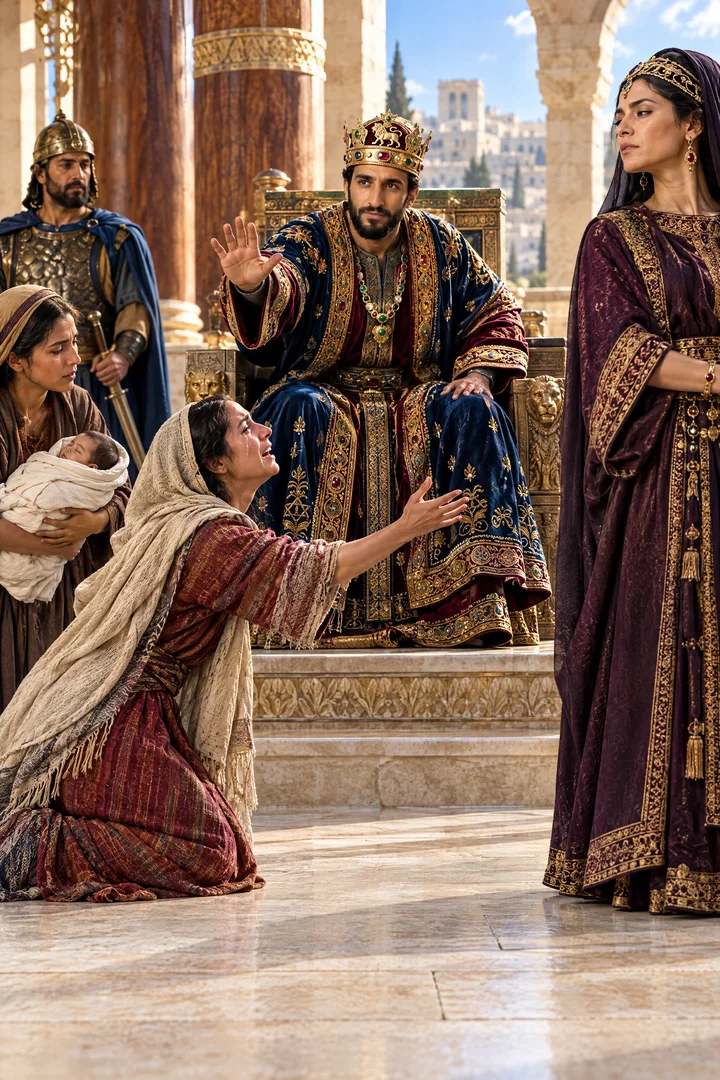
Then came there two women, that were harlots, unto the king, and stood before him.
Translations
American King James Version, Webster Bible
Then came there two women, that were harlots, to the king, and stood before him.
King James Version, KJV Cambridge Paragraph Bible, Revised Version
Then came there two women, that were harlots, unto the king, and stood before him.
Then there came two women that were harlots, unto the king, and stood before him.
then come in do two women, harlots, unto the king, and stand before him,
Then came two women, harlots, to the king, and stood before him.
Then, came there in two unchaste women, unto the king,—and stood before him.
Berean Standard Bible, Majority Standard Bible
At that time two prostitutes came to the king and stood before him.
Then two women who were prostitutes came to the king, and stood before him.
Then two loose women of the town came and took their places before the king;
Then came two harlots vnto the King, and stoode before him.
Douay-Rheims (Challoner revision)
Then there came two women that were harlots, to the king, and stood before him:
Pictures
Cross-references
- 1 Kings 3:28
And all Israel heard of the judgment which the king had judged; and they feared the king: for they saw that the wisdom of God was in him, to do judgment.
The people recognize Solomon’s wise judgment in this case.
Commentary
Each commentary is drawn from primary sources: the writings of Ellen G. White and Adventist pioneers and periodicals. Each commentary is separate. Its own words are not a quotation; follow the references to read the source passages.
Ellen G. White
2 sources
The case came before Solomon early in his reign.RH Dec 21, 1905 The verse introduces the dispute in which he displayed wisdom united with sympathy.PK 57.2RH Dec 21, 1905 That union was shown in restoring a helpless infant child, a helpless baby, to its mother, to its true mother, by wise and kindly sympathetic action.PK 57.2RH Dec 21, 1905
Sources
Pioneers and periodicals
11 sources
The verse introduces two harlots coming before Solomon, each claiming the same living child as her own.ST Dec 9, 1897ST Jan 6, 1888 Their hard case gave Solomon opportunity to display the wisdom he had asked for, and by proposing to divide the living child he discerned the true mother, for she would rather give him up than see him killed while the other accepted the division.ST Dec 9, 1897ST Dec 9, 1897ST Nov 5, 1885ST Jan 6, 1888 The account belongs to the history of Solomon's life and reign over undivided Israel, displaying his glory and wisdom in chronological order.RH May 11, 1916ST May 13, 1913 As a record of his reign it teaches that faithful leaders strongly shape the people, while Solomon's uncertainty which woman was the rightful mother contrasts with God's unfailing knowledge of those who belong to Him.ST Apr 26, 1910RH Nov 4, 1858 The test that exposes who truly loves the child illustrates the difference between the dead ceremonial law nailed to the cross and the living moral law that must remain whole, and the true mother's pleading for life rather than death shows how one truly turning from sin honors God's law instead of seeking its abolition.RH Jun 9, 1853RH Apr 16, 1867
Setting and Story
The verse stands in the history of the undivided kingdom under Solomon told in 1 Kings 1 to 11, which gives the same events as 2 Chronicles 1 to 9 and comes at this point in chronological order.RH May 11, 1916 It belongs to the account of Solomon's life and reign over undivided Israel, covering his call to the throne and entrance upon his reign, displaying his wonderful glory and highlighting his wisdom.ST May 13, 1913
The verse introduces two women who were harlots coming to the king and standing before him, each claiming the same living child as her own.ST Dec 9, 1897ST Jan 6, 1888 Their difficult case gave Solomon an opportunity to show in his decision between them the wisdom for which he had asked.ST Dec 9, 1897ST Dec 9, 1897 By proposing and threatening to divide the living child he discerned the true mother, for the real mother would rather give him up than see him killed while the other accepted the division.ST Jan 6, 1888RH Jun 9, 1853 With rough, shrewd sense and with wisdom and kind sympathy, his justice by personal appeal restored the helpless baby to its mother and made the favor especially impressive to its recipient.RH Dec 21, 1905ST Nov 5, 1885
The account presents Solomon as possibly uncertain which of the women was the child's rightful mother.RH Nov 4, 1858
Doctrine and Moral Application
As a record of Solomon's reign, the verse teaches important lessons about the influence of leaders, for when leaders are faithful to God they strongly shape the people.ST Apr 26, 1910 Solomon may be uncertain which of the two women who come before him is the child's rightful mother.RH Nov 4, 1858 His uncertainty stands in contrast to God's unfailing knowledge of those who belong to Him, whom no circumstance can hide from God.RH Nov 4, 1858
By threatening to divide the living child, Solomon reveals which woman truly loves him, since the true mother would rather give him up than see him killed.RH Jun 9, 1853 This judgment illustrates the difference between the ceremonial law, which is dead and nailed to the cross, and the moral law, which is alive.RH Jun 9, 1853 The test of truth and justice exposes those willing to divide or abolish the moral law, for it should remain whole with all its commandments.RH Jun 9, 1853 So too the real mother's pleading for the contested child's life rather than its death shows how a person truly turning from sin honors God's law and does not seek its abolition.RH Apr 16, 1867
Sources