1 Samuel 17:5
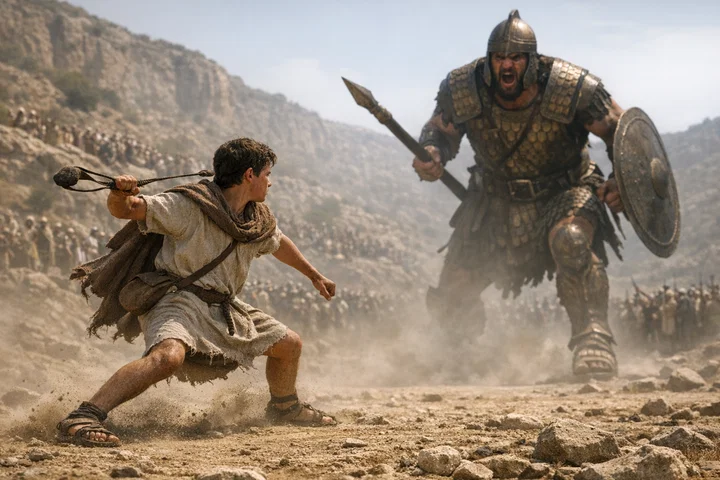
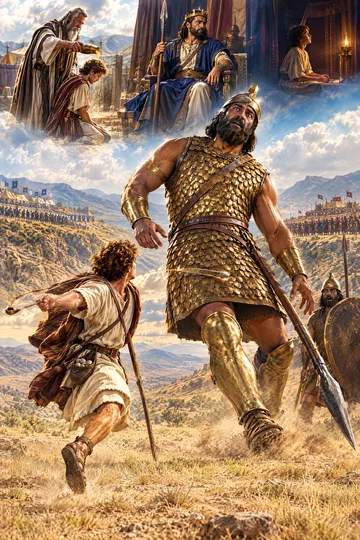
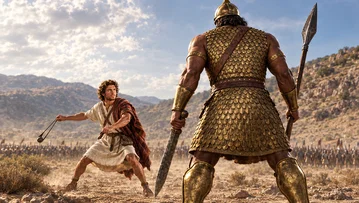
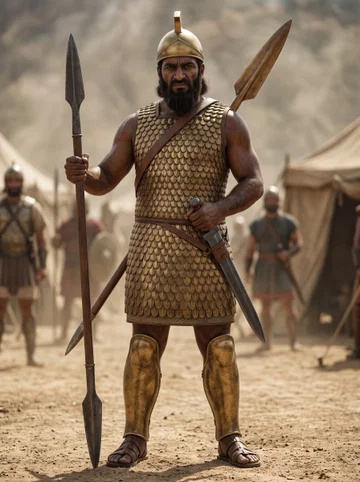
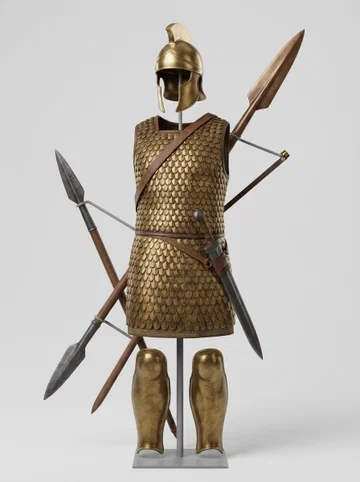
And he had an helmet of brass upon his head, and he was armed with a coat of mail; and the weight of the coat was five thousand shekels of brass.
Translations
And he had an helmet of brass on his head, and he was armed with a coat of mail; and the weight of the coat was five thousand shekels of brass.
And he had an helmet of brass upon his head, and he was armed with a coat of mail; and the weight of the coat was five thousand shekels of brass.
KJV Cambridge Paragraph Bible, Webster Bible
And he had a helmet of brass upon his head, and he was armed with a coat of mail; and the weight of the coat was five thousand shekels of brass.
And he had an helmet of brass upon his head, and he was clad with a coat of mail; and the weight of the coat was five thousand shekels of brass.
And he had a helmet of brass upon his head, and he was clad with a coat of mail; and the weight of the coat was five thousand shekels of brass.
and a helmet of brass [is] on his head, and [with] a scaled coat of mail he [is] clothed, and the weight of the coat of mail [is] five thousand shekels of brass,
And he had a helmet of bronze upon his head, and he was clothed with a corselet of scales; and the weight of the corselet was five thousand shekels of bronze.
with a helmet of bronze on his head, and, with a scaly coat of mail, was he clad,—the weight of the coat, being five thousand shekels of bronze;
Berean Standard Bible, Majority Standard Bible
and he had a bronze helmet on his head. He wore a bronze coat of mail weighing five thousand shekels,
He had a helmet of bronze on his head, and he wore a coat of mail; and the weight of the coat was five thousand shekels of bronze.
And he had a head-dress of brass on his head, and he was dressed in a coat of metal, the weight of which was five thousand shekels of brass.
Aud had an helmet of brasse vpon his head, and a brigandine vpon him: and the weight of his brigandine was fiue thousand shekels of brasse.
Douay-Rheims (Challoner revision)
And he had a helmet of brass upon his head, and he was clothed with a coat of mail with scales, and the weight of his coat of mail was five thousand sicles of brass:
Pictures

Cross-references
- 1 Samuel 17:50-51
So David prevailed over the Philistine with a sling and with a stone, and smote the Philistine, and slew him; but there was no sword in the hand of David.
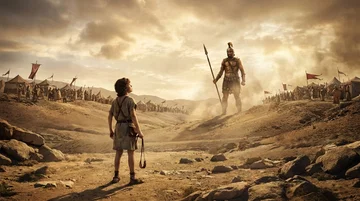
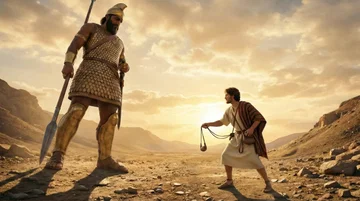
David defeats the armored Goliath despite the disparity in arms.
- 1 Samuel 17:45-47
Then said David to the Philistine, Thou comest to me with a sword, and with a spear, and with a shield: but I come to thee in the name of the LORD of hosts, the God of the armies of Israel, whom thou hast defied.
David faces Goliath trusting God rather than weapons.
- 1 Samuel 17:16
And the Philistine drew near morning and evening, and presented himself forty days.
Goliath repeats his challenge day after day for forty days.
- 1 Samuel 17:26
And David spake to the men that stood by him, saying, What shall be done to the man that killeth this Philistine, and taketh away the reproach from Israel? for who is this uncircumcised Philistine, that he should defy the armies of the living God?
David challenges Goliath’s defiance of the living God.
- 1 Samuel 17:10
And the Philistine said, I defy the armies of Israel this day; give me a man, that we may fight together.
Goliath’s challenge is echoed in the quoted taunt.
- 1 Samuel 17:11
When Saul and all Israel heard those words of the Philistine, they were dismayed, and greatly afraid.
Israel is dismayed and afraid before Goliath.
- 1 Samuel 17:32
And David said to Saul, Let no man’s heart fail because of him; thy servant will go and fight with this Philistine.
David volunteers to fight Goliath, trusting God rather than his own strength.
- 1 Samuel 17:34-37
And David said unto Saul, Thy servant kept his father’s sheep, and there came a lion, and a bear, and took a lamb out of the flock:
David recalls killing a lion and a bear while guarding sheep.
Commentary
Each commentary is drawn from primary sources: the writings of Ellen G. White and Adventist pioneers and periodicals. Each commentary is separate. Its own words are not a quotation; follow the references to read the source passages.
Ellen G. White
15 sources
The verse describes the brass helmet and massive coat of mail worn by Goliath as he defied Israel, marking him as a trained warrior of formidable size, strength, and appearance against whom Israel felt the battle was impossible.PP 644.4–645.11SP 370.1–3ST Mar 4, 1886SG4 79.2–80.2ST Dec 20, 1910 His coat was formed of closely joined, overlapping plates like fish scales that darts and arrows could not pierce.PP 646.2–3 His heavy armor stands in contrast to David's simple weapons to show that the victory was gained not by superior weapons but by trust in God, who delivered Israel through David.1SP 370.1–3ST Mar 4, 1886SG4 79.2–80.2 His proud, boastful defiance makes him a pattern of all boastful opposition to God and His truth, which may glory in power and seem to prosper for a time yet does not last.Lt 123, 1894, par. 3–53T 219.2ST Dec 20, 1910ST Mar 4, 1886 Such boasting, though imposing like his brass helmet and coat of mail, hides weakness and is overcome not by harsh dealing but by simple truth presented with dignity, even temper, prayer, and the Holy Spirit.Lt 31d, 1895, par. 2–3
Goliath's Armor and Challenge
The verse belongs to the account of Goliath's challenge to Israel, in which he came forward and repeatedly defied Israel while the army was afraid.PP 644.4–645.1 David heard that defiance and was moved to step forward to defend the honor of God and His people.PP 644.4–645.1
The verse describes his heavy armor, with a helmet of brass upon his head and a coat of mail weighing five thousand shekels of brass.ST Mar 4, 1886 That helmet and coat formed part of the equipment of a trained warrior, whose size and challenge struck terror into Israel's army.ST Dec 20, 1910 The equipment emphasizes his formidable appearance and the unequal odds David faced, while David trusted not in his own strength or weapons but in God.ST Mar 4, 1886ST Dec 20, 1910
The coat of mail was made of closely joined, overlapping plates of brass like the scales of a fish.PP 646.2–3 Because the plates were so joined, darts and arrows could not pierce it.PP 646.2–3 This heavy, impenetrable armor helped make the giant appear formidable to Israel.PP 646.2–3
His enormous size and strength and his imposing armor and equipment helped him defy Israel and terrify Saul's army.1SP 370.1–3 His immense size and imposing appearance helped make Israel afraid, and his heavy armor and proud challenge made the battle seem impossible for Israel.SG4 79.2–80.2 Yet the battle was won and Israel delivered by God through David, not by superior armor or weapons and not through Saul.1SP 370.1–3SG4 79.2–80.2
Victory Through God Over Boasting
The battle was won and Israel delivered by God through David, not by superior armor or weapons and not through Saul.1SP 370.1–3SG4 79.2–80.2 David trusted not in his own strength or weapons but in God, while the brass helmet and the coat of mail weighing five thousand shekels of brass emphasized the giant's formidable appearance and the unequal odds David faced.1SP 370.1–3ST Mar 4, 1886 The heavily armed warrior with his imposing equipment and strength helped make Israel afraid and made the battle seem impossible, yet his armor contrasts with David's simple weapons to highlight that victory came through reliance on God rather than superior equipment or human strength.ST Mar 4, 1886SG4 79.2–80.2ST Mar 4, 1886
The courage David showed by trusting in God in the victory over the Philistine champion in 1 Samuel 17:4-51 stands in contrast with his later faltering faith when pursued by Saul, when he relied on deception to escape danger.PP 656.2 The giant's strength and apparent advantage illustrate how enemies of God's truth may glory in their power and seem to prosper for a time, yet their triumph does not last.ST Mar 4, 1886 His proud contempt for the apparently weak David serves as a pattern for opposition to those loyal to God, applied to people who defend God's truth and the Sabbath, whose strength and success come from God when they forget self and seek to honor Him.ST Dec 20, 1910
His proud, boasting defiance of Israel pictures trained, intellectually proud debaters and ministers who provoke debate, boast that they will wipe out Sabbathkeepers, and rely confidently on prepared arguments instead of humbly trusting God to give truth the victory.Lt 123, 1894, par. 3–53T 219.2 To leave such defiance unanswered dishonors God, so God's servants must accept the challenge and agree to the terms of open contest.Lt 123, 1894, par. 3–5 He is the pattern for boastful opposition to God's work in the present, with great bombast, ridicule, assertions, falsehood and misrepresentation while taking on the appearance of a godly man, backed by a demon-infuriated, noisy rabble with a high, boasting spirit.Ms 60, 1895, par. 19 The account parallels a man who heaped personal abuse and ridicule on a Christian worker, and such contempt is difficult to endure patiently.Lt 22, 1895, par. 6–9
In his brass helmet and massive coat of mail he was proud and boastful in defying Israel, yet his imposing strength hid apparent weakness.Lt 31d, 1895, par. 2–3 This means boastful opposition, like a modern debater against the Sabbath truth who states falsehood as truth, is defeated not by sharp and severe dealing but by truth itself, like the small pebbles David used.Lt 31d, 1895, par. 2–3 When presented with dignity, even temper, prayer, and the guidance of the Holy Spirit, simple truth brings about his defeat and leaves a right impression favoring the truth.Lt 31d, 1895, par. 2–3
Sources
Pioneers and periodicals
25 sources
The verse describes the heavy, imposing armor of Goliath as a trained Philistine warrior, with a brass helmet on his head and a coat of mail weighing five thousand shekels of brass, likely of overlapping plates or scales and about 157 pounds, underscoring his formidable appearance and the unequal odds.ST Mar 4, 1886ST Dec 20, 1910ST Mar 4, 1886 He was the Philistines' new champion in their war with Israel, who daily defied Israel for forty days and left them dismayed and afraid, until the young David came down from Bethlehem bringing food from his father to his brothers in the army and saw the giant and heard his defiance.ST Mar 14, 1906 David ventured against that formidably armored enemy trusting not in his own strength or weapons but in God, so that victory came through reliance on God rather than superior equipment or human strength.ST Mar 4, 1886ST Mar 4, 1886ST Sep 17, 1896 Armor, numbers and outward strength are less powerful than faith, so that one faith-filled young man is a greater force than an army paralyzed by fear, and one who appears weak and outnumbered can stand against a powerful foe when God is on his side.ST Jan 1, 1885ST Jul 14, 1887 The giant is thus an example of an enemy that God's workers, relying on Jesus, can overcome, and his proud contempt for the apparently weak David is a pattern for opposition to those loyal to God who defend His truth.ST Dec 20, 1910RH Nov 28, 1871
Goliath's Armor And Setting
The account in 1 Samuel 17-18 presents David as the champion of God's people, set against Saul's fierce, unreasoning jealousy and enmity and against the beginning friendship between David and Jonathan.ST Apr 11, 1911ST Apr 15, 1913 David's course there is checkered but ever-rising, while Saul's is marked by rashness, weakness, failure, rejection and an ever-downward course.ST Apr 11, 1911 David flees from place to place without retaliating against the ruler of his people, showing a noble spirit in the young king totally unlike Saul. The larger history is the choosing of Saul as king and the death of Samuel, within which these chapters tell of the waning of the house of Saul and the calling of David.ST Apr 11, 1911ST Apr 15, 1913 The narrative throws light on the habits and customs of the people and the influence of surrounding nations upon them, while showing God's providence shaping and molding national events and still remembering the promised Seed.ST Apr 11, 1911
The battle is one in which David slew Goliath and took a leading part, and its results brought greater praise to David than to Saul in the cry that Saul has slain his thousands and David his ten thousands.ST Nov 28, 1895 That slaying took place after David had been kept at Saul's court, made captain of a thousand, and married to Michal.ST Nov 28, 1895 It stood about a year before Jonathan met David at the rock Ezel to warn him of Saul's purpose to take his life.ST Nov 28, 1895
Goliath was the Philistines' new champion in their war with Israel.ST Mar 14, 1906 He daily defied the men of Israel for forty days and left them dismayed and afraid.ST Mar 14, 1906 The young David came down from his Bethlehem home bringing parched corn and loaves from his father to his three eldest brothers serving as soldiers in the army, with a present for their captain, and there saw the giant and heard the defiant speech.ST Mar 14, 1906
The heavy armor marks Goliath as a trained warrior of the Philistine force, with a brass helmet covering his head and a coat of mail weighing five thousand shekels of brass.ST Mar 4, 1886ST Dec 20, 1910ST Mar 4, 1886RH Mar 2, 1905ST Nov 21, 1895 The coat was probably made of overlapping plates or scales and is estimated at about 157 pounds.ST Nov 21, 1895 His size, equipment and challenge struck terror into Israel's army and emphasized his formidable, terrifying appearance and the unequal odds David faced.ST Mar 4, 1886ST Dec 20, 1910ST Mar 4, 1886ST Nov 21, 1895 Yet his impressive size and equipment did not make him a true giant in spirit, since bravery and character rather than physical stature or strength make a person a real giant.RH Mar 2, 1905
He was a boastful, haughty challenger with a scornful, arrogant manner.RH Jan 10, 1871RH Apr 15, 1873 His stumping, threatening and bragging arguments bombarded opponents for weeks.RH Jan 10, 1871
Faith Overcomes Human Strength
The brass helmet and coat of mail weighing five thousand shekels of brass made the giant formidably armed and terrifying in appearance, setting starkly unequal odds for the encounter.ST Mar 4, 1886ST Mar 4, 1886ST Sep 17, 1896 David ventured against that armored enemy in faith, trusting not in his own strength or weapons but in God.ST Mar 4, 1886ST Sep 17, 1896 Victory therefore came through reliance on God rather than through superior equipment or human strength.ST Mar 4, 1886ST Mar 4, 1886
Armor, numbers and outward strength are less powerful than faith, so that one faith-filled young man is a greater force than an army paralyzed by fear.ST Jan 1, 1885 One who appears weak and outnumbered can stand against a powerful foe when God is on his side, showing divine strength made perfect in human weakness.ST Jul 14, 1887 Truth and right are not determined by size or strength.ST Jan 1, 1885ST Jul 14, 1887 Neither great size nor loud, boastful, angry bellowing could overcome the sling.ST Dec 2, 1913
Impressive size and equipment did not make a true giant in spirit, since bravery and character rather than physical stature or strength make a person a real giant.RH Mar 2, 1905 The giant is an example of an enemy that God's workers, relying on Jesus, can overcome.RH Nov 28, 1871 His proud contempt for the apparently weak David is a pattern for opposition to those loyal to God who defend God's truth and the Sabbath.ST Dec 20, 1910 Their strength and success come from God when they forget self and seek to honor Him.ST Dec 20, 1910RH Nov 28, 1871
The giant's great strength represents formidable human opposition and worldly advantage.RH Sep 30, 1858RH Sep 2, 1873 Such opposition need not be feared when God's people keep the ark in view and obey its holy precepts.RH Sep 30, 1858 Such advantage cannot compare with God's grace and mercy.RH Sep 2, 1873 Enemies of God's truth may glory in their power and seem to prosper for a time, and openly defy God as the challenge to Israel defied Him, yet their triumph does not last.ST Mar 4, 1886ST Aug 25, 1909
Size and armor picture an obvious danger, in contrast to small, deceptive actions that quietly harm a home.RH Nov 16, 1916 Boasting in strength pictures philosophy boasting its claims against what the Bible teaches about man's creation, nature, death, intermediate state and final doom in trying to break the decision of the word of God.RH Jan 28, 1873 The stumping, threatening and bragging arguments may bombard opponents for weeks, yet the young David quickly silences the battery and turns the battle.RH Jan 10, 1871RH Jan 28, 1873 Boastful philosophy will be found weak, weaker than Belshazzar before the handwriting on the wall.RH Jan 28, 1873
The great spear is a deadly weapon poised in the hand of an enemy thirsting for the blood of God's servant, which God alone keeps from being thrown.RH Aug 4, 1903 The servant uses every lawful precaution yet attends to his work as if no enemy were there, leaving all other results in the hands of Jesus.RH Aug 4, 1903 The unequal match is used as a comparison for the combatants in Revelation 20, unlike whom the two were unequally matched.RH Dec 31, 1901
Sources