1 Samuel 17:6
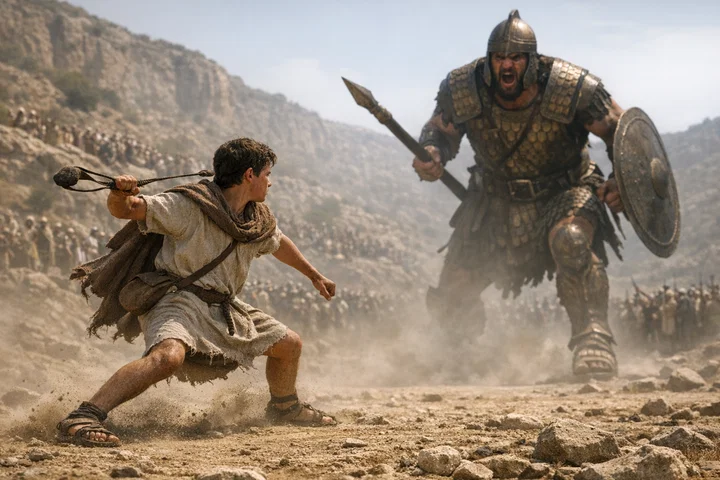
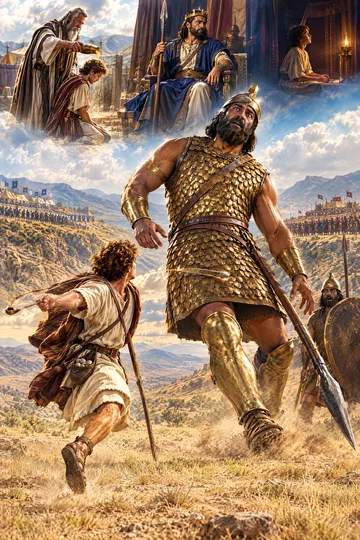
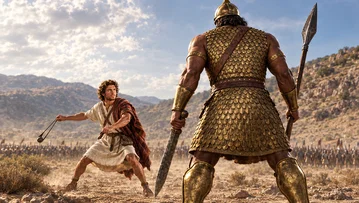
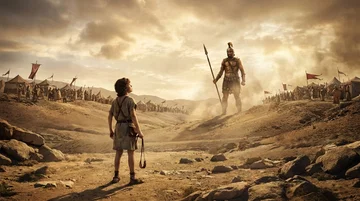
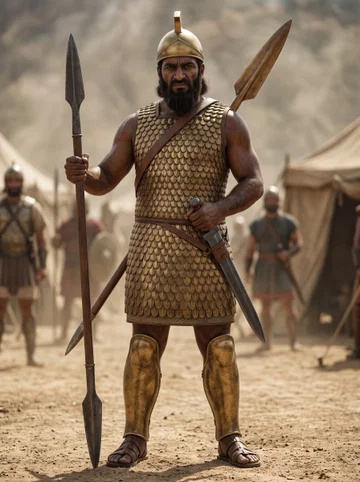
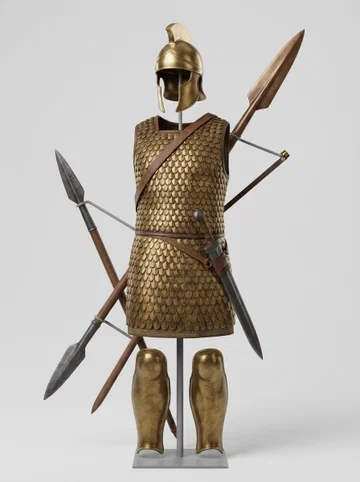
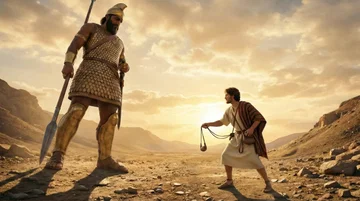
And he had greaves of brass upon his legs, and a target of brass between his shoulders.
Translations
And he had greaves of brass on his legs, and a target of brass between his shoulders.
King James Version, KJV Cambridge Paragraph Bible, Webster Bible
And he had greaves of brass upon his legs, and a target of brass between his shoulders.
Revised Version, American Standard Version
And he had greaves of brass upon his legs, and a javelin of brass between his shoulders.
and a frontlet of brass [is] on his feet, and a javelin of brass between his shoulders,
And he had greaves of bronze upon his legs, and a javelin of bronze between his shoulders.
and, greaves of bronze, on his feet,—and, a javelin of bronze, between his shoulders;
Berean Standard Bible, Majority Standard Bible
and he had armor of bronze on his legs and a javelin of bronze slung between his shoulders.
He had bronze shin armor on his legs and a bronze javelin between his shoulders.
His legs were covered with plates of brass and hanging on his back was a javelin of brass.
And he had bootes of brasse vpon his legs, and a shield of brasse vpon his shoulders.
Douay-Rheims (Challoner revision)
And he had greaves of brass on his legs, and a buckler of brass covered his shoulders.
Pictures

Cross-references
- 1 Samuel 17:45-47
Then said David to the Philistine, Thou comest to me with a sword, and with a spear, and with a shield: but I come to thee in the name of the LORD of hosts, the God of the armies of Israel, whom thou hast defied.
David faces Goliath trusting God rather than weapons and declares the battle belongs to the Lord.
- 1 Samuel 17:50
So David prevailed over the Philistine with a sling and with a stone, and smote the Philistine, and slew him; but there was no sword in the hand of David.
David defeats the Philistine champion with a sling and stone.
- 1 Samuel 17:38-39
And Saul armed David with his armour, and he put an helmet of brass upon his head; also he armed him with a coat of mail.
David removes Saul’s armor because he has not tested it.
- 1 Samuel 17:10
And the Philistine said, I defy the armies of Israel this day; give me a man, that we may fight together.
Goliath’s challenge follows the description of his armor.
- 1 Samuel 17:26
And David spake to the men that stood by him, saying, What shall be done to the man that killeth this Philistine, and taketh away the reproach from Israel? for who is this uncircumcised Philistine, that he should defy the armies of the living God?
David answers Goliath’s defiance of Israel’s God.
- 1 Samuel 17:32
And David said to Saul, Let no man’s heart fail because of him; thy servant will go and fight with this Philistine.
David offers to fight the armored giant.
Commentary
Each commentary is drawn from primary sources: the writings of Ellen G. White and Adventist pioneers and periodicals. Each commentary is separate. Its own words are not a quotation; follow the references to read the source passages.
Ellen G. White
13 sources
The verse describes part of Goliath's formidable armor, brass coverings on his legs and a brass plate between his shoulders for protection, which with his great size, strength and massive weapons made him appear an overwhelming and terrifying trained warrior.ST Mar 4, 18861SP 370.1–3SG4 79.2–80.23T 219.2 As the Philistine champion he repeatedly challenged Israel and defied them for forty days, glorying in his strength and trusting in his armor with proud boasting, contempt and ridicule that left the army afraid and trembling and dishonored God.PP 644.4–645.1Lt 123, 1894, par. 3–5SG4 79.2–80.23T 219.2PP 646.2–3 In contrast David trusted in God rather than armor to defend the honor of the living God, and Goliath's imposing armor could not protect him, for his formidable appearance covered weakness that was exposed when truth like the small pebbles brought his defeat.PP 644.4–645.1ST Mar 4, 18861SP 370.1–33T 219.2Lt 31d, 1895, par. 2–3 The account stands as an example of humble courage and trust in God's strength for those who defend God's truth and Sabbath against proud opponents, showing boastful ridicule, falsehood and misrepresentation are overcome by truth without sharpness and severity.ST Dec 20, 1910Lt 31d, 1895, par. 2–3Ms 60, 1895, par. 19Lt 22, 1895, par. 6–9
Goliath's Armor and Defiance
The verse describes part of a formidable suit of armor, brass greaves upon the legs and a brass target or plate of armor between the shoulders worn for protection.ST Mar 4, 18861SP 370.1–33T 219.2PP 646.2–3ST Mar 4, 1886 That equipment belonged to a display of strength in which its wearer gloried.ST Mar 4, 1886 He was a man of great size and strength, a trained warrior whose massive weapons and armor made him appear overwhelming and terrifying.ST Mar 4, 18861SP 370.1–3SG4 79.2–80.2PP 646.2–3Lt 31d, 1895, par. 2–3
As the Philistine champion he challenged Israel to send out a man to fight him, repeating his defiance for forty days until the army was left afraid and trembling before him.PP 644.4–645.1SG4 79.2–80.2PP 646.2–3 He trusted in his imposing armor and gloried in his strength as a proud, boasting giant.Lt 123, 1894, par. 3–53T 219.2ST Mar 4, 1886 His defiance dishonored God and could not be left unanswered, but had to be met by defending the honor of the living God and His people.PP 644.4–645.1Lt 123, 1894, par. 3–5
That defiance was uttered with contempt and ridicule, the worst kind of insult and the most difficult to endure patiently.Lt 22, 1895, par. 6–9
Victory Through Trust in God
Goliath trusted in his weapons and armor while David trusted in God rather than weapons or armor, and David's response to the Philistine champion's repeated defiance that left the army afraid was to defend the honor of the living God and His people.PP 644.4–645.1ST Mar 4, 18863T 219.2 His brass greaves upon his legs and brass target between his shoulders for protection marked him as a massive, trained warrior of great size and strength, and that formidable outward equipment only highlighted the outward strength David faced.ST Mar 4, 1886ST Mar 4, 1886 That confidence in imposing armor stands in contrast to David's trust, for his victory depended not on superior weapons but on God's strength.3T 219.2ST Mar 4, 1886
That imposing size and terrifying armor with bronze greaves on the legs and bronze plate between the shoulders could not protect him from the Lord's deliverance through David.1SP 370.1–3 His formidable appearance covered weakness that was exposed when truth, like the small pebbles David used, brought about his defeat.Lt 31d, 1895, par. 2–3 The account therefore stands as an example of humble courage and trust in God, showing that those who defend God's truth and Sabbath when facing contempt from proud opponents can see God work through human weakness when they seek to honor Him rather than themselves.ST Dec 20, 1910 In that same way opponents who state falsehood as though it were truth and make misrepresenting assertions against the Sabbath are overcome by truth without sharpness and severity.Lt 31d, 1895, par. 2–3
Goliath is the pattern for present opposition to God's work, a boastful bombast dealing in ridicule, assertions, falsehood and misrepresentation while taking the appearance of godliness.Ms 60, 1895, par. 19 His high, boasting spirit is repeated when men infuriated by an evil spirit preach in the streets and gather a noisy rabble.Ms 60, 1895, par. 19 The same defiant boasting with contempt and ridicule is repeated when a preacher opposes the law of God by abuse, tramples God's character underfoot, heaps personal abuse and ridicule on God's workers, and boasts he will make a clean sweep of the law and drive God's workers out of the country.Lt 22, 1895, par. 6–9
Sources
Pioneers and periodicals
21 sources
The verse pictures the Philistine champion in heavy bronze armor, with greaves covering his legs and a bronze shield or covering hung between his shoulders, making his appearance terrifying and displaying the outward strength in which he gloried.ST Mar 4, 1886ST Mar 4, 1886ST Mar 4, 1886 The piece between his shoulders is also a brazen javelin slung upon his back.ST Nov 21, 1895 He stood as his people's chosen warrior, shouting daily defiance against the armies of the living God while Israel was dismayed and afraid, until the young David came down from Bethlehem to his brothers in the army and met him in unequal combat with only sling and stones and slew him.ST Aug 26, 1889ST Jan 1, 1885ST Dec 2, 1913ST Mar 14, 1906ST Nov 28, 1895 The contrast shows that David's trust in God made him stronger than the heavily armed giant, for victory rests on God's strength and not on weapons, size, or equipment, and loud boasting that looks strong is weak before God.ST Mar 4, 1886ST Mar 4, 1886ST Jan 1, 1885RH Mar 2, 1905RH Jan 28, 1873 In the same way those who with humble courage defend God's truth and Sabbath may face contempt from proud opponents, yet by keeping God's commandments in view and seeking His honor rather than their own they can overcome powerful enemies without fearing human strength.ST Dec 20, 1910RH Nov 28, 1871RH Sep 30, 1858
Armor and Narrative Setting
The brass greaves upon the legs and the brass target between the shoulders were part of Goliath's formidable, heavy bronze armor.ST Mar 4, 1886ST Mar 4, 1886ST Mar 4, 1886RH Sep 2, 1873ST Jun 3, 1875 The covering between the shoulders served as protection, and the whole equipment presented a terrifying appearance.ST Mar 4, 1886ST Nov 21, 1895ST Jun 3, 1875 It displayed the outward strength of a trained warrior, strength in which he gloried.ST Mar 4, 1886ST Mar 4, 1886 His great physical strength, imposing power, and equipment were worldly advantages, yet worth less than grace and mercy.RH Sep 2, 1873 One reading takes the brass piece between the shoulders as a brazen javelin carried on the back.ST Nov 21, 1895
Goliath was the Philistines' new champion of immense stature who represented his people in the war against Israel.ST Aug 26, 1889ST Mar 14, 1906 He stood on the heights above Elah brandishing a spear like a weaver's beam and shouting defiance of the armies of the living God.ST Aug 25, 1909 He taunted Israel daily for forty days while awaiting an opponent.ST Aug 26, 1889ST Mar 14, 1906 Israel was dismayed, afraid, and frightened by his size.ST Dec 2, 1913ST Mar 14, 1906 He was marked by haughtiness and a scornful, arrogant, loud, and boastful manner.ST Dec 2, 1913RH Apr 15, 1873
The young David came down from his Bethlehem home bringing parched corn and loaves from his father to his three eldest brothers who were soldiers in the army, with a present for their captain, and saw the giant and heard the defiance.ST Mar 14, 1906 David then slew Goliath and acted a leading part in the battle.ST Jan 1, 1885ST Nov 28, 1895 That slaying took place some time, perhaps a year, before Jonathan helped David escape Saul.ST Nov 28, 1895 The combat was an unequal match between the heavily armed giant and David with sling and stones.ST Jan 1, 1885ST Dec 2, 1913RH Dec 31, 1901
The verse stands in the account of Saul's rashness, weakness, failure, rejection, and ever-downward course and David's choosing and checkered but ever-rising career.ST Apr 11, 1911 That account throws light on the habits and customs of the people.ST Apr 11, 1911 It shows the influence of surrounding nations upon them.ST Apr 11, 1911 It reveals God's providence shaping and molding national events while God remembers the promised Seed.ST Apr 11, 1911
Faith Over Outward Strength
The brass greaves on the legs and the brass covering between the shoulders belong to a formidable equipment that marks trained outward strength, and set against David's sling and stones they show that his faith made him a stronger force than heavily armed men who were afraid.ST Mar 4, 1886ST Mar 4, 1886ST Jan 1, 1885 His victory did not rest on weapons or armor or any superiority of weapons, but on trust in God and on God's strength working for him.ST Mar 4, 1886ST Mar 4, 1886 Outward size and equipment do not make a true giant, for the physically imposing Saul was surpassed in bravery by David, and the lesson is the contrast between outward strength and inner courage.RH Mar 2, 1905
Great physical strength and imposing power with bronze defenses on legs and shoulders are worldly advantages, yet they are worth less than God's grace and mercy.RH Sep 2, 1873 Loud boasting in brass armor makes an imposing show that looks strong but is really weak, because human defiance cannot stand before God.RH Jan 28, 1873 Like David, those who with humble courage and trust in God defend God's truth and the Sabbath may face contempt from proud opponents, but God can work through human weakness when they seek to honor Him rather than themselves.ST Dec 20, 1910 The slaying of the giant is therefore an image of God's workers overcoming powerful enemies.ST Dec 20, 1910RH Nov 28, 1871
The formidable human enemy pictures opposition against Sabbath-keeping believers, who need not fear human strength but can meet it united, keeping the ark in view and obeying God's commandments, since victory comes through trust in Israel's God.RH Sep 30, 1858 To be Goliath-like is to stump and brag with arguments and challenge others to fight, while to be a young David is to take up the challenge and silence that boastful battery and turn its force back.RH Jan 10, 1871 In the same way, philosophy that sets its reason and science and its claims about the soul against the word of God boasts like Goliath in brass armor and will be found weak.RH Jan 10, 1871RH Jan 28, 1873
The armor is also an image of the strength of public opinion reinforced by intemperance and gluttony.ST Jun 3, 1875 It pictures open, avowed, outside infidelity that takes its stand boldly on the heights and declares itself in defiance of the armies of the living God, as seen in Bradlaugh and Ingersoll as brave men in open opposition.ST Aug 25, 1909 That open boldness stands in contrast to the infidelity that masquerades in the livery of heaven within the gates.ST Aug 25, 1909
Sources