1 Samuel 7:11
And the men of Israel went out of Mizpeh, and pursued the Philistines, and smote them, until they came under Beth-car.
Translations
And the men of Israel went out of Mizpeh, and pursued the Philistines, and smote them, until they came under Bethcar.
King James Version, KJV Cambridge Paragraph Bible, Webster Bible
And the men of Israel went out of Mizpeh, and pursued the Philistines, and smote them, until they came under Beth-car.
Revised Version, American Standard Version
And the men of Israel went out of Mizpah, and pursued the Philistines, and smote them, until they came under Beth-car.
And the men of Israel go out from Mizpeh, and pursue the Philistines, and smite them unto the place of Beth-Car.
And the men of Israel went out of Mizpah, and pursued the Philistines, and smote them, as far as below Beth-car.
And the men of Israel went forth out of Mizpah, and pursued the Philistines,—and smote them as far as under Beth-car.
Berean Standard Bible, Majority Standard Bible
Then the men of Israel charged out of Mizpah and pursued the Philistines, striking them down all the way to an area below Beth-car.
The men of Israel went out of Mizpah and pursued the Philistines, and struck them until they came under Beth Kar.
And the men of Israel went out from Mizpah and went after the Philistines, attacking them till they came under Beth-car.
And the men of Israel went from Mizpeh and pursued the Philistims, and smote them vntill they came vnder Beth-car.
Douay-Rheims (Challoner revision)
And the men of Israel going out of Masphath pursued after the Philistines, and made slaughter of them till they came under Bethchar.
Pictures
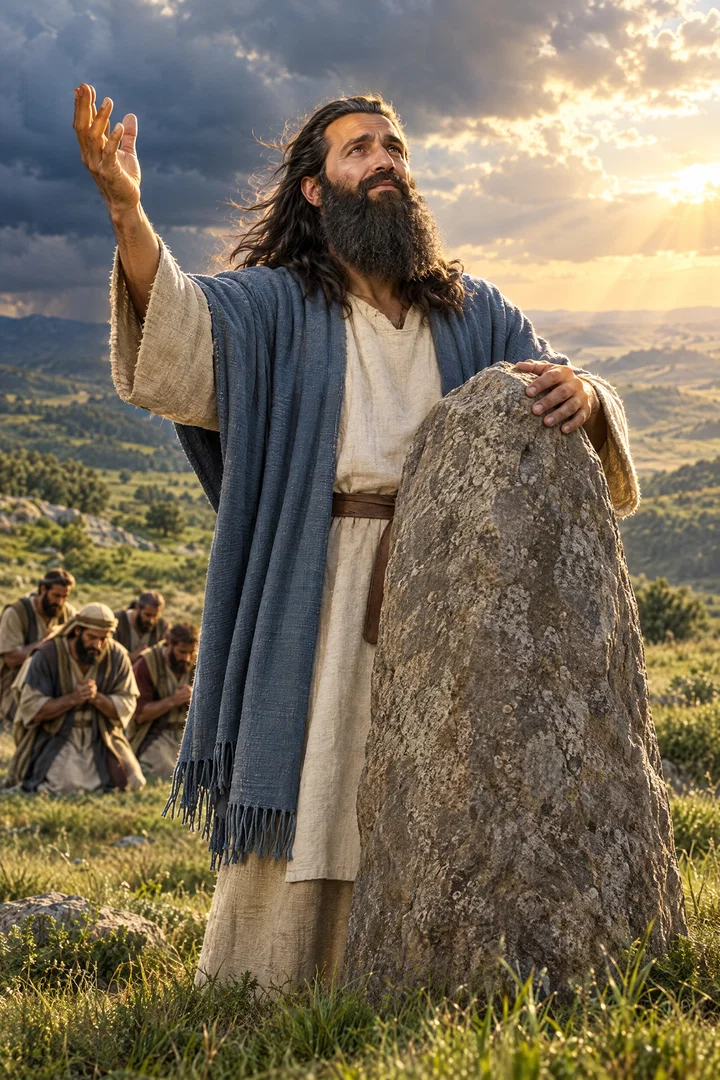
Cross-references
- 1 Samuel 4:10-11
And the Philistines fought, and Israel was smitten, and they fled every man into his tent: and there was a very great slaughter; for there fell of Israel thirty thousand footmen.
Israel’s earlier defeat and the ark’s capture contrast with the later victory on the same field.
- 1 Samuel 7:3-6
And Samuel spake unto all the house of Israel, saying, If ye do return unto the LORD with all your hearts, then put away the strange gods and Ashtaroth from among you, and prepare your hearts unto the LORD, and serve him only: and he will deliver you out of the hand of the Philistines.
humbling and repentance preceded mercy
- 1 Samuel 4:1-2
And the word of Samuel came to all Israel. Now Israel went out against the Philistines to battle, and pitched beside Eben-ezer: and the Philistines pitched in Aphek.
The earlier defeat contrasts with Israel’s later victory.
- 1 Samuel 7:2
And it came to pass, while the ark abode in Kirjath-jearim, that the time was long; for it was twenty years: and all the house of Israel lamented after the LORD.
Twenty years of lamenting preceded Israel’s victory over the Philistines.
Commentary
Each commentary is drawn from primary sources: the writings of Ellen G. White and Adventist pioneers and periodicals. Each commentary is separate. Its own words are not a quotation; follow the references to read the source passages.
Ellen G. White
4 sources
The pursuit to Beth-car came after Israel had been under Philistine power for twenty years.PP 591.11SP 408.1–409.2SG4 110.2 That long domination ended in victory on the very field where Israel had been defeated about twenty years before.PP 591.1 It was the same battlefield where the priests had been killed and the ark had been captured.PP 591.1
Before that battle the Hebrews were greatly humbled and repented of their sins.1SP 408.1–409.2SG4 110.2 When Samuel began to judge Israel, even in his youth, he called the people together for fasting and prayer and deep humiliation before God and bore solemn testimony to them.4T 517.4 Samuel interceded for them, and the people, having learned where their strength lay, entreated him to cry to God for them without ceasing.4T 517.41SP 408.1–409.2SG4 110.2
When the Philistines were aroused and came to make war, God in mercy heard prayer in Israel's behalf.4T 517.41SP 408.1–409.2SG4 110.2 He wrought for them in a miraculous manner and turned victory to Israel's side.4T 517.41SP 408.1–409.2SG4 110.2 Israel then pursued the fleeing Philistines and smote them as far as Beth-car.PP 591.11SP 408.1–409.2 In that pursuit they used weapons taken from the fallen enemy.PP 591.1 The outcome proved that obedience to God brings safety and victory, while transgression brings disaster and defeat.4T 517.4PP 591.1
Sources
Pioneers and periodicals
7 sources
This verse belongs to the period between the judges and the kings when every man did what was right in his own eyes, when Hophni and Phinehas were sons of Belial who knew not the Lord and by greedy extortion caused the people to abhor the service of God, and when strange gods and Ashtaroth and abominable excesses of the heathen had been introduced into worship. It is part of the account of Israel's apostasy and restoration through Samuel, an example of God restoring His people through a prophet. That account is of inestimable value to God's people today when viewed from a spiritual standpoint.
When the Philistines gathered against repentant Israel at Mizpeh, God answered Samuel's prayer and the cry of His children by discomfiting the Philistines and throwing them into confusion and flight with thunder and lightning.ST Jan 26, 1882ST Dec 12, 1895ST Oct 17, 1895ST Jul 15, 1889RH Aug 21, 1856 After that deliverance the men of Israel went out of Mizpeh and pursued the fleeing Philistines, taking weapons from the fallen Philistines to attack the force they had feared, and smote them, carrying the victory as far as under Beth-car.ST Jan 26, 1882ST Oct 17, 1895 Their victory followed God's deliverance and showed them that He had accepted their repentance and acted for them, and it prompted the people to praise God for His help.ST Jan 26, 1882ST Dec 12, 1895RH Aug 21, 1856
The battle took place at Mizpah on the same field where twenty years before Israel had been defeated and the ark captured because they failed to recognize God.ST Jul 15, 1889ST Oct 17, 1895 The tables were turned because Israel now trusted God instead of their own strength and God manifested His power with them, in contrast to their earlier defeat when they carried the ark into battle while presumptuously sinning against Him.ST Jul 15, 1889ST Jul 15, 1889 The ark in one sense typified God's presence because it contained the law of God, the ten commandments, which is the reflex of His divine will and represents the character and perfection of Almighty God, as immutable and unchangeable as when written by God on tables of stone, with not one jot or tittle ever abrogated or set aside.ST Jul 15, 1889 The fall and destruction of the image of Dagon, a false god representing a false system of religion, before the ark shows that the God whose law was in that ark is the true God alone.ST Jul 15, 1889
The pursuit to Beth-car was a supernatural deliverance by God's direct interposition, not a fortunate combination of circumstances.ST Jul 15, 1889 It is always safe to walk in conformity with God's will, but death and destruction surely come from disobedience, for God does not accompany those who walk in forbidden paths, and to willfully continue in iniquity after seeing its sinfulness is the height of presumption; God reveals His will to be followed in the path that leads to life eternal.ST Jul 15, 1889 God brings His children again and again over the same places to fully test weak points until they have power with Him to gain precious victories instead of humiliating defeats, He will overrule events for eternal good for those who trust Him and open the way of deliverance out of great temptations, and His direct interposition to save and help today should be believed in as much as in the past and openly given the glory instead of being explained away by natural causes.ST Jul 15, 1889 The Lord can bring victory where defeat once occurred, and His strength does not change; the obstacle is human faith and obedience, and the same lesson applies to repeated struggles with sin where the struggle may recur until victory is gained.ST Oct 17, 1895
Sources