2 Chronicles 20:22
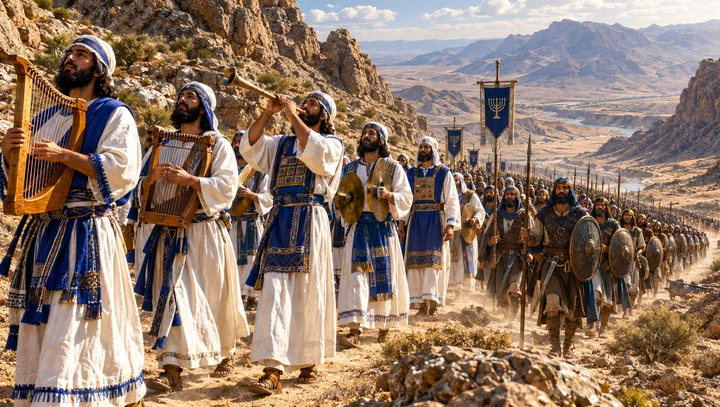
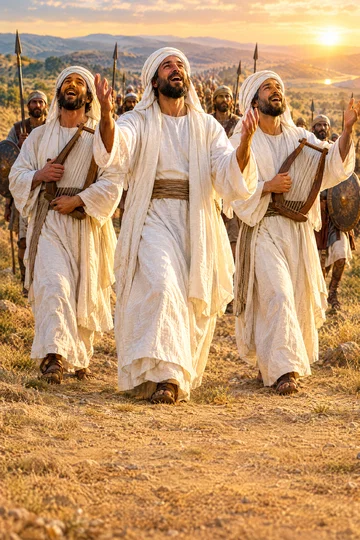
And when they began to sing and to praise, the LORD set ambushments against the children of Ammon, Moab, and mount Seir, which were come against Judah; and they were smitten.
Translations
And when they began to sing and to praise, the LORD set ambushes against the children of Ammon, Moab, and mount Seir, which were come against Judah; and they were smitten.
And when they began to sing and to praise, the LORD set ambushments against the children of Ammon, Moab, and mount Seir, which were come against Judah; and they were smitten.
And when they began to sing and to praise, the Lord set ambushments against the children of Ammon, Moab, and mount Seir, which were come against Judah; and they were smitten.
And when they began to sing and to praise, the LORD set ambushes against the children of Ammon, Moab, and mount Seir, who were come against Judah; and they were smitten.
And when they began to sing and to praise, the LORD set liers in wait against the children of Ammon, Moab, and mount Seir, which were come against Judah; and they were smitten.
And when they began to sing and to praise, Jehovah set liers-in-wait against the children of Ammon, Moab, and mount Seir, that were come against Judah; and they were smitten.
And at the time they have begun with singing and praise, Jehovah hath put ambushments against the sons of Ammon, Moab, and mount Seir, who are coming in to Judah, and they are smitten,
And when they began the song of triumph and praise, Jehovah set liers-in-wait against the children of Ammon, Moab, and mount Seir, who had come against Judah, and they were smitten.
And, when they began to sing and to praise, Yahweh had set liers-in-wait against the sons of Ammon, Moab and Mount Seir, who were coming against Judah, and they were smitten.
Berean Standard Bible, Majority Standard Bible
The moment they began their shouts and praises, the LORD set ambushes against the men of Ammon, Moab, and Mount Seir who had come against Judah, and they were defeated.
When they began to sing and to praise, the LORD set ambushers against the children of Ammon, Moab, and Mount Seir, who had come against Judah; and they were struck.
And at the first notes of song and praise the Lord sent a surprise attack against the children of Ammon and Moab and the people of Mount Seir, who had come against Judah; and they were overcome.
And when they began to shoute, and to prayse, the Lord layed ambushments against the children of Ammon, Moab, and mount Seir, which were come against Iudah, and they slewe one another.
Douay-Rheims (Challoner revision)
And when they began to sing praises, the Lord turned their ambushments upon themselves, that is to say, of the children of Ammon, and of Moab, and of mount Seir, who were come out to fight against Juda, and they were slain.
Pictures
Cross-references
- 2 Chronicles 20:15-17
And he said, Hearken ye, all Judah, and ye inhabitants of Jerusalem, and thou king Jehoshaphat, Thus saith the LORD unto you, Be not afraid nor dismayed by reason of this great multitude; for the battle is not yours, but God’s.
God promises Judah need not fight; the battle belongs to Him, and He will give them victory.
- Judges 7:19-22
So Gideon, and the hundred men that were with him, came unto the outside of the camp in the beginning of the middle watch; and they had but newly set the watch: and they blew the trumpets, and brake the pitchers that were in their hands.
God routs a larger enemy through a small force, causing confusion among them.
- 2 Chronicles 20:17
Ye shall not need to fight in this battle: set yourselves, stand ye still, and see the salvation of the LORD with you, O Judah and Jerusalem: fear not, nor be dismayed; to morrow go out against them: for the LORD will be with you.
God promises Judah victory without fighting.
- 2 Chronicles 20:12
O our God, wilt thou not judge them? for we have no might against this great company that cometh against us; neither know we what to do: but our eyes are upon thee.
Jehoshaphat fixes his eyes on God in prayer before God delivers Judah.
- 2 Chronicles 20:3-4
And Jehoshaphat feared, and set himself to seek the LORD, and proclaimed a fast throughout all Judah.
Judah unites to seek God’s help before he overthrows the enemy.
- Acts 16:25-26
And at midnight Paul and Silas prayed, and sang praises unto God: and the prisoners heard them.
Praise and prayer precede God’s deliverance from danger.
- Judges 7:22
And the three hundred blew the trumpets, and the LORD set every man’s sword against his fellow, even throughout all the host: and the host fled to Beth-shittah in Zererath, and to the border of Abel-meholah, unto Tabbath.
God causes enemy forces to turn against one another.
- Joshua 6:1-21
Now Jericho was straitly shut up because of the children of Israel: none went out, and none came in.
Both recount God conquering enemies without his people fighting.
- Joel 3:1-2
For, behold, in those days, and in that time, when I shall bring again the captivity of Judah and Jerusalem,
God judges the nations in the valley of Jehoshaphat while restoring Judah.
- Isaiah 52:12
For ye shall not go out with haste, nor go by flight: for the LORD will go before you; and the God of Israel will be your rereward.
God as frontguard and rearguard in battle
- 1 Kings 8:45
Then hear thou in heaven their prayer and their supplication, and maintain their cause.
God hears Israel’s prayer in battle and maintains their cause.
Commentary
Each commentary is drawn from primary sources: the writings of Ellen G. White and Adventist pioneers and periodicals. Each commentary is separate. Its own words are not a quotation; follow the references to read the source passages.
Ellen G. White
10 sources
Judah under Jehoshaphat was attacked by Ammon, Moab, and Mount Seir, and in dependence on God and His prophets he consulted the people and placed singers with instruments ahead of the army to praise the beauty of holiness and His enduring mercy.Lt 19, 1895, par. 20–22Lt 26, 1895, par. 19–22STB 241.4Ms 72, 1905, par. 12–15 The singers were set in front to declare that the mercy of the Lord endures forever, praising God for the promised victory before the battle was fought.Lt 26, 1895, par. 19–22ED 163.3–4 The moment they began to sing and to praise, the Lord Himself intervened and set ambushments against the invaders so that they were smitten, not by Judah's strength.PK 202.2–3Ms 80, 1904, par. 52–55Lt 19, 1895, par. 20–22Lt 26, 1895, par. 19–22
The ambushed forces turned against one another until they were destroyed, so that when Judah looked from the watchtower all were dead bodies and none had escaped.PK 202.2–3 The defeat is also that fear seized the enemies so that they fled, for as soon as praise began they saw the whole army of heaven before them and were afraid of being destroyed.STB 241.4Ms 93a, 1899, par. 26–27Ms 72, 1905, par. 12–15 Heaven has lost none of its angels and is just as ready to come to the help of God's people now as in the days of ancient Israel.Ms 72, 1905, par. 12–15 Four days later the army returned to Jerusalem laden with the enemies' spoil, singing praise for the victory won.ED 163.3–4
The verse means the battle is not man's but God's, so deliverance comes through dependence and faith expressed in praise in advance.PK 202.2–3Ms 80, 1904, par. 52–55Lt 19, 1895, par. 20–22Lt 26, 1895, par. 19–22 Believing in the Lord establishes His people, while believing His prophets brings prosperity.Lt 26, 1895, par. 19–22 Those in peril, grief, discouragement, and trial should therefore keep their eyes on God, stand still in faith, and let Him lead and save rather than spending probationary time weeping in sackcloth or trusting gloomy feelings.Lt 19, 1895, par. 20–22Lt 26, 1895, par. 19–22 They should meet trial with more music and praise and less groaning, putting faith into work, refusing discouraging speech, and refusing doleful recitations of discouragement.STB 241.4Ms 72, 1905, par. 12–15
They are to trust God as helper and strength and vanguard and rearguard, leaning on His almighty arm with a sympathetic intercessor pleading for them, and knowing trial comes because it is needed, for such faith pleases God and gives triumph and victory.Ms 72, 1905, par. 12–15 The same praising now revives hope and courage and faith, strengthens those standing in defense of the truth, and gains many more victories.Ms 93a, 1899, par. 26–27Ms 72, 1905, par. 12–15 Believers should therefore keep praising, pray as never before, and hold regular praise gatherings together.Ms 93a, 1899, par. 26–27
Singing and shouting to God's glory drives off the enemy, beats him back, vanquishes temptation, and brings victory over Satan and the powers of darkness that bind God's children.Ms 93a, 1899, par. 26–2719MR 129.2–321MR 237.3 With darkness rising and Satan working in great power knowing his time is short, God's people must constantly rise and keep the ascendancy by increasing in power and strength and growing in grace and knowledge of the truth, or be overcome.19MR 129.2–3 There must be more glorifying of God and childlike simplicity, and the victory must be gained together unitedly as one instead of dragging down like weights anyone attempting to rise.19MR 129.2–321MR 237.3
Sources
Pioneers and periodicals
28 sources
When Judah under Jehoshaphat was besieged by Moab and Ammon and their allies with no power or plan of their own, they sought God together in fasting and prayer toward the sanctuary, believed the prophecy that the battle was not theirs but God's and they need only stand still to see His salvation, and went out with singers praising the beauty of holiness in front of the army, whereupon the Lord set ambushments and sent confusion so that Ammon and Moab fell upon Mount Seir and then destroyed one another until Judah found them dead with none escaped and returned laden with spoil.RH Jul 14, 1903ST Oct 20, 1914RH Jan 19, 1911RH Sep 8, 1904ST Dec 24, 1902 The victory was already assured through faith before it was accomplished, and their singing and praise expressed confidence that it was theirs by God's promise before they could see how it would be done.ST Sep 24, 1894ST Jun 10, 1908RH May 21, 1901 God Himself rules and fights for His people when they acknowledge helplessness and utter dependence and gather to ask His help, showing He is their strength and defense and that in emergency the battle belongs to Him whose limitless power can turn apparent impossibility into greater victory.ST Oct 20, 1914ST May 2, 1916RH Oct 10, 1907 Trust in God's promise and belief in the Lord to be established and in His prophets to prosper brings deliverance in obedience to prophetic counsel.RH Jul 14, 1903RH Nov 10, 1904 Sacred song in times of peril is an act of worship through which the Holy Spirit wins the victory, serving as a weapon against discouragement that turns the heart to thanksgiving, strengthens courage in danger, and revives hope and faith for many more victories.RH Nov 10, 1904ST Apr 18, 1911RH May 13, 1915ST Oct 19, 1915
Historical Setting and Battle
This deliverance belongs to the good reign of Jehoshaphat and his reforms, within the account of his return to integrity.RH May 20, 1862ST May 26, 1909 That return to integrity stands in contrast with his later voluntary alliance with wicked King Ahaziah, which brought the destruction of their ships.RH May 20, 1862
When besieged by Moab and Ammon and others, Jehoshaphat proclaimed a fast and Judah sought God together.ST Oct 20, 1914RH Jan 19, 1911RH Oct 3, 1912 The whole people stood together before God, including families and children, with no power or plan of their own, looking to Him for help.RH Nov 18, 1909RH Oct 3, 1912 Jehoshaphat appealed to God's promise and to the sanctuary built for God's name, praying toward the sanctuary, which is turning to the Saviour at the Father's right hand.RH Sep 8, 1904RH Nov 10, 1904 The overthrow of Moab and Ammon came as God answered that united seeking and united dependence on Him.RH Jan 19, 1911RH Oct 3, 1912
Word came by prophecy that the battle was not theirs but God's, that they had no need to fight but only to stand still and see the salvation of God, and that God would be with them.ST Oct 20, 1914RH Nov 10, 1904RH Nov 18, 1909 Believing in the Lord would establish them, and believing His prophets would prosper them and bring strength and success.RH Nov 18, 1909 In obedience Judah went out with singers appointed to praise the beauty of holiness in front of the army.ST May 2, 1916RH Oct 10, 1907 They sang Praise the Lord for His mercy endures forever, praising God for the victory in advance.ST Oct 20, 1914ST May 2, 1916RH Oct 10, 1907ST Oct 19, 1915
When they began to sing and to praise, the Lord set ambushments against the children of Ammon, Moab, and Mount Seir, and sent confusion and panic into the camp, disorganizing the enemy ranks.RH Jul 14, 1903ST Oct 20, 1914ST Apr 18, 1911ST May 2, 1916RH Oct 10, 1907 Ammon and Moab attacked the people of Mount Seir, identified as the Edomites, and then the forces turned on each other until every one helped to destroy another.RH Jul 14, 1903ST Oct 20, 1914ST Dec 24, 1902ST May 2, 1916RH Oct 10, 1907 Judah was saved without having to fight and witnessed deliverance without fighting.RH Jul 14, 1903ST Oct 20, 1914ST Dec 24, 1902 From the watchtower the enemy army was found lying dead, with none escaped.ST Oct 20, 1914ST Dec 24, 1902
Four days later the army returned to Jerusalem laden with the spoils, singing praise for the victory won. This took place in the valley in the wilderness of Tekoah, a victory without parallel in the nation's records.RH Feb 2, 1905 It is the historical event associated with Joel's valley of Jehoshaphat, whose name means Jehovah's judgment.RH Feb 2, 1905
Victory Through Faithful Prayer
The victory belonged to God and was assured through faith before it was accomplished.ST Sep 24, 1894ST Jun 10, 1908 When the singers began praising as they went out against Ammon, Moab, and Mount Seir, the Lord brought about the defeat of the enemy.ST Sep 24, 1894 Their praise expressed faith that the victory was already theirs and confidence in the promised victory before they could see how it would be accomplished.ST Sep 24, 1894ST Jun 10, 1908RH May 21, 1901 Claiming that promise brought encouragement amid difficulty and led to praising God for a deliverance seen by faith.RH May 21, 1901
Prayer sought the wisdom and help needed for victory, while faith claimed and accepted the victory in a spirit of praise.ST Sep 24, 1894 The overthrow of Moab and Ammon was an answer to united prayer and united dependence on God when Judah and Jerusalem sought Him in a proclaimed fast and prayer.RH Jan 19, 1911RH Nov 14, 1912RH Aug 7, 1855 When Judah sought God together, the plea for help turned into songs of praise as He acted against the armies that had come against them and they were defeated.RH Oct 3, 1912RH Nov 14, 1912 In that praying and praising He turned away anger to show favor and intervened to give victory.RH Aug 1, 1871RH Aug 7, 1855
God Himself ruled and fought for His people when they realized and acknowledged helplessness and utter dependence and gathered to seek and ask help of the Lord.ST Oct 20, 1914ST May 2, 1916RH Oct 10, 1907 Word by prophecy had declared the battle was not theirs but God's and they had no need to fight but only to stand still and see His salvation, and in obedience they went out with singers appointed to praise the beauty of holiness before the army saying Praise the Lord for His mercy endures forever.ST Oct 20, 1914ST May 2, 1916RH Oct 10, 1907 When they began to sing and to praise, the Lord sent confusion and panic into the camp so that Ammon and Moab turned against the Edomites of Mount Seir and then every one helped to destroy another until Judah was saved without fighting.RH Jan 1, 1914ST Oct 20, 1914ST May 2, 1916RH Oct 10, 1907 This shows God is His people's strength and defense, that they are not to put trust in human rulers, and that in emergency the battle belongs to God whose limitless power can make an apparent impossibility a greater victory, succeeding through His strength in a seemingly overwhelming crisis.RH Jan 1, 1914RH Aug 26, 1902 He would interpose and preserve His people from war if they trusted in Him.ST Oct 20, 1914
The verse gives ground for faith that the Lord will intervene for His cause and prevent it from suffering disgrace.RH May 21, 1901 God may permit circumstances to reach a crisis so that His intervention becomes clear and Satan's plans are hindered, as when Judah's singing and praising in crisis was met by the Lord's action against their enemies.ST Dec 4, 1901 That battle deliverance stands as visible proof of God's power to help people in trouble because they believed and trusted in Him, and it gives courage to trust Him.ST Jun 18, 1885 It is not a call to physical warfare and does not mean His people are to fight with the sword.ST Jun 18, 1885ST May 2, 1916 Nor is that truth to be turned into an excuse for inactivity and false trust.ST May 2, 1916
Prophecy Music and Courage
The setting of ambushes meant turning the invaders against one another, with Ammon and Moab striking Mount Seir and then the forces destroying each other until the enemy lay dead without Judah having to fight, for the battle belonged to God who brought confusion among the nations.ST Dec 24, 1902 This illustrates how God will fight for His people when nations gather against Jerusalem, since without a common foe their rivalry and desire for power will turn them against one another.ST Dec 24, 1902 When Judah began to sing and to praise in obedience to the prophetic counsel received, the Lord set ambushes against Ammon, Moab, and Mount Seir and the attackers were defeated, so that trust in God's promise that the battle was His brought deliverance without having to fight.RH Jul 14, 1903 Believing in the Lord to be established and believing His prophets to prosper accompanied that setting of ambushes and defeat, as singers praising the beauty of holiness went before the army singing that His mercy endures forever and praising God for victory in advance.RH Jul 14, 1903
When the singers went before the army and praised God, the enemy ranks were disorganized and the opposing forces destroyed one another, giving Judah a decisive victory through song.ST Apr 18, 1911RH Aug 12, 1915 Sacred music in that hour served as an instrument through which the Holy Spirit won the victory and struck the invading forces.ST Apr 18, 1911RH Aug 12, 1915 That praise glorified God while His power gave the victory, as Jehoshaphat's people praised Him and He acted after telling them to stand still and see His salvation.RH Nov 10, 1904ST Sep 21, 1904 Their reliance on His promise of help, expressed in prayer toward the sanctuary, was thus joined to praise as the setting in which He overthrew Ammon, Moab, and Mount Seir.RH Nov 10, 1904ST Sep 21, 1904
The account is an example of singing as well as praying in times of peril, when Judah's song of trust in the face of overwhelming danger accompanied victory.RH May 13, 1915 Sacred song is an act of worship that can serve as a weapon against discouragement, turning the heart toward thanksgiving and strengthening courage. When Judah faced a much greater force and singers were appointed to praise God, their singing accompanied God's victory over the attackers and stands as a source of courage in danger and part of the setting of deliverance.RH May 13, 1915ST Oct 19, 1915
Praise before and in battle brings victory, and the same praising now revives hope and courage and faith. It strengthens the hands of soldiers standing in defense of the truth and gains many more victories in place of doleful recitation of discouragement. Four days after God destroyed the enemies, the army returned to Jerusalem laden with spoils singing praise for the victory won.
Sources