2 Chronicles 20:21
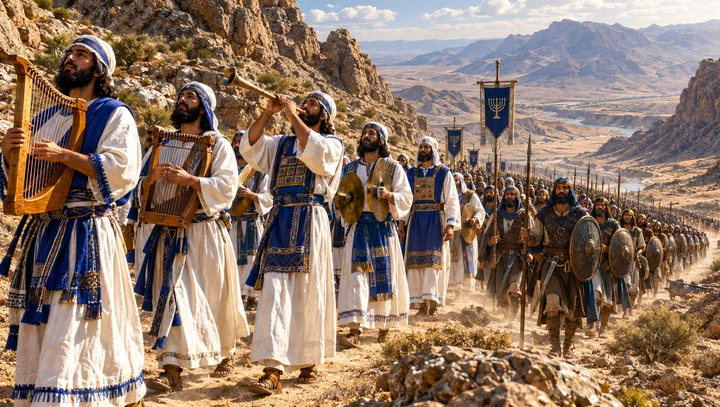
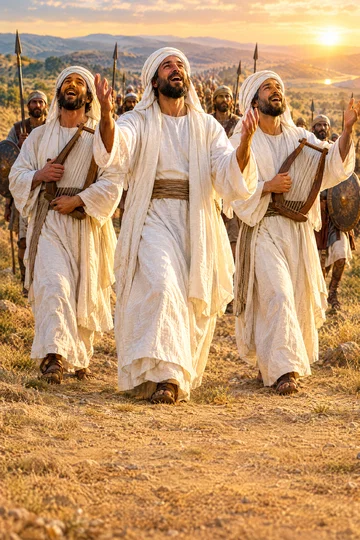
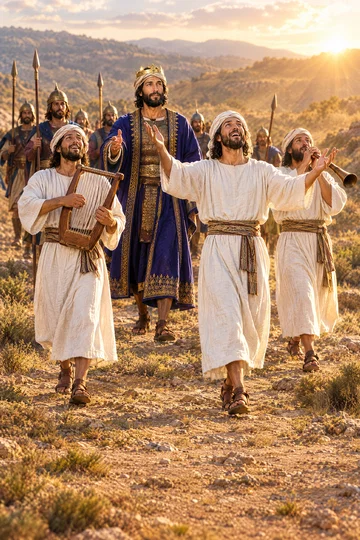
And when he had consulted with the people, he appointed singers unto the LORD, and that should praise the beauty of holiness, as they went out before the army, and to say, Praise the LORD; for his mercy endureth for ever.
Translations
And when he had consulted with the people, he appointed singers to the LORD, and that should praise the beauty of holiness, as they went out before the army, and to say, Praise the LORD; for his mercy endures for ever.
And when he had consulted with the people, he appointed singers unto the LORD, and that should praise the beauty of holiness, as they went out before the army, and to say, Praise the LORD; for his mercy endureth for ever.
And when he had consulted with the people, he appointed singers unto the Lord, and that should praise the beauty of holiness, as they went out before the army, and to say, Praise the Lord; for his mercy endureth for ever.
And when he had consulted with the people, he appointed singers to the LORD, and that should praise the beauty of holiness, as they went out before the army, and to say, Praise the LORD; for his mercy endureth for ever.
And when he had taken counsel with the people, he appointed them that should sing unto the LORD, and praise the beauty of holiness, as they went out before the army, and say, Give thanks unto the LORD; for his mercy endureth for ever.
And when he had taken counsel with the people, he appointed them that should sing unto Jehovah, and give praise in holy array, as they went out before the army, and say, Give thanks unto Jehovah; for his lovingkindness endureth for ever.
And he taketh counsel with the people, and appointeth singers to Jehovah, and those giving praise to the honour of holiness, in the going out before the armed [men], and saying, 'Give ye thanks to Jehovah, for to the age [is] His kindness.'
And he consulted with the people, and appointed singers to Jehovah, and those that should praise in holy splendour, as they went forth before the armed men, and say, Give thanks to Jehovah; for his loving-kindness [endureth] for ever!
And, when he had given counsel unto the people, he appointed such as should sing unto Yahweh, and offer praise with holy adorning,—as they should be going forth before the armed men, that they should be saying, O give thanks unto Yahweh, For, age-abiding, is his lovingkindness.
Berean Standard Bible, Majority Standard Bible
Then Jehoshaphat consulted with the people and appointed those who would sing to the LORD and praise the splendor of His holiness. As they went out before the army, they were singing:
“ Give thanks to the LORD,
for His loving devotion endures forever.”When he had taken counsel with the people, he appointed those who were to sing to the LORD and give praise in holy array as they go out before the army, and say, “ Give thanks to the LORD, for his loving kindness endures forever.”
And after discussion with the people, he put in their places those who were to make melody to the Lord, praising him in holy robes, while they went at the head of the army, and saying, May the Lord be praised, for his mercy is unchanging for ever.
And when he had consulted with the people, and appoynted singers vnto the Lord, and them that should prayse him that is in the beautifull Sanctuarie, in going forth before the men of armes, and saying, Prayse ye the Lord, for his mercy lasteth for euer,
Douay-Rheims (Challoner revision)
And he gave counsel to the people, and appointed the singing men of the Lord, to praise him by their companies, and to go before the army, and with one voice to say: Give glory to the Lord, for his mercy endureth for ever.
Pictures
Cross-references
- 2 Chronicles 20:15-17
And he said, Hearken ye, all Judah, and ye inhabitants of Jerusalem, and thou king Jehoshaphat, Thus saith the LORD unto you, Be not afraid nor dismayed by reason of this great multitude; for the battle is not yours, but God’s.
God promises to fight for Judah and give them victory as they go out singing.
- Acts 16:25-26
And at midnight Paul and Silas prayed, and sang praises unto God: and the prisoners heard them.
Paul and Silas pray and sing praises, and the prison doors open.
- 2 Chronicles 20:3-4
And Jehoshaphat feared, and set himself to seek the LORD, and proclaimed a fast throughout all Judah.
Seeking the LORD for help preceded the appointment of singers.
- Psalms 136:1
O give thanks unto the LORD; for he is good: for his mercy endureth for ever.
Both praise the Lord because his mercy endures forever.
- 1 Chronicles 16:29
Give unto the LORD the glory due unto his name: bring an offering, and come before him: worship the LORD in the beauty of holiness.
Both call for worship in the beauty of holiness.
- Psalms 29:2
Give unto the LORD the glory due unto his name; worship the LORD in the beauty of holiness.
Calls worshipers to honor God in the beauty of holiness.
- Psalms 96:9
O worship the LORD in the beauty of holiness: fear before him, all the earth.
Calls people to worship the Lord in the beauty of holiness.
- 2 Chronicles 20:27-30
Then they returned, every man of Judah and Jerusalem, and Jehoshaphat in the forefront of them, to go again to Jerusalem with joy; for the LORD had made them to rejoice over their enemies.
Victory won through praise ends in rejoicing and rest.
- Psalms 40:3
And he hath put a new song in my mouth, even praise unto our God: many shall see it, and fear, and shall trust in the LORD.
Praise leads others to trust in the LORD.
- 1 Chronicles 16:35
And say ye, Save us, O God of our salvation, and gather us together, and deliver us from the heathen, that we may give thanks to thy holy name, and glory in thy praise.
Both call for God’s deliverance and praise to his name.
- Psalms 48:10-14
According to thy name, O God, so is thy praise unto the ends of the earth: thy right hand is full of righteousness.
Both texts praise God’s righteousness and celebrate him as his people’s guide.
- 2 Chronicles 20:12
O our God, wilt thou not judge them? for we have no might against this great company that cometh against us; neither know we what to do: but our eyes are upon thee.
In peril, the people look to God for help.
- Psalms 47
O clap your hands, all ye people; shout unto God with the voice of triumph.
The people praise God as king over the nations.
- 2 Chronicles 20:25
And when Jehoshaphat and his people came to take away the spoil of them, they found among them in abundance both riches with the dead bodies, and precious jewels, which they stripped off for themselves, more than they could carry away: and they were three days in gathering of the spoil, it was so much.
The army returns after the victory, carrying the enemies’ spoil.
- Isaiah 52:12
For ye shall not go out with haste, nor go by flight: for the LORD will go before you; and the God of Israel will be your rereward.
God goes before his people as their battle frontguard and rearguard.
Commentary
Each commentary is drawn from primary sources: the writings of Ellen G. White and Adventist pioneers and periodicals. Each commentary is separate. Its own words are not a quotation; follow the references to read the source passages.
Ellen G. White
12 sources
After consulting with the people, Jehoshaphat appointed singers to go out before the army praising the beauty of holiness and declaring that the Lord's mercy endures forever, with instruments of music accompanying them.PK 201.4–202.1Ms 80, 1904, par. 52–55Lt 53, 1896, par. 3–6 Their singing before the battle was a battle song of trust in God's promised victory and gratitude for the victory He had given, sung before it was won.PK 201.4–202.1ST Mar 15, 1905 When they began to sing and praise, the Lord set ambushes against Ammon, Moab, and Mount Seir so that they struck one another until Judah found only dead bodies with none escaping.Ms 80, 1904, par. 52–55Lt 19, 1895, par. 20–22Lt 26, 1895, par. 19–22 Some hold that the enemies also fled because God filled their hearts with fear when they heard the music, seeing the whole army of heaven before them.STB 241.4Ms 72, 1905, par. 12–15Ms 93a, 1899, par. 26–27 The battle is not the people's but God's, so His people are to stand still and see His salvation, and praise joined to faith still brings His deliverance, opposing unbelief and strengthening hope, courage, and faith for victory over the powers of darkness.ST Mar 15, 1905Lt 53, 1896, par. 3–6Lt 19, 1895, par. 20–22Ms 93a, 1899, par. 26–27
Singers Before the Army
After consulting with the people, Jehoshaphat appointed singers unto the Lord to go out before the army, praising the beauty of holiness and declaring that His mercy endures forever, with instruments of music accompanying them.PK 201.4–202.1Ms 80, 1904, par. 52–55Lt 53, 1896, par. 3–6Lt 19, 1895, par. 20–22Ms 72, 1905, par. 12–15 It was a singular way of going to battle, for their singing as they went out was their battle song against the enemy army.PK 201.4–202.1Lt 53, 1896, par. 3–6 That song expressed trust in God's promise of victory and gratitude for the victory He had given and promised, sung before the victory was won.PK 201.4–202.1ST Mar 15, 1905ED 163.3–4
When they began to sing and to praise, the Lord set ambushes against Ammon, Moab, and Mount Seir who had come against Judah, causing them to strike and destroy one another until Judah found only dead bodies with none escaping.Ms 80, 1904, par. 52–55Lt 19, 1895, par. 20–22Lt 26, 1895, par. 19–22 When the enemies heard the music God filled their hearts with fear so that they fled, for they saw the whole army of heaven before them and feared their own destruction.STB 241.4Ms 72, 1905, par. 12–15Ms 93a, 1899, par. 26–27
After the victory Judah returned to Jerusalem with joy and music singing praise for the victory won, because the Lord had made them rejoice over their enemies.ST Mar 15, 1905Ms 80, 1904, par. 52–55ED 163.3–4 They came carrying the enemies' spoils four days later.Ms 80, 1904, par. 52–55 And the fear of the Lord fell on the surrounding kingdoms while rest was given to Jehoshaphat's realm.Ms 80, 1904, par. 52–55
Trust Expressed in Praise
The appointment of singers declares that the battle is not the people's but God's.Lt 19, 1895, par. 20–22 They were therefore to set themselves, stand still, and see the salvation of the Lord.Lt 19, 1895, par. 20–22 They were to fear not nor be dismayed, because the Lord would be with them.Lt 19, 1895, par. 20–22
Believing in the Lord establishes His people, and believing His prophets makes them prosper.Lt 19, 1895, par. 20–22Lt 26, 1895, par. 19–22 That belief was shown in bowing down, worshiping, and praising Him with a loud voice on high.Lt 19, 1895, par. 20–22 The singers going out before the army embodied that established, prospering trust.Lt 19, 1895, par. 20–22Lt 26, 1895, par. 19–22
The people possessed the beauty of holiness as they praised.PK 201.4–202.1 Their praise honored God for His holiness and for His enduring mercy.PK 201.4–202.1Lt 53, 1896, par. 7–9 Such praise is fitting even while facing opposition, falsehood, and error.Lt 53, 1896, par. 7–9
Thanksgiving and praise stand opposed to unbelief.Lt 53, 1896, par. 3–6Lt 53, 1896, par. 7–9 Praising God strengthens hope and courage and faith.ST Mar 15, 1905Lt 53, 1896, par. 3–6 It strengthens the hands of valiant soldiers standing in defense of truth and encourages them on to further victories.ST Mar 15, 1905Lt 53, 1896, par. 3–6
Praise Bringing Present Victory
Jehoshaphat's way of going to battle was singular, for after consulting the people he appointed singers to go out before the army exalting the God of Israel and praising the beauty of holiness, and this singing was their battle song against the enemy army.Lt 53, 1896, par. 3–6 These are words of God for encouragement now, teaching much more praising of the Lord and far less doleful recitation of discouragements, darkness, doubt, murmuring and complaining, which brings many more victories.Lt 53, 1896, par. 3–6 Doing this now strengthens hope and courage and faith, strengthens the hands of valiant soldiers standing in defense of truth, and uplifts the voice that utters the praises of God, with the inspiration of the Holy Spirit leading to that praise.Lt 53, 1896, par. 3–6
Israel went into battle with singers and music accompanying the army praising God, and when the enemies heard it God filled their hearts with fear so that they fled.STB 241.4Ms 72, 1905, par. 12–15 God's people should therefore meet their work with faith and praise put into work rather than groaning and discouragement, replacing discouragement and groaning with music and faith.STB 241.4Ms 72, 1905, par. 12–15 Trial comes because it is needed.STB 241.4Ms 72, 1905, par. 12–15 The Lord's hosts are still behind God's people and heaven's angels are just as ready to help today as in ancient Israel, for when Israel went to battle God commanded singers with instruments of music to go out before the army singing the high praises of God.Ms 72, 1905, par. 12–15 God will be helper and strength and frontguard and rearguard, an almighty arm to lean on, with a sympathetic Saviour pleading on their behalf, so unwavering faith pleases Him and brings triumph and victory in the God of salvation.Ms 72, 1905, par. 12–15
Praise joined to faith brings God's deliverance, for when they began to sing and to praise the Lord set ambushes against Ammon, Moab and Mount Seir who had come against Judah and they were smitten.Lt 19, 1895, par. 20–22Lt 26, 1895, par. 19–22 Those in darkness, heaviness and tribulation are therefore to place dependence upon God and praise Him, exercising constant faith, looking away from self and feelings to Christ, and trusting His promises for peace, grace and strength.Lt 19, 1895, par. 20–22Lt 26, 1895, par. 19–22 They are not to spend probationary time in weeping and sitting in sackcloth, for the future is in the hands of Him who created the earth and He will lead all who will be led.Lt 19, 1895, par. 20–22 Singing and shouting praise to God vanquishes the enemy and gives victory over the powers of darkness, for as soon as Israel began to sing their enemies fled because they saw the whole army of heaven before them and feared their own destruction.Ms 93a, 1899, par. 26–2721MR 237.3 Believers should keep praising God and sing when tempted, rising together unitedly in praise rather than struggling alone while others drag them down, and in this way God's children break Satan's binding influence.Ms 93a, 1899, par. 26–2721MR 237.3
Sources
Pioneers and periodicals
33 sources
When Jehoshaphat had consulted with the people he appointed singers to go out in front of the army praising the beauty of holiness and saying Praise the Lord for His mercy endures forever.ST Sep 24, 1894RH Jul 14, 1903ST Apr 18, 1911 When they began to sing and praise, the Lord set ambushments and threw the enemy into confusion so that Ammon and Moab turned against Mount Seir and then against each other until none escaped and Judah did not need to fight.ST Oct 20, 1914ST Dec 9, 1913ST Dec 24, 1902 Their singing was faith and thanksgiving for the victory God had promised before it was seen, accepting it as already won.ST Mar 15, 1905ST Sep 24, 1894ST Jun 10, 1908 God had promised that Judah need only set themselves, stand still and see His salvation, for the battle was His, and they marched out as confident as though victory were already accomplished.ST Dec 24, 1902RH Oct 10, 1907 That praise in danger was worship through which the Holy Spirit gave victory and courage, strengthening hope, courage and faith and glorifying God.ST Mar 15, 1905RH Aug 12, 1915RH May 13, 1915
Jehoshaphat's Battle Setting
The verse stands in the history of the kings of Judah in the time of Jehoshaphat's good reign and reforms.ST Jun 27, 1911ST May 26, 1909 Ammon, Moab, and Mount Seir came against Judah with a force that greatly outnumbered Israel, and Jehoshaphat led his people out to a valley in the wilderness of Tekoah where an unparalleled victory was won.ST Dec 24, 1902RH Feb 2, 1905ST Jun 18, 1885 When the singers began to sing and praise, God set ambushments against the invading Ammonites, Moabites, and people of Mount Seir.ST Dec 24, 1902ST Oct 1, 1885
After consulting with the people, Jehoshaphat selected and appointed singers to go out in the lead before the army.ST Sep 24, 1894RH Jul 14, 1903ST Dec 9, 1913 They were to praise the beauty of holiness and to say that the Lord is to be praised because His mercy endures forever.ST Sep 24, 1894RH Jul 14, 1903RH May 20, 1862 They went ahead of the army praising the Lord for His enduring mercy as the people went out to battle against a much larger enemy force.ST Apr 18, 1911RH Nov 14, 1912ST May 2, 1916 Their praise marked dependence on God as He fought for them.RH Jul 14, 1903ST May 2, 1916
The appointment came after Judah, including families, stood together before the Lord to seek Him.RH Nov 18, 1909RH Nov 10, 1904 Jehoshaphat proclaimed a fast, the people gathered together to ask help of the Lord, and they admitted they had no strength against the enemy and did not know what to do.RH Nov 18, 1909RH Jan 19, 1911RH Oct 10, 1907 In helplessness Jehoshaphat appealed to God's promise and to the sanctuary built for His name, with prayer offered toward the sanctuary.RH Sep 8, 1904RH Dec 29, 1904 God answered with assurance that He would be with them and that trust in Him and His prophets would establish and prosper them.RH Nov 18, 1909RH Nov 10, 1904 It was one of the most remarkable answers to prayer in the Bible, a crisis in which God made His intervention unmistakable and hindered the working out of Satan's plans.ST Dec 4, 1901RH Dec 29, 1904
When they began to sing and praise, the Lord sent confusion into the camp of the enemies so that every one helped to destroy another.ST Oct 20, 1914ST May 2, 1916RH Oct 10, 1907 The enemy ranks became disorganized, Ammon and Moab stood up against Mount Seir to slay and destroy them and then turned upon each other until all were slain.ST Dec 9, 1913ST Dec 24, 1902ST Apr 18, 1911 Judah did not need to fight because the enemies destroyed themselves.ST Dec 24, 1902ST May 2, 1916RH Oct 10, 1907 When Israel looked there were only dead bodies fallen to the earth, with none escaped.ST Dec 24, 1902 The triumph was so complete that they were three days in gathering the spoil. Four days later the army returned to Jerusalem carrying the enemies' spoils and singing.ST Mar 15, 1905
Faith, Prayer and Victory
The singers sent ahead of the army praised God's holiness and enduring mercy before any blow was struck, expressing faith in the victory He had promised and gratitude for it as already given.ST Mar 15, 1905ST Sep 24, 1894RH Jul 14, 1903RH Mar 18, 1902 They accepted the victory as real before they could see how it would be accomplished, singing as they marched and making faith's victory visible in experience.ST Sep 24, 1894ST Jun 10, 1908RH Mar 18, 1902 The account is therefore one of victory by faith, assured before it was accomplished and met with trust as Judah went out against a great enemy.ST Mar 15, 1905ST Jun 10, 1908RH Jul 14, 1903 When the people began to sing the Lord gave victory and joy over their enemies, and after the victory the army returned to Jerusalem days later carrying spoil and singing.ST Mar 15, 1905RH Jul 14, 1903RH Mar 18, 1902
God had undertaken the battle with the word that the battle was His and Judah would not need to fight, but only set themselves, stand still, and see His salvation with them.ST Dec 24, 1902RH Oct 10, 1907 Believing that word as certain, Jehoshaphat and his people marched out to meet a great multitude as confident as though victory were already accomplished before their eyes, appointing singers to sing the song of victory as they went before the army.RH Oct 10, 1907 When they began to sing and praise the Lord set ambushments and sent confusion into the enemy camp, so that Ammon and Moab stood against Mount Seir and then every one helped destroy another until only dead bodies fallen to the earth remained with none escaped.ST Dec 24, 1902RH Oct 10, 1907
The history gives grounds for faith in God's deliverance in crisis, darkness, and perplexity, its instruction and promises claimed by faith bringing spiritual light and leading to praise for a deliverance trusted beforehand.RH Sep 8, 1904RH Nov 10, 1904RH May 21, 1901 In helplessness Jehoshaphat appealed to God's promise and to the sanctuary built for His name, leading the people to rely on God, and help and strength came from God when His people sought Him in prayer and succeeded through His strength amid perplexity.RH Sep 8, 1904RH Nov 10, 1904RH Aug 26, 1902 When Judah sought God together in danger their plea for help became praise, singers going before the army praising Him for His enduring mercy.RH Oct 3, 1912RH Nov 14, 1912 United seeking of God can thus turn a plea for help into songs of praise and victory when He delivers His people.RH Oct 3, 1912RH Nov 14, 1912
Praising God before the victory strengthens hope, courage, and faith, and can encourage those defending the truth to further victories.ST Mar 15, 1905 That song of trust expressed faith in the promised victory and God gave joy over enemies, while praise of His holiness and enduring mercy glorifies Him.ST Mar 15, 1905RH Mar 18, 1902ST Sep 21, 1904 Praise in difficulty can bring back the power of God and make the Lord's joy a source of strength.ST Sep 21, 1904 Praise is an expression of trust in God's power to deliver, grounded in the lasting nature of His mercy, and the deliverance of greatly outnumbered Judah because the people believed and trusted shows His power to help people in trouble and gives courage.ST Jun 18, 1885ST May 2, 1916RH Jan 9, 1900 It is not an example of engaging in physical warfare, since Judah did not need to fight because the enemies destroyed themselves, and trust that God will act calls for seeking His help in dependence on Him as He fights, not passive inactivity.ST Jun 18, 1885ST May 2, 1916RH Oct 10, 1907
Praise, Prophecy and Practice
The beauty of holiness named here is the beauty of God's holy character, expressed in praise.ST May 9, 1916 Holiness is not merely outward brightness; its beauty is the visible outflow of a character that is glorious within.ST May 9, 1916 The beauty of the physical world gives only a partial glimpse of this beauty, which is to be loved, lived, and developed in the inner life.ST May 9, 1916 In the life of Christ that holy character shines undimmed, though veiled in sinful flesh.ST May 9, 1916
Music here served as an instrument through which the Holy Spirit brought victory, when singers were sent ahead of the army to praise the Lord and the beauty of holiness and to declare that His mercy endures forever, and as the people began to sing and praise their enemies were struck down.RH Aug 12, 1915 Sacred song is praise to God in danger, serving worship and devotion, with singers going before the army and praising God for His enduring mercy. The singing in the face of overwhelming danger brought victory, showing that peril may be met with a song of trust and praise, not with prayer alone.RH May 13, 1915 Appointed singers praising God's holiness in front of a much larger army illustrate how singing can give courage and strength in danger.ST Oct 19, 1915
The same holds today: bringing God into the life fills the soul with singing, puts foes to confusion before believers, and makes experience one blessed onward march with victory inscribed on banners.ST Dec 9, 1913 God would have believers filled with praise for His goodness and joining in showing forth His praises until many see and fear and trust in the Lord, with victory as the ceaseless song.ST Dec 9, 1913 Such praise proves that Christian happiness does not depend on favorable temporal conditions but on being rich in faith as a child of a King.ST Dec 9, 1913
The same work of enemies destroying one another will be repeated in the final battle, for the battle is God's and not His people's, and He fights in the day of battle by setting ambushments so that Ammon and Moab stood against Mount Seir to slay and destroy them and then turned upon each other until all were found as dead bodies.ST Dec 24, 1902 In that final battle the nations take Jerusalem but leave a remnant who are the people of God, with whom God identifies Himself for salvation.ST Dec 24, 1902 With the restraining Spirit withdrawn the nations are left to the spirit of Satan, and with no common foe the unsettled question of who shall possess the city and stand at the head moves them to anarchy, jealousy, envy, and self-advancement until they turn upon each other and the armies are cut to pieces.ST Dec 24, 1902
Sources