2 Kings 2:24
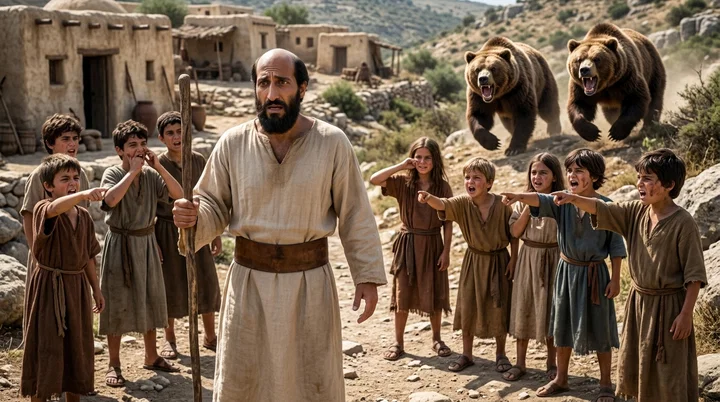
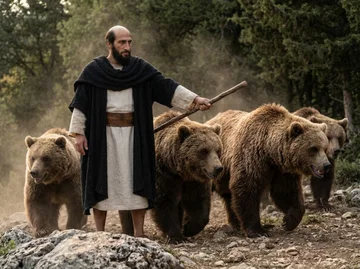
And he turned back, and looked on them, and cursed them in the name of the LORD. And there came forth two she bears out of the wood, and tare forty and two children of them.
Translations
American King James Version, King James Version
And he turned back, and looked on them, and cursed them in the name of the LORD. And there came forth two she bears out of the wood, and tare forty and two children of them.
And he turned back, and looked on them, and cursed them in the name of the Lord. And there came forth two she bears out of the wood, and tare forty and two children of them.
And he turned back, and looked on them, and cursed them in the name of the LORD. And there came forth two she bears out of the wood, and tore forty and two children of them.
And he looked behind him and saw them, and cursed them in the name of the LORD. And there came forth two she-bears out of the wood, and tare forty and two children of them.
And he looked behind him and saw them, and cursed them in the name of Jehovah. And there came forth two she-bears out of the wood, and tare forty and two lads of them.
And he looketh behind him, and seeth them, and declareth them vile in the name of Jehovah, and two bears come out of the forest, and rend of them forty and two lads.
And he turned back, and looked on them, and cursed them in the name of Jehovah. And there came forth two she-bears out of the wood, and tore forty-two children of them.
And, when he turned round and saw them, he cursed them, in the name of Yahweh,—and there came forth two she-bears out of the wood, and tare, of them, forty-two youths.
Berean Standard Bible, Majority Standard Bible
Then he turned around, looked at them, and called down a curse on them in the name of the LORD.Suddenly two female bears came out of the woods and mauled forty-two of the boys.
He looked behind him and saw them, and cursed them in the LORD’s name. Then two female bears came out of the woods and mauled forty-two of those youths.
And turning back, he saw them, and put a curse on them in the name of the Lord. And two she-bears came out of the wood and put forty-two of the children to death.
And he turned backe, and looked on them, and cursed them in the name of the Lord. And two beares came out of the forest, and tare in pieces two and fourtie children of them.
Douay-Rheims (Challoner revision)
And looking back, he saw them, and cursed them in the name of the Lord: and there came forth two bears out of the forest, and tore of them two and forty boys.
Pictures
Cross-references
- 2 Kings 2:11
And it came to pass, as they still went on, and talked, that, behold, there appeared a chariot of fire, and horses of fire, and parted them both asunder; and Elijah went up by a whirlwind into heaven.
Elijah’s ascent to heaven precedes the mockery of Elisha.
- 2 Kings 2:13
He took up also the mantle of Elijah that fell from him, and went back, and stood by the bank of Jordan;
Elisha receives Elijah’s mantle before the youths mock him.
Commentary
Each commentary is drawn from primary sources: the writings of Ellen G. White and Adventist pioneers and periodicals. Each commentary is separate. Its own words are not a quotation; follow the references to read the source passages.
Ellen G. White
6 sources
On the way to Bethel after Elijah's ascension or translation, ungodly youths mocked Elisha over his going up by taunting him about going up and about his baldness.PK 235.2–236.1SG1 154.1 Their mockery showed contempt for his sacred prophetic calling and a lack of reverence, and as an insult to God's servant and representative it was directed against God himself.5T 44.2–45.1EW 209.2SG1 154.1PK 236.3–237.1SG1 153.1 The young people had learned this disrespect from their parents.SG1 154.1SG1 153.1
Elisha, though mild by nature, turned and pronounced a curse on them in the Lord's name under divine inspiration.PK 235.2–236.15T 44.2–45.1SG1 153.1 God punished them then and there, with two she-bears coming out of the woods and mauling forty-two of them.PK 235.2–236.1EW 209.2SG1 153.1 The judgment established respect for his ministry and authority and prevented further mockery that could have hindered his mission to instruct and save during his many years of service.PK 235.2–236.15T 44.2–45.1 The episode shows that kindness has limits and that authority may require firm severity.5T 44.2–45.1
The youths' lack of reverence teaches that reverence should be taught and cherished, that God's name must not be spoken lightly, and that respect shown to ministers, teachers, and parents as God's representatives honors God.PK 236.3–237.1 The verse warns that scoffing at God's work and treating the hope and prospect of the saints' going up as something to ridicule brings God's wrath and plagues.EW 209.2SG1 154.1SG1 153.1 It is not a light or small thing to trifle with the Creator.EW 209.2SG1 154.1SG1 153.1
Sources
Pioneers and periodicals
14 sources
After Elijah was taken up to God in a chariot of fire, Elisha his successor was confronted at Bethel by more than forty youths who told him to go up as Elijah had and insulted his bald head.RH Jun 16, 1868RH Dec 14, 1905RH Jan 10, 1865RH Dec 24, 1867ST Jul 13, 1904 He turned back and looked on them and cursed them in the name of the LORD, and two she-bears came out of the wood and mauled and killed forty-two of them.ST Feb 24, 1881RH Jun 16, 1868ST Mar 25, 1903 Their taunt to go up made sport of Elisha's word that his master had gone up and of the solemn hope of translation, and so was wickedness against God and not merely against the prophet.ST Feb 24, 1881RH Jun 16, 1868RH Apr 14, 1874RH Jan 10, 1865RH Jan 10, 1854 The outbreak reflected the poor state of family religion and the neglect of parents to teach respect and obedience, for which the people of Bethel were visited with severe judgment.ST Dec 13, 1905RH Apr 11, 1912ST Jul 13, 1904 The punishment warns those who now mock the hope of being caught up to meet Christ at His return with the same taunt about going up, as after the time passed in 1844, that cruel mockery and making light of God will bring far greater vengeance at His revelation.ST Feb 24, 1881RH Apr 14, 1874RH Jan 10, 1854RH Dec 24, 1867ST Jun 28, 1877
The Mocking at Bethel
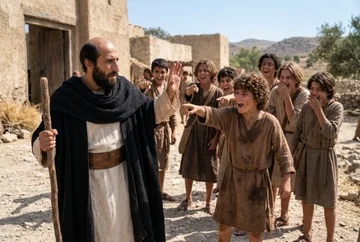
The incident took place at Bethel after Elijah had been caught away from Elisha and taken up to God in a chariot of fire, leaving Elisha behind as his companion and successor.RH Dec 14, 1905RH Dec 24, 1867ST Jul 13, 1904 The students of the prophets at Bethel were close to God and knew that Elijah would ascend, in contrast with the youths who taunted Elisha there and were destroyed.RH Dec 14, 1905 A group described as children, youths, and more than forty boys confronted Elisha there and called for him to go up as Elijah had.RH Jan 10, 1865RH Dec 24, 1867ST Jul 13, 1904 They added the insult about his bald head, saying go up thou bald head.RH Jun 16, 1868RH Dec 24, 1867
Elisha turned back and looked on them and cursed them in the name of the Lord.ST Mar 25, 1903RH Jan 10, 1854 Then two she-bears came out of the wood, sent by God, and mauled and tore forty-two of them.ST Feb 24, 1881RH Jun 16, 1868ST Mar 25, 1903 The children who mocked Elisha for saying Elijah had gone up were thus killed.ST Feb 24, 1881RH Jan 10, 1854 The wider chapter presents Elisha succeeding Elijah to the double portion of his master's spirit as a true successorship, set against Gehazi's later failure in office to Elisha when Gehazi sought Naaman's gain and gained leprosy with it.RH Dec 23, 1915
The account of Elisha's miracles including the bears is a true event rather than a pious legend or myth.ST Jan 24, 1906 After this incident Elisha's presence commanded the respect of all classes of the people so that he was consulted by kings. After the healing of Naaman his renown went throughout Syria. The appellation man of God was specially applied to him.
What the Mockery Meant
The “go up” taunt was aimed at Elisha’s belief, teaching, and word that his master had gone up after Elijah was caught away from him in a chariot of fire and taken up to God.RH Apr 14, 1874RH Jan 10, 1854RH Dec 24, 1867 Left behind as Elijah’s companion, Elisha was mocked for the going-up hope after viewing the translation, with the scoffers calling for him to go up as Elijah had.ST Feb 24, 1881RH Apr 14, 1874ST Jul 13, 1904 That mockery made sport of the solemn hope of translation itself.ST Feb 24, 1881RH Apr 14, 1874ST Jul 13, 1904 The forty children who said “go up, thou bald head” and were torn in pieces by wild beasts therefore picture contempt for the word that the Master had gone up.RH Jan 10, 1854RH Dec 24, 1867
The scoffing and wishing him to go up after Elijah was wickedness against the prophet, and it paid for with a horrible death when God sent two she-bears from the woods that tore forty-two of them.RH Jun 16, 1868RH Jan 10, 1865 It was not merely against Elisha, because God had taken Elijah up, so it was mockery of God.RH Jun 16, 1868RH Jan 10, 1854 Making light in this way is thus shown to bring severe judgment for mocking God.RH Jun 16, 1868RH Jan 10, 1865RH Jan 10, 1854 The curse in the Lord’s name followed by the bears coming from the woods to maul forty-two shows how severely irreverent and disrespectful conduct is regarded, including disrespect toward the elderly.ST Mar 25, 1903ST Jul 13, 1904ST Jun 28, 1877
The irreverence of more than forty boys scoffing together points beyond the moment to the homes behind it.ST Dec 13, 1905RH Apr 11, 1912ST Jul 13, 1904 It reflected the poor state of family religion in their homes.ST Jul 13, 1904 The people of Bethel were visited by severe judgment because they had neglected to teach their children respect and obedience at home, and the judgment that came when the children mocked Elisha is connected to that parental neglect.ST Dec 13, 1905RH Apr 11, 1912 Cruel mockery is therefore shown to bring severe consequences, falling not only on the mockers but on the community that failed to form them.ST Dec 13, 1905RH Apr 11, 1912ST Jun 28, 1877
Warning to Modern Mockers
The punishment of the mockers at Bethel warns those who now mock the going-up hope taught from Elisha's belief that his master had gone up.ST Feb 24, 1881RH Apr 14, 1874 That same hope is mocked now by the question when believers are going up, just as Elisha was mocked for believing and teaching going up after viewing the translation of Elijah.RH Apr 14, 1874 Because God had taken Elijah up, the mockery was not merely against Elisha but against God, and making light of the expectation of being caught up to meet Christ at his return in the clouds likewise mocks God.RH Jan 10, 1854
The mocking of Elisha's word that his master had gone up pictures the mocking of those who look for the return of their blessed Master in the clouds of heaven.RH Dec 24, 1867 After Elijah was caught away from Elisha in a chariot of fire and caught up to God, the mockers said go up, and after the time passed in 1844 the disappointed who looked for Christ were met with the taunt that they had not yet gone up.RH Dec 24, 1867 If God took vengeance on children for mocking one old man over his master's going up, the portion of those guilty of mocking, scoffing, ridiculing, and persecuting those waiting for Christ's return will be far greater vengeance at his revelation.RH Dec 24, 1867
Making light of God brings severe judgment, as shown when God sent two she-bears from the woods that tore forty-two of those who told the prophet to go up.RH Jun 16, 1868 Scoffing against the prophet was wickedness, and those who wished him to go up after Elijah paid for it with a horrible death.RH Jan 10, 1865 Cruel mockery can therefore bring severe consequences, even a horrible death.RH Jun 16, 1868RH Jan 10, 1865ST Jun 28, 1877
Sources