2 Kings 25:17
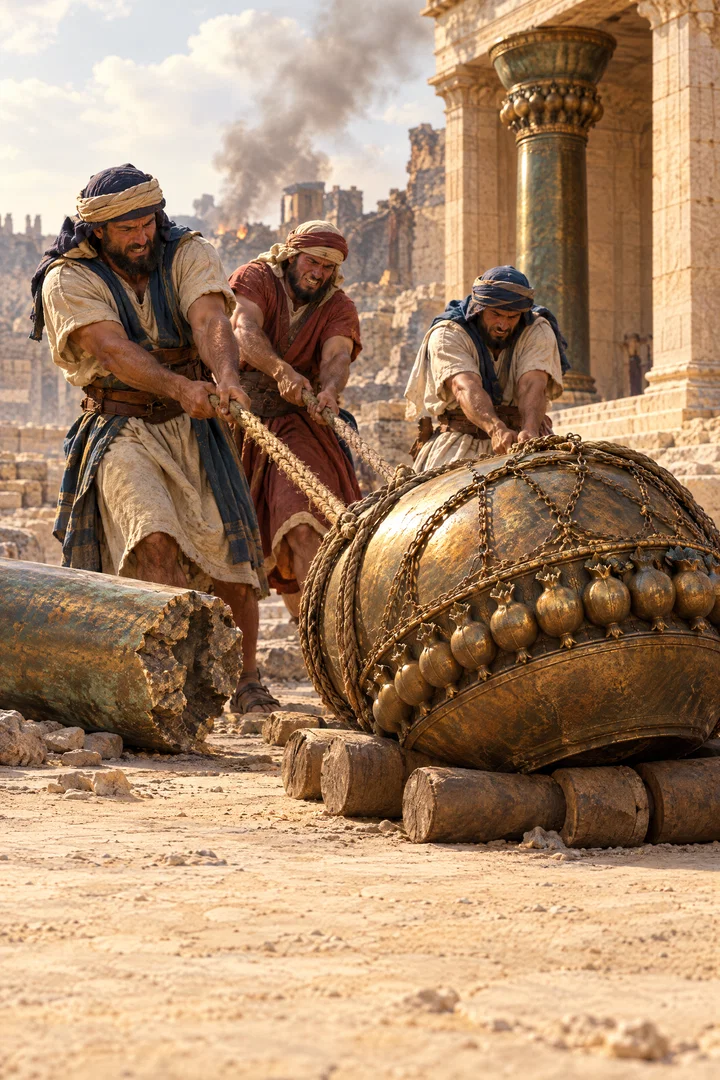
The height of the one pillar was eighteen cubits, and the chapiter upon it was brass: and the height of the chapiter three cubits; and the wreathen work, and pomegranates upon the chapiter round about, all of brass: and like unto these had the second pillar with wreathen work.
Translations
The height of the one pillar was eighteen cubits, and the capital on it was brass: and the height of the capital three cubits; and the wreathen work, and pomegranates on the capital round about, all of brass: and like to these had the second pillar with wreathen work.
King James Version, KJV Cambridge Paragraph Bible
The height of the one pillar was eighteen cubits, and the chapiter upon it was brass: and the height of the chapiter three cubits; and the wreathen work, and pomegranates upon the chapiter round about, all of brass: and like unto these had the second pillar with wreathen work.
The hight of the one pillar was eighteen cubits, and the capital upon it was brass: and the hight of the capital three cubits; and the wreathen work, and pomegranates upon the capital around, all of brass: and like to these had the second pillar with wreathen work.
The height of the one pillar was eighteen cubits, and a chapiter of brass was upon it: and the height of the chapiter was three cubits; with network and pomegranates upon the chapiter round about, all of brass: and like unto these had the second pillar with network.
The height of the one pillar was eighteen cubits, and a capital of brass was upon it; and the height of the capital was three cubits, with network and pomegranates upon the capital round about, all of brass: and like unto these had the second pillar with network.
eighteen cubits [is] the height of the one pillar, and the chapiter on it [is] of brass, and the height of the chapiter [is] three cubits, and the net and the pomegranates [are] on the chapiter round about — the whole [is] of brass; and like these hath the second pillar, with the net.
The height of one pillar was eighteen cubits, and the capital upon it was brass, and the height of the capital three cubits; and the network and the pomegranates, upon the capital round about, all of brass: and similarly for the second pillar with the network.
Eighteen cubits, was the height of each pillar, and, the capital thereupon was of bronze, and, the height of the capital, was three cubits, and, the lattice-work and pomegranates upon the capital round about, the whole, was of bronze; and, like these, had the second pillar, upon the lattice-work.
Berean Standard Bible, Majority Standard Bible
Each pillar was eighteen cubits tall. The bronze capital atop one pillar was three cubits high, with a network of bronze pomegranates all around. The second pillar, with its network, was similar.
The height of the one pillar was eighteen cubits, and a capital of bronze was on it. The height of the capital was three cubits, with network and pomegranates on the capital around it, all of bronze; and the second pillar with its network was like these.
One of the pillars was eighteen cubits high, with a crown of brass on it; the crown was three cubits high, circled with a network and apples all of brass; and the second pillar had the same.
The height of the one pillar was eighteene cubits, and the chapiter thereon was brasse, and the height of the chapiter was with networke three cubites, and pomegranates vpon the chapiter rounde about, all of brasse: and likewise was the second pillar with the networke.
Douay-Rheims (Challoner revision)
One pillar was eighteen cubits high, and the chapiter of brass which was upon it was three cubits high: and the network, and the pomegranates that were upon the chapiter of the pillar, were all of brass: and the second pillar had the like adorning.
Pictures
Cross-references
- 1 Kings 7
But Solomon was building his own house thirteen years, and he finished all his house.
same one-book history, first section
Commentary
Each commentary is drawn from primary sources: the writings of Ellen G. White and Adventist pioneers and periodicals. Each commentary is separate. Its own words are not a quotation; follow the references to read the source passages.
Pioneers and periodicals
8 sources
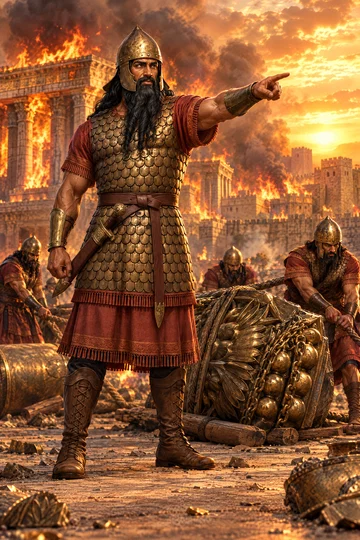
The verse describes the two bronze pillars of the temple, the one pillar standing eighteen cubits high with a brass capital three cubits high, decorated round about with wreathwork and pomegranates, all of brass, and the second pillar with its wreathwork made like the first.ST Jan 14, 1886ST Nov 5, 1912 Those pillars and their decorated capitals were part of the temple furnishings and treasures despoiled, plundered and carried away when Jerusalem fell to Babylon and the temple was burned after the people's unfaithfulness.ST Jan 14, 1886ST Jun 10, 1913ST Nov 5, 1912 Their removal formed part of the destruction and plunder of Jerusalem that completed Judah's captivity.ST Jan 14, 1886
The verse belongs to the closing history of the kingdom of Judah describing the fall and laying waste of Jerusalem by Babylon, when the kingdom was subverted.ST Jun 10, 1913ST Nov 7, 1906 The chapter in which it stands is a concluding chapter added to the words of Jeremiah, describing the fall of Jerusalem.RH Jul 27, 1916 It stands in the fuller telling of Zedekiah's downfall in 2 Kings 24 and 25, for Zedekiah was the last king of the chosen people and of Judah, captured, blinded by Nebuchadnezzar, taken to Babylon and dying in captivity.ST Jun 10, 1913ST Nov 4, 1897
The same context includes the despoiling of the temple, the slaying of the captives at Riblah, the capture of Zedekiah the last king, the appointment of Gedaliah as governor and his slaying through treachery, the going of the remnant to Egypt contrary to the counsel of Jeremiah, and the kind treatment shown to Jehoiachin by the king of Babylon.ST Jun 10, 1913 Their removal formed part of the destruction that completed Judah's captivity, when the people were taken captive and scattered.ST Jan 14, 1886ST Nov 7, 1906 Afterward Judah had no independent government except as a province subservient to the great kingdoms that ruled the world.ST Nov 4, 1897
It belongs to the Babylonian captivity that closes the history of the great empires mentioned in the Bible from the confusion of tongues, and shows God's overruling hand in the history of nations.ST Feb 11, 1897 The captivity and final destruction of Jerusalem in 2 Kings 25:1-21, with the prophecies relating to it, is typical of events to transpire either under the gospel or at the close of this dispensation, having a primary and typical fulfillment among the Jews and an emphatic fulfillment in this age.RH Sep 17, 1872 There is a sudden transition from type to antitype requiring care not to apply to the type what applies to the antitype, for God molded portrayals of His ancient people to also represent gospel events so ancient hearers could look beyond their own dispensation and those in the Christian dispensation have a special interest in what emphatically applies to them.RH Sep 17, 1872
Sources