2 Kings 25:16
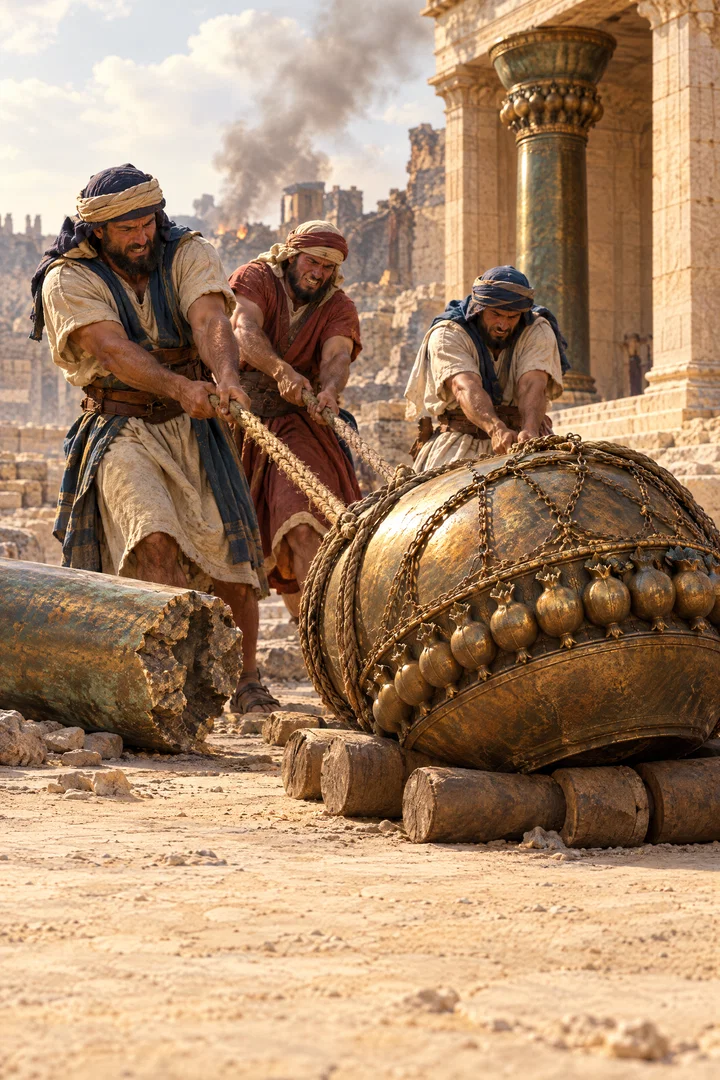
The two pillars, one sea, and the bases which Solomon had made for the house of the LORD; the brass of all these vessels was without weight.
Translations
American King James Version, King James Version, Webster Bible
The two pillars, one sea, and the bases which Solomon had made for the house of the LORD; the brass of all these vessels was without weight.
The two pillars, one sea, and the bases which Solomon had made for the house of the Lord; the brass of all these vessels was without weight.
The two pillars, the one sea, and the bases, which Solomon had made for the house of the LORD; the brass of all these vessels was without weight.
The two pillars, the one sea, and the bases, which Solomon had made for the house of Jehovah, the brass of all these vessels was without weight.
The two pillars, the one sea, and the bases that Solomon made for the house of Jehovah, there was no weighing of the brass of all these vessels;
The two pillars, the one sea, and the bases which Solomon had made for the house of Jehovah: for the brass of all these vessels there was no weight.
As for the two pillars the one sea and the stands which Solomon made for the house of Yahweh, without weight, was the bronze of all these things.
Berean Standard Bible, Majority Standard Bible
As for the two pillars, the Sea, and the movable stands that Solomon had made for the house of the LORD, the weight of the bronze from all these articles was beyond measure.
The two pillars, the one sea, and the bases, which Solomon had made for the LORD’s house, the bronze of all these vessels was not weighed.
The two pillars, the great water-vessel and the wheeled bases, which Solomon had made for the house of the Lord: the brass of all these vessels was without weight.
With the two pillars, one Sea and the bases, which Salomon had made for the house of the Lord: the brasse of all these vessels was without weight.
Douay-Rheims (Challoner revision)
That is, two pillars, one sea, and the bases which Solomon had made in the temple of the Lord: the brass of all these vessels was without weight.
Pictures
Cross-references
- 2 Chronicles 36:18-19
And all the vessels of the house of God, great and small, and the treasures of the house of the LORD, and the treasures of the king, and of his princes; all these he brought to Babylon.
Both recount Babylon taking temple vessels and burning the temple.
- 2 Kings 24:13-16
And he carried out thence all the treasures of the house of the LORD, and the treasures of the king’s house, and cut in pieces all the vessels of gold which Solomon king of Israel had made in the temple of the LORD, as the LORD had said.
Describes an earlier removal of Jerusalem’s temple treasures and people.
- Jeremiah 39:8-9
And the Chaldeans burned the king’s house, and the houses of the people, with fire, and brake down the walls of Jerusalem.
Jerusalem is burned and its people are carried away captive.
Commentary
Each commentary is drawn from primary sources: the writings of Ellen G. White and Adventist pioneers and periodicals. Each commentary is separate. Its own words are not a quotation; follow the references to read the source passages.
Pioneers and periodicals
10 sources
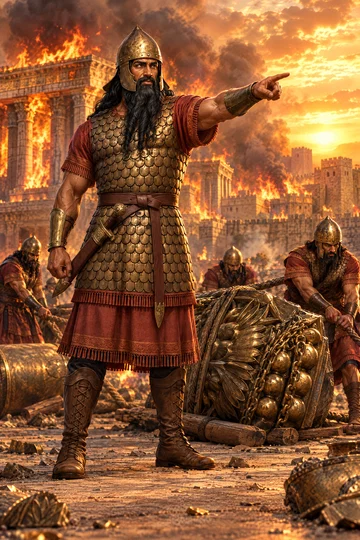
2 Kings 25:16 stands in the closing chapters of Kings that recount the wicked and weak reigns of the kings of Judah.ST May 10, 1910 It belongs to the fuller telling in 2 Kings 24 and 25 of the downfall of Zedekiah as the last king of the chosen people, whose eyes were put out before he was taken to Babylon where he died in captivity, after which Judah existed only as a province subservient to the great kingdoms that ruled the world.ST Nov 4, 1897 It belongs to the record of the taking of Jerusalem by Nebuchadnezzar, the carrying of many of the children of God into captivity, and the rebellion of Zedekiah and the final capture of the Jewish nation, after which a little company under Gedaliah was left in the land.ST May 12, 1909 It describes what Nebuzar-adan, captain of the guard and servant of the king of Babylon, did when he came to Jerusalem on the seventh day of the fifth month, after burning the house of the LORD and the king's house and all the houses of Jerusalem and every great man's house with fire and breaking down the walls of Jerusalem.ST Jan 14, 1886
He carried the remnant of the people to Babylon with vessels of gold and silver and brass, including the two great brass pillars Solomon had made and the brazen sea and the bases, whose brass was so much it could not be weighed, and with this the captivity of Judah was completed.ST Jan 14, 1886 The verse belongs to the closing history of the kingdom of Judah, recording the despoiling of the temple when Jerusalem was laid waste.ST Jun 10, 1913 It belongs to the concluding historical account associated with the fall of Jerusalem, which is presented as an addition to the words of Jeremiah.RH Jul 27, 1916
The verse is part of the account of Babylon's overthrow of Judah and Jerusalem and the captivity and scattering of the people, in which Babylon was the first empire to subvert the kingdom of Judah, while earlier hostile nations had only been temporarily successful.ST Nov 7, 1906 It is part of the Babylonian captivity that ends the span of Bible history from the confusion of tongues, giving salient facts of history that show God's overruling hand in the history of nations.ST Feb 11, 1897 It belongs to the history of the Jews' captivity in Babylon and the final destruction of Jerusalem, and that history is typical of events to transpire either under the gospel or at the close of this dispensation.RH Sep 17, 1872 It belongs to the account of the Babylonian captivity, which is a historical event that people believed but, as a past event, did not by itself reveal God's truth for their present needs.ST May 11, 1915
Sources