2 Kings 5:2
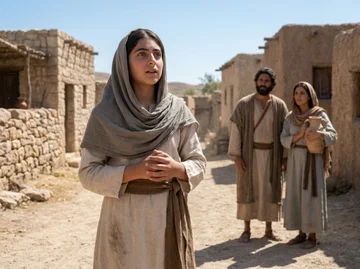
And the Syrians had gone out by companies, and had brought away captive out of the land of Israel a little maid; and she waited on Naaman’s wife.
Translations
American King James Version, King James Version, KJV Cambridge Paragraph Bible
And the Syrians had gone out by companies, and had brought away captive out of the land of Israel a little maid; and she waited on Naaman’s wife.
And the Syrians had gone out by companies, and had brought away captive out of the land of Israel a little maid; and she waited on Naaman's wife.
And the Syrians had gone out in bands, and had brought away captive out of the land of Israel a little maid; and she waited on Naaman’s wife.
And the Syrians had gone out in bands, and had brought away captive out of the land of Israel a little maiden; and she waited on Naaman’s wife.
And the Aramaeans have gone out [by] troops, and they take captive out of the land of Israel a little damsel, and she is before the wife of Naaman,
And the Syrians had gone out in bands, and had brought away captive out of the land of Israel a little maid; and she waited on Naaman's wife.
Now, the Syrians, had gone out in companies, and had brought back out of the land of Israel, a little maiden,—who became an attendant on the wife of Naaman.
Berean Standard Bible, Majority Standard Bible
At this time the Arameans had gone out in bands and had taken a young girl from the land of Israel, and she was serving Naaman’s wife.
The Syrians had gone out in bands, and had brought away captive out of the land of Israel a little girl, and she waited on Naaman’s wife.
Now the Aramaeans had gone out in bands, and taken prisoner from Israel a little girl, who became servant to Naaman's wife.
And the Aramites had gone out by bands, and had taken a litle mayde of the land of Israel, and shee serued Naamans wife.
Douay-Rheims (Challoner revision)
Now there had gone out robbers from Syria, and had led away captive out of the land of Israel a little maid, and she waited upon Naaman’s wife.
Pictures




Cross-references
- Luke 4:27
And many lepers were in Israel in the time of Eliseus the prophet; and none of them was cleansed, saving Naaman the Syrian.
Jesus cites Naaman’s healing to show that God’s favor reached a receptive outsider amid Israel’s unbelief.
- 2 Kings 5:14
Then went he down, and dipped himself seven times in Jordan, according to the saying of the man of God: and his flesh came again like unto the flesh of a little child, and he was clean.
Naaman is cleansed after obeying the prophet’s instruction to wash in the Jordan.
- 2 Kings 5:26-27
And he said unto him, Went not mine heart with thee, when the man turned again from his chariot to meet thee? Is it a time to receive money, and to receive garments, and oliveyards, and vineyards, and sheep, and oxen, and menservants, and maidservants?
Gehazi’s covetousness brings Naaman’s leprosy upon him.
- 2 Kings 5:8
And it was so, when Elisha the man of God had heard that the king of Israel had rent his clothes, that he sent to the king, saying, Wherefore hast thou rent thy clothes? let him come now to me, and he shall know that there is a prophet in Israel.
The same Spirit moved the maid and the prophet to bring Naaman to healing.
Commentary
Each commentary is drawn from primary sources: the writings of Ellen G. White and Adventist pioneers and periodicals. Each commentary is separate. Its own words are not a quotation; follow the references to read the source passages.
Ellen G. White
17 sources
After Israel's defeat in the battle in which Ahab died, Syrian raiding companies kept up border warfare and carried away a Hebrew little girl to serve in the home of Naaman the Syrian army captain as a servant to his wife.PK 244.2PK 246.1ST Feb 17, 1881 Her parents had taught her to know God, and their faithful training formed her character so that even as a slave in a heathen household her conduct bore witness to her early home.PK 246.1PK 245.1 Though far from home she was placed where she could point Naaman to divine help in his need, thus serving as God's representative and unconsciously fulfilling the purpose for which Israel had been chosen.PK 244.2PK 246.1MH 472.4–473.1 Naaman the heathen leper was cleansed and enlightened in the truth because he lived up to the light he had and was open to instruction, while many lepers in apostate Israel were left unhealed through unbelief, showing that God's help is not confined to Israel but is given to receptive hearts wherever they are.DA 238.2–239.12SP 112.2–113.1ST Feb 17, 18812SP 113.2–3 Jesus pointed to Naaman as the only leper cleansed in Elisha's time to rebuke unbelief and hypocrisy and to show that rejection of heaven's messengers cuts men off from blessing that the humble and receptive may receive.ST Feb 17, 1881LC1 56.1LC1 53.2–54.1
Maid's Captivity and Witness
After Benhadad king of Syria defeated Israel in the battle in which Ahab died, Syria kept up constant border warfare against Israel.PK 244.2 In one raid by companies the Syrians carried the little maid away captive out of the land of Israel.PK 244.2 The captive was a Hebrew little maid from the land of Israel who was brought to Syria to wait on and serve Naaman's wife in the home of Naaman, the Syrian army captain.PK 244.2PK 246.1ST Feb 17, 1881DA 262.4–264.2PK 245.1 She was an Israelite girl taken captive in a Syrian raid and made to serve in that household, placed where she could be in contact with those she would help.ST Feb 17, 1881DA 262.4–264.2MH 472.4–473.1
Her parents had taught her about God, and she had learned to honor Him.PK 246.1 Their faithfulness in example and teaching shaped her habits and character and prepared her to bear witness to God even in captivity.PK 246.1PK 245.1 Her conduct in a heathen home testified to the influence of the early training she had received at home, showing how parents shape children through what they teach and live.PK 245.1
Though a slave far from home in a heathen household, she was placed where she could help Naaman in his need of divine help and guidance.PK 244.2MH 472.4–473.1 There she served as God's representative to the Syrian captain and as one of God's witnesses.PK 244.2PK 246.1MH 472.4–473.1 In doing so she unconsciously fulfilled the purpose for which God had chosen Israel as His people.PK 244.2
Why a Syrian Was Healed
This verse belongs to the account of Naaman, a Syrian heathen nobleman and captain of the army who was a leper, and who was cleansed through Elisha and thereby came to know the true God and was enlightened in divine truth.DA 238.2–239.12SP 112.2–113.12SP 113.2–3ST Feb 17, 18814RED 5.3–7.1 His cleansing took place in a time of apostasy in Israel, when many lepers in Israel were not cleansed or healed.2SP 112.2–113.12SP 113.2–3ST Feb 17, 1881LC1 53.2–54.1Ms 40, 1887, par. 8–11 His was the last known cleansing of a leper since Elisha, which is why lepers afterward did not expect to be healed.DA 262.4–264.2
Naaman was healed because, though a heathen, he lived faithfully by the light, privileges, and convictions of right he had, felt his need of help, and was open and receptive to divine instruction.DA 238.2–239.12SP 112.2–113.12SP 113.2–3ST Feb 17, 18814RED 5.3–7.1 Israelites who had greater light and spiritual advantages shut themselves off from God's power by unbelief, misuse of blessings and privileges, unwillingness to receive, and lives contradicting their profession of godliness.2SP 113.2–3ST Feb 17, 18814RED 5.3–7.1Ms 40, 1887, par. 8–11 A heathen who lived up to the light he had received was therefore accounted more righteous than God's chosen people when they turned from Him in unbelief and rebellion.SLP 229.1–230.2
His story teaches that God's help and blessings are not limited to Israel.DA 238.2–239.1ST Jun 23, 1909 Those among the heathen who do right according to the light they have are regarded more favorably by God and counted more righteous than backslidden professors who have great light yet reject it, live unrighteously, and sacrifice principle for convenience and worldly honor.ST Feb 17, 18812SP 113.2–3SLP 229.1–230.2AA 416.2–417.1 God does not put forth His power through the prophets for the salvation of an unbelieving, hard-hearted people, but for those who have hearts that can feel and faith that will grasp the evidences He is pleased to give, even turning from those who reject the truth to manifest Himself to those in heathen lands who have not rejected heaven's light.AA 416.2–417.1LC1 56.1
Jesus cited Naaman as the only one cleansed among many lepers in Israel in Elisha's time, a foreigner healed when Israelites were not.LC1 53.2–54.1ST Jun 23, 1909 He told this prophetic history to meet questioning thoughts, rebuke corrupt lives and wicked unbelief and hypocrisy, and strike truth home.ST Feb 17, 1881LC1 56.1 It exposed that the Jews rejected Him because He came in meekness and lowliness, poverty and sorrow, without worldly wealth, honor, power, riches, splendor, or a grand and imposing army.ST Feb 17, 1881LC1 56.1 Those who were receptive to God's message could receive His blessings, while Israel's rejection of the prophets cut the people off from those blessings.ST Jun 23, 1909
Sources
Pioneers and periodicals
47 sources
Syrian raiding companies plundered Israel and carried away a young Israelite girl captive to serve Naaman's wife.ST Sep 10, 1885ST Aug 4, 1898ST Aug 4, 1898 Her captivity providentially placed her in Naaman's household where she could tell of the prophet in Samaria who could heal his leprosy.ST Dec 8, 1914ST Aug 4, 1898RH Jun 16, 1903ST Jun 16, 1887 Though only a child and a captive, she remained faithful to God and bore witness with simple faith in His power to heal, so that Naaman was healed and light about God came to Syria.ST Jul 13, 1904ST May 27, 1913RH Jun 10, 1902ST Jul 22, 1886 Even in her lowly place as a maid-servant she could give valuable instruction, showing that faithful service in small things and the witness of children can lead influential people to know God's love and power.RH Dec 7, 1905RH Nov 11, 1915RH May 2, 1865RH Jan 4, 1912 Her witness directed the Syrian commander to Israel for healing, illustrating that God gives blessing without distinction between Jew and Gentile and that salvation is received by faith.ST Feb 19, 1894ST Feb 19, 1894ST Mar 22, 1899ST Nov 7, 1895
Historical Setting
The bands of Syria were marauding, plundering companies in the habit of ravaging the profitable territory of the countries around Israel.
Syrian companies raided Israel and carried away a young Israelite girl captive from her homeland to serve Naaman's wife.ST Sep 10, 1885ST Aug 4, 1898ST Aug 4, 1898ST Feb 11, 1889RH Jun 16, 1903
Though a captive in a foreign household, she directed Naaman's family toward the prophet in Samaria as the one who could heal his leprosy.ST Sep 10, 1885
The capture took place at a time when God had allowed Syria to prevail against Israel because of Israel's sins.ST Jul 7, 1909
The verse places Naaman's illness in the setting of those Syrian raids into Israel.ST Sep 10, 1885
The girl's presence in Naaman's household provides the setting for her later recommendation of the prophet in Samaria as able to heal him, and her captivity placed her where she could tell his family about that prophet.ST Aug 4, 1898ST Aug 4, 1898ST Feb 11, 1889
Her words about the prophet in Samaria begin the account of Naaman's healing, which is continued in the rest of the chapter.ST Jul 7, 1909
The miracles of Elisha to which the verse belongs are true events rather than pious legends or myths.ST Jan 24, 1906
Through the healing of Naaman's leprosy Elisha became known to the Syrians, and after that healing his renown spread throughout Syria.ST Oct 19, 1904
The Maid's Faithful Witness
The little Israelite girl taken captive served Naaman's wife, and in that service she did missionary work on behalf of her master.ST Dec 7, 1904 Though only a child and a captive, she brought blessing to Syria by telling of Israel's God and His power to heal, so that through her testimony Naaman was healed and the nation received light about God.RH Jun 10, 1902 She became the means by which Naaman and his household learned of the prophet in Samaria who could heal him, and by which Naaman was directed to travel peacefully to Israel where the Lord's prophet healed him of leprosy.RH Jun 16, 1903ST Jun 16, 1887
Her confidence was simple faith that Elisha could heal Naaman of leprosy, although Elisha had not healed a leper before meeting Naaman.ST Jul 13, 1904ST May 27, 1913 That confidence rested not on having seen or heard of earlier healings, but on faith in God's word and power.ST Jul 13, 1904 Taken captive by the Syrians and made to serve Naaman's wife, she could remain faithful to God despite adverse circumstances in a foreign household.ST Jul 22, 1886 Even in the lowly position of a maid-servant taken captive she could offer valuable instruction by directing Naaman toward the prophet for a cure, and her simple witness shows that faithful service in small things can lead influential people to recognize God's love and power.RH May 2, 1865RH Jan 4, 1912
Her example shows that children can be missionaries by speaking to others, as she spoke to her mistress about the prophet in Samaria who could help Naaman's leprosy.RH Dec 7, 1905 It shows also that children can serve through useful work at home in a household like Naaman's, and be prepared by it to help in other places.RH Nov 11, 1915 She told her mistress and Naaman's household about the true God and gave a message about healing from leprosy, and her testimony led to Naaman being healed.RH Dec 7, 1905RH Nov 19, 1908RH May 16, 1912
Her difficult captivity providentially placed her in Naaman's household where she could tell his family about the prophet in Samaria, turning circumstances of loss into opportunity to serve one in need of divine help and guidance.ST Dec 8, 1914ST Aug 4, 1898 She spoke of the prophet in Samaria because the Spirit moved her, just as the same Spirit moved the prophet to have Naaman sent to him.ST Oct 12, 1904 Her word aimed beyond the physical healing of the Syrian captain, so that Naaman and others through him might know that there is a prophet in Israel and through that knowledge find salvation.ST Oct 12, 1904 Sharing the gospel as she did is not limited to ministers or foreign missionaries.RH Jan 4, 1912
Naaman's Healing by Obedience
Naaman was a Syrian commander, a great man of rank and standing in the court, but a leper, and his leprosy outweighed his greatness.RH Apr 23, 1908RH Oct 8, 1872 His disease would worsen and eventually end his life, yet he continued to do his duty, showing that courage can mean accepting and bearing what cannot be overcome.ST Jun 7, 1910 God's means are effective when followed in faith according to His word, even when they seem unworthy or insignificant.ST Aug 20, 1902 He found healing by obeying the prophet's simple command to dip seven times in the Jordan rather than following his own preference for Damascus's clearer rivers, and the simplicity of the means tested his faith.ST Feb 4, 1897ST Feb 11, 1889 His servants' counsel helped him obey, and his willingness to give up expectations of a great deed and accept a small, simple action teaches faithfulness in small tasks, including in missionary work.ST Feb 11, 1889
Obedience to God's command was the way for him to be made clean, presenting obedience as the way to healing and life, while refusing the commanded course would have left him a leper.ST Feb 4, 1897RH Apr 23, 1908 His healing illustrates that a deep-seated malady cannot be cured without the Great Physician.RH Apr 23, 1908 He came before Elisha's door with horses, chariot, and rich presents of silver and gold, expecting a pompous display suited to his rank, and went away in a rage when the prophet's demeanor and the simple appointed cure did not feed his vanity and pride.RH Oct 8, 1872 His desire to receive benefit on terms he dictated, inventing a cure more congenial to his proud heart, illustrates the propensity to invent religion by adding to or taking from God's word so that pride is not marred and self is not denied, whether by sinners outside or inside the church, who are willing to receive the Lord's benefits only without denying self, reforming life, and being governed by pure morality, preferring an easier way congenial to the carnal mind until religion is lifeless.RH Oct 8, 1872 His expectation of healing without effort while continuing in transgression shows that healing is not to be presumed apart from cooperation with God.ST
Like Naaman looking for great acts and despising the day of small things, people refuse the straight line of the holy Sabbath and try to climb up some other way, and the only appointed way of escape is to heed the third angel's message by patiently enduring trials and keeping God's commandments and the faith of Jesus, for simply obeying God carries the weight of life and death.RH Jan 20, 1853 True faith leaves the question of cure or continued sickness with the Lord, for continued sickness can serve God's glory and the believer's good, and accepting it can also be an expression of faith. The persistence of anger is like Naaman's leprosy in that it can cling to a person and remain after those who helped form the habit are gone. After Naaman was cured he stood before the man of God and gratefully urged him to receive a present, but the prophet refused, while Gehazi was taken by a spirit of worldly policy, reasoning that a valuable present from a rich, grateful, willing Syrian should not be let slip, and resolved to run after Naaman and take somewhat of him, further showing his selfish disposition.RH Sep 25, 1860ST Oct 3, 1878ST Jul 28, 1898
Salvation Beyond Israel
God providentially directed the Syrian commander to Israel in his search for deliverance from leprosy, so that the king there was given opportunity to learn that God could deliver and to turn to the true God.ST Dec 23, 1897 Though many lepers lived in Israel in Elisha's time, none there was cleansed, while Naaman the Syrian received healing.ST Jun 16, 1887ST Mar 22, 1899 Jesus cited Naaman as the only one among the many lepers in Israel who was cleansed in Elisha's time, as an example of a prophet's ministry reaching beyond Israel to benefit someone outside Israel.ST Jun 23, 1909ST Feb 19, 1894ST Mar 22, 1899 That point enraged his hearers.ST Feb 19, 1894
His healing illustrates that God gives blessing without distinction between Jew and Gentile and that salvation is received by faith, for he was healed because he believed.ST Feb 19, 1894 God does not favor one people to the exclusion of others, but his offer and blessing were for the whole world.ST Nov 7, 1895 His story shows that precious souls are found in every nation and that God's truth is to be carried to them.ST Dec 23, 1889 His case was a lesson to Israel that God's light and salvation were for people beyond the Jewish nation and that Israel was to share its knowledge of God with the world.ST Jan 22, 1894
Naaman, a Syrian, was cleansed of leprosy and taught divine truth, while many lepers in Israel were not healed because their unbelief, disregard for God's privileges, and misuse of privileges left them unreceptive to God's power.ST Feb 17, 1881ST Jun 16, 1887 God's blessings were not limited to Israel: those receptive to God's message could receive them, while Israel's rejection of the prophets cut the people off from those blessings.ST Jun 23, 1909 People among the heathen who do right according to the light they have are regarded more favorably by God than people who have great light and profess godliness while living unrighteously.ST Feb 17, 1881 Jesus applied this lesson to the Jews, exposing their unbelief and hypocrisy in rejecting him because he came without worldly wealth, honor, or power.ST Feb 17, 1881
Naaman's need and openness to instruction made him ready to receive help, showing that God works for those who value the light they have received and act according to their convictions of right.ST Feb 17, 1881ST Jun 16, 1887 Every leper in Israel might have been cleansed by appreciating the Lord's presence in his accredited prophet, so lack of healing there does not show that healing was unavailable. Elisha's message was rejected in Israel but received by a foreigner, showing that God's message must not be rejected because of the messenger who brings it.ST Sep 24, 1894
Practical Applications
The account to which the verse belongs is that of Naaman the Syrian, whom God saved from leprosy. That healing is held out as the one possible hope for lepers such as Simon, who is also a leper. The verse tells of a little Israelite girl taken captive to Syria.RH May 16, 1912 Her giving of a message about healing to Naaman's household provides material for instruction.RH May 16, 1912
Sources