2 Samuel 17:5
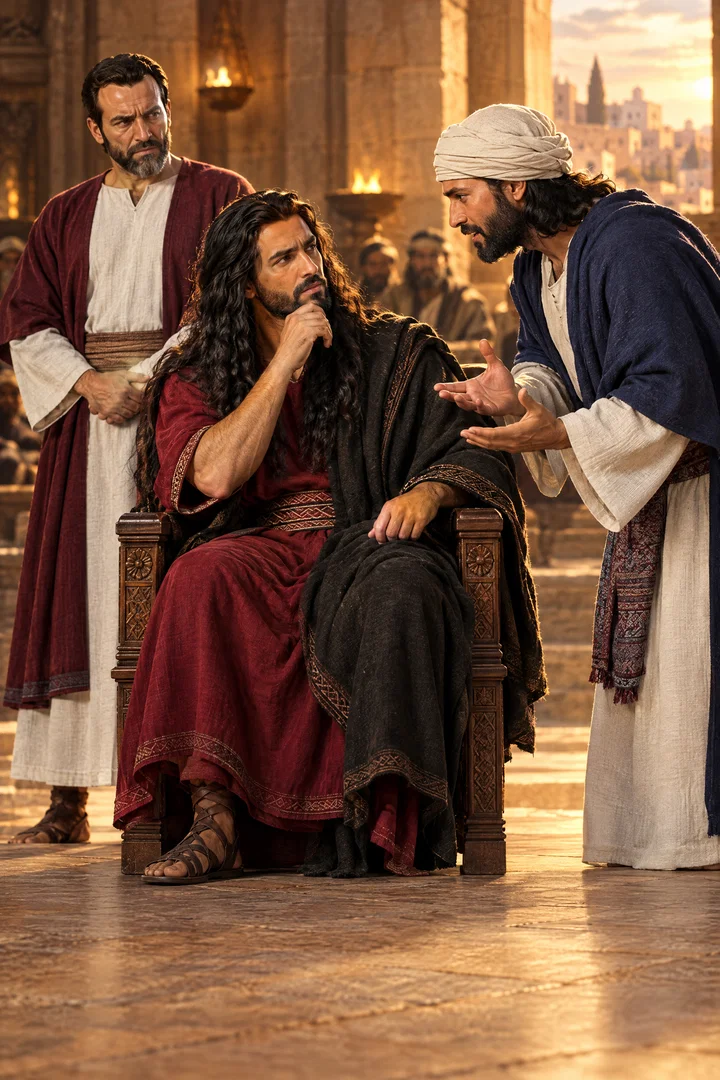
Then said Absalom, Call now Hushai the Archite also, and let us hear likewise what he saith.
Translations
Then said Absalom, Call now Hushai the Archite also, and let us hear likewise what he says.
King James Version, KJV Cambridge Paragraph Bible, Webster Bible, Revised Version, American Standard Version
Then said Absalom, Call now Hushai the Archite also, and let us hear likewise what he saith.
And Absalom saith, 'Call, I pray thee, also for Hushai the Archite, and we hear what [is] in his mouth — even he.'
And Absalom said, Call now Hushai the Archite also, and we will hear also what he says.
Then said Absolom, I pray you, call ye Hushai the Archite also,—and let us hear what is in, his, mouth, also.
Berean Standard Bible, Majority Standard Bible
Then Absalom said, “ Summon Hushai the Archite as well, and let us hear what he too has to say.”
Then Absalom said, “ Now call Hushai the Archite also, and let’s hear likewise what he says.”
Then Absalom said, Now send for Hushai the Archite, and let us give ear to what he has to say.
Then said Absalom, Call now Hushai the Archite also, and let vs heare likewise what he sayth.
Douay-Rheims (Challoner revision)
But Absalom said: Call Chusai the Arachite, and let us hear what he also saith.
Pictures
Cross-references
- 2 Samuel 15
And it came to pass after this, that Absalom prepared him chariots and horses, and fifty men to run before him.
The account of David’s flight continues into the rebellion’s events in chapter 17.
- 2 Samuel 17:14
And Absalom and all the men of Israel said, The counsel of Hushai the Archite is better than the counsel of Ahithophel. For the LORD had appointed to defeat the good counsel of Ahithophel, to the intent that the LORD might bring evil upon Absalom.
The Lord appointed to defeat Ahithophel’s counsel and bring evil upon Absalom.
- 2 Samuel 15:31
And one told David, saying, Ahithophel is among the conspirators with Absalom. And David said, O LORD, I pray thee, turn the counsel of Ahithophel into foolishness.
David prayed that Ahithophel’s counsel would be brought to nothing.
- 2 Samuel 18
And David numbered the people that were with him, and set captains of thousands and captains of hundreds over them.
Read alongside chapter 17 in the account of the rebellion and its outcome.
- 2 Samuel 16
And when David was a little past the top of the hill, behold, Ziba the servant of Mephibosheth met him, with a couple of asses saddled, and upon them two hundred loaves of bread, and an hundred bunches of raisins, and an hundred of summer fruits, and a bottle of wine.
Read alongside chapter 17 in the account of the rebellion.
Commentary
Each commentary is drawn from primary sources: the writings of Ellen G. White and Adventist pioneers and periodicals. Each commentary is separate. Its own words are not a quotation; follow the references to read the source passages.
Ellen G. White
1 source
Hushai had not been summoned to the council in which Ahithophel pressed for an immediate night pursuit of David.PP 739.2–740.1 He refrained from forcing his way in uninvited, knowing that to intrude would invite suspicion that he was a spy.PP 739.2–740.1 Once that assembly broke up, Absalom himself laid Ahithophel's plan before Hushai for his opinion.PP 739.2–740.1 He did so because he held a high regard for the judgment of the counselor who had served his father.PP 739.2–740.1 Hushai at once perceived the danger, seeing clearly that if Ahithophel's proposed course were carried out David would be lost.PP 739.2–740.1
Sources
Pioneers and periodicals
6 sources
Absalom asked that Hushai the Archite also be called so that what he had to say might likewise be heard, and Hushai's counsel delayed the battle and brought Ahithophel's counsel to nothing.ST Aug 13, 1896 The verse belongs to the account of David fleeing from Jerusalem before his son Absalom and warring against him until victory over Absalom and return to Jerusalem, the circumstances connected with the setting of Psalm 3.ST Jun 18, 1885ST Apr 14, 1909 It stands amid the disgrace and sorrow brought upon David by his sons Amnon and Absalom, and shows the awful evil of a multiplicity of wives, to which the miseries that came upon David are largely traced.ST Apr 14, 1909
The verse belongs to Absalom's rebellion and unnatural crimes against David, which came upon David as retribution in kind for his wrong and wicked conduct toward Uriah, following him through all the rest of his life principally within his own family.ST Mar 31, 1881RH Apr 26, 1870 It belongs to the history in 2 Samuel 11-24 and 1 Kings 1-2 that shows the judgments that came upon David after his great wickedness in the case of Uriah, by which he gave great occasion to the enemies of the Lord to blaspheme.RH Oct 12, 1869 That transgression is not covered up or excused but is openly recorded with the prophet Nathan's terrible denunciation, whose complete accomplishment is seen in David's subsequent history, alongside David's own humble confession of his great transgression placed on record for all future time.RH Oct 12, 1869
The verse thus illustrates that the very kind of evil caused to others comes back upon the wrongdoer, and that sin never pays.RH Apr 26, 1870
Sources