2 Samuel 17:6
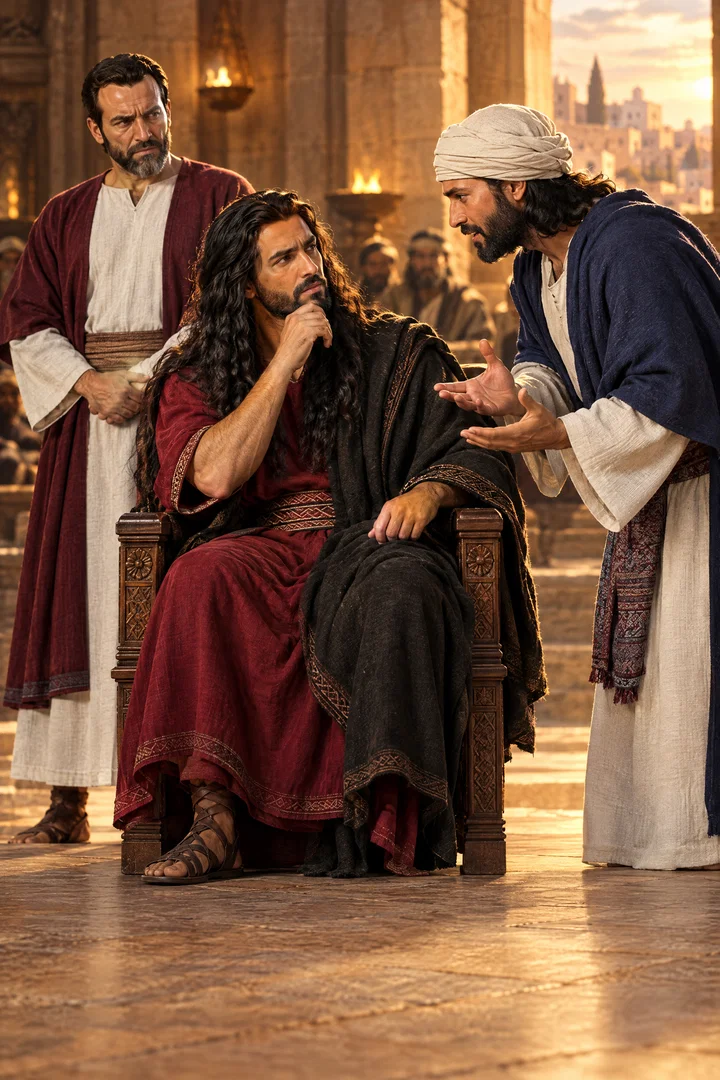
And when Hushai was come to Absalom, Absalom spake unto him, saying, Ahithophel hath spoken after this manner: shall we do after his saying? if not; speak thou.
Translations
And when Hushai was come to Absalom, Absalom spoke to him, saying, Ahithophel has spoken after this manner: shall we do after his saying? if not; speak you.
King James Version, KJV Cambridge Paragraph Bible
And when Hushai was come to Absalom, Absalom spake unto him, saying, Ahithophel hath spoken after this manner: shall we do after his saying? if not; speak thou.
And when Hushai had come to Absalom, Absalom spoke to him, saying, Ahithophel hath spoken after this manner: shall we do after his saying? if not, speak thou.
Revised Version, American Standard Version
And when Hushai was come to Absalom, Absalom spake unto him, saying, Ahithophel hath spoken after this manner: shall we do after his saying? if not, speak thou.
And Hushai cometh in unto Absalom, and Absalom speaketh unto him, saying, 'According to this word hath Ahithophel spoken; do we do his word? if not, thou — speak thou.'
And Hushai came to Absalom, and Absalom spoke to him saying, Ahithophel has spoken after this manner: shall we carry out his word? If not, speak thou.
And, when Hushai came in unto Absolom, Absolom spake unto him, saying—After this manner, hath Ahithophel spoken, shall we do what he saith? if not, thou, speak.
Berean Standard Bible, Majority Standard Bible
So Hushai came to Absalom, who told him, “Ahithophel has spoken this proposal. Should we carry it out? If not, what do you say?”
When Hushai had come to Absalom, Absalom spoke to him, saying, “Ahithophel has spoken like this. Shall we do what he says? If not, speak up.”
And when Hushai came, Absalom said to him, This is what Ahithophel has said: are we to do as he says? if not, what is your suggestion?
So when Hushai came to Absalom, Absalom spake vnto him, saying, Ahithophel hath spoken thus: shall we doe after his saying, or no? tell thou.
Douay-Rheims (Challoner revision)
And when Chusai was come to Absalom, Absalom said to him: Achitophel hath spoken after this manner: shall we do it or not? what counsel dost thou give?
Pictures
Cross-references
- 2 Samuel 15:1-18
And it came to pass after this, that Absalom prepared him chariots and horses, and fifty men to run before him.
Absalom’s rebellion forms part of David’s retribution and the circumstances behind the psalm.
- 2 Samuel 13:1-29
And it came to pass after this, that Absalom the son of David had a fair sister, whose name was Tamar; and Amnon the son of David loved her.
Amnon’s assault and Absalom’s revenge are part of the family retribution against David.
- 2 Samuel 17:14
And Absalom and all the men of Israel said, The counsel of Hushai the Archite is better than the counsel of Ahithophel. For the LORD had appointed to defeat the good counsel of Ahithophel, to the intent that the LORD might bring evil upon Absalom.
the Lord appointed to defeat Ahithophel's counsel
- 2 Samuel 15:31
And one told David, saying, Ahithophel is among the conspirators with Absalom. And David said, O LORD, I pray thee, turn the counsel of Ahithophel into foolishness.
David prayed that Ahithophel’s counsel would be overthrown.
Commentary
Each commentary is drawn from primary sources: the writings of Ellen G. White and Adventist pioneers and periodicals. Each commentary is separate. Its own words are not a quotation; follow the references to read the source passages.
Ellen G. White
1 source
After the council had dispersed, Absalom laid Ahithophel's plan for an immediate night attack on David before Hushai to obtain his judgment.PP 739.2–740.1 Hushai had not been called to the council and would not intrude unasked, lest suspicion fall upon him as a spy.PP 739.2–740.1 Absalom himself sought him out, because he had a high regard for the judgment of his father's counselor.PP 739.2–740.1
The plan under discussion called for twelve thousand men to fall upon David while he was weary and weak-handed and to smite the king only, and it had already been approved by the king's counselors.PP 739.2–740.1 That plan would surely have slain David unless the Lord had directly interposed, and Hushai saw that if it were followed David would be lost.PP 739.2–740.1 Yet a wisdom higher than Ahithophel's was directing events, for the Lord had appointed to defeat the good counsel of Ahithophel in order to bring evil upon Absalom.PP 739.2–740.1 In response Hushai declared that the counsel given was not good at this time.PP 739.2–740.1
Sources
Pioneers and periodicals
6 sources
This verse belongs to the history in 2 Samuel 11-24 of the troubles in David's family, namely Absalom's rebellion, ambition and unnatural crimes against David, Ahithophel's treachery, David's flight from Absalom, and the events leading to battle.ST Apr 29, 1908ST Mar 31, 1881RH Apr 26, 1870RH Oct 12, 1869ST Jun 18, 1885 In its immediate setting Absalom tells Hushai what Ahithophel has advised and asks whether to do after his saying or else to hear what Hushai has to speak.ST Aug 13, 1896 Hushai's counsel delayed the attack and helped bring Ahithophel's counsel to naught, in answer to David's prayer.ST Aug 13, 1896
The circumstances surrounding David's flight from Absalom provide the setting for the third psalm.ST Jun 18, 1885 Absalom's rebellion came upon David as judgment and retribution for his great wickedness toward Uriah, by which he gave great occasion to the enemies of the Lord to blaspheme.ST Mar 31, 1881RH Apr 26, 1870RH Oct 12, 1869 That retribution followed David through all the rest of his life and fell principally in his own family, and the whole subsequent history including this verse shows how completely the terrible denunciation by the prophet Nathan was accomplished.RH Apr 26, 1870RH Oct 12, 1869
The transgression is not covered up or excused, but the denunciation stands on record together with David's own humble confession.RH Oct 12, 1869 The surrounding account shows that people cannot violate God's laws without suffering the consequences, for each transgression carries an inherent curse.ST Apr 29, 1908 The very kind of evil a man causes others comes back upon himself, so that what a man sows that he shall reap.ST Apr 29, 1908RH Apr 26, 1870
Sources