2 Samuel 23:17
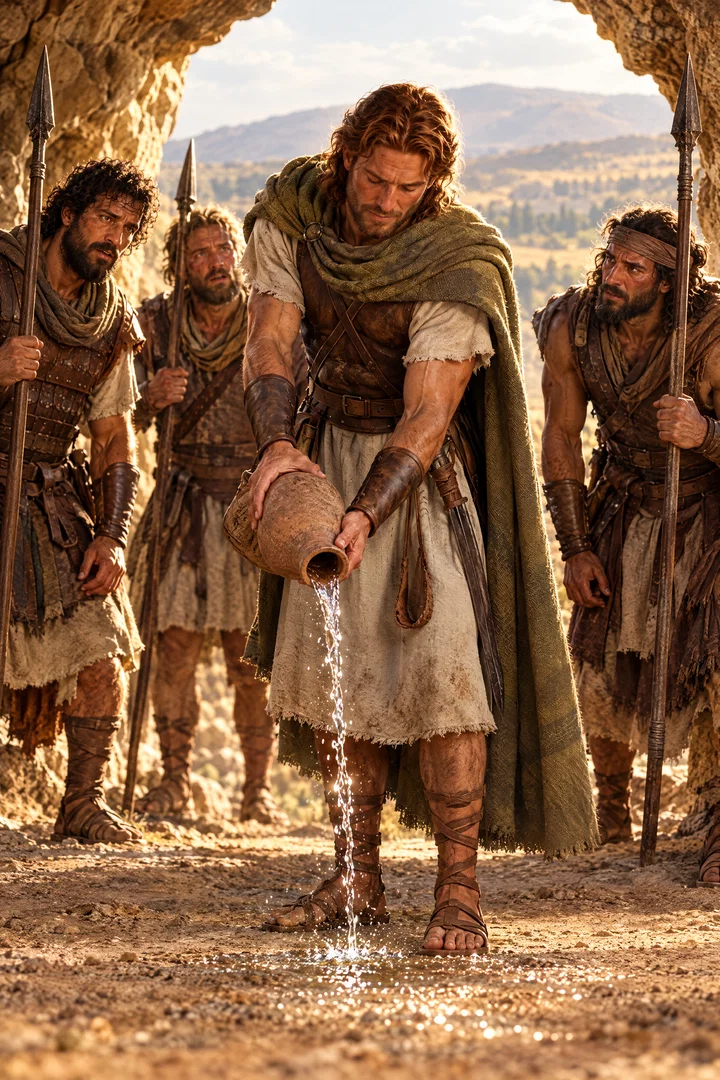
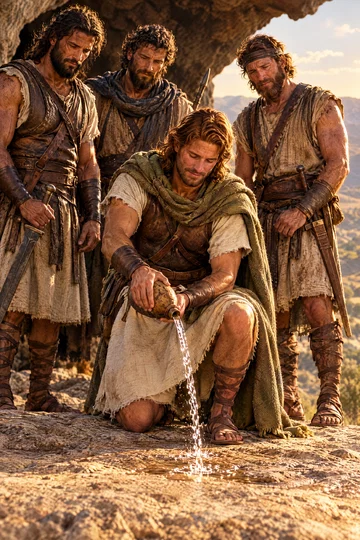
And he said, Be it far from me, O LORD, that I should do this: is not this the blood of the men that went in jeopardy of their lives? therefore he would not drink it. These things did these three mighty men.
Translations
American King James Version, King James Version, Webster Bible
And he said, Be it far from me, O LORD, that I should do this: is not this the blood of the men that went in jeopardy of their lives? therefore he would not drink it. These things did these three mighty men.
And he said, Be it far from me, O Lord, that I should do this: is not this the blood of the men that went in jeopardy of their lives? therefore he would not drink it. These things did these three mighty men.
And he said, Be it far from me, O LORD, that I should do this: shall I drink the blood of the men that went in jeopardy of their lives? therefore he would not drink it. These things did the three mighty men.
And he said, Be it far from me, O Jehovah, that I should do this: shall I drink the blood of the men that went in jeopardy of their lives? therefore he would not drink it. These things did the three mighty men.
and saith, 'Far be it from me, O Jehovah, to do this; is it the blood of the men who are going with their lives?' and he was not willing to drink it; these [things] did the three mighty ones.
And he said, Be it far from me, Jehovah, that I should do this thing! is it not the blood of the men that went at the risk of their lives? Therefore he would not drink it. These things did the three mighty men.
and said—Be it far from me, O Yahweh, that I should do this! is it not the blood of the men who went with their lives [in their hands]? So he would not drink it. These things, did the three mighty men.
Berean Standard Bible, Majority Standard Bible
saying, “ Far be it from me, O LORD, to do this! Is this not the blood of the men who risked their lives?” So he refused to drink it.Such were the exploits of the three mighty men.
He said, “ Be it far from me, LORD, that I should do this! Isn’t this the blood of the men who risked their lives to go?” Therefore he would not drink it. The three mighty men did these things.
And he said, Far be it from me, O Lord, to do this; how may I take as my drink the life-blood of men who have put their lives in danger? So he would not take it. These things did the three great men of war.
And said, O Lord, be it farre from me, that I should doe this. Is not this the blood of the men that went in ieopardie of their liues? therefore he woulde not drinke it. These things did these three mightie men.
Douay-Rheims (Challoner revision)
Saying: The Lord be merciful to me, that I may not do this: shall I drink the blood of these men that went, and the peril of their lives? therefore he would not drink. These things did these three mighty men.
Pictures
Cross-references
- 1 Chronicles 11:17-19
And David longed, and said, Oh that one would give me drink of the water of the well of Beth-lehem, that is at the gate!
Retells David’s refusal to drink water his men risked their lives to bring.
Commentary
Each commentary is drawn from primary sources: the writings of Ellen G. White and Adventist pioneers and periodicals. Each commentary is separate. Its own words are not a quotation; follow the references to read the source passages.
Ellen G. White
9 sources
David longed with intense thirst for water from the well at Bethlehem, and three mighty men broke through to bring it to him at the risk of their lives.PP 736.3–41SP 383.2–384.2SG4 91.25T 42.2–43.2Ms 24, 1891, par. 69–70 He regarded that water as sacred and too holy for ordinary use, as if it were the blood of the men because they had gone in jeopardy of their lives to obtain it, so that to drink it would be like drinking their blood.PP 736.3–41SP 383.2–384.2SG4 91.2Ms 24, 1891, par. 69–70Lt 5, 1849, par. 1–2 He therefore refused to drink it for himself.PP 736.3–41SP 383.2–384.2SG4 91.25T 42.2–43.2Ms 24, 1891, par. 69–70
Instead of using it to quench his own thirst, he poured it out as a sacred offering to God.PP 736.3–41SP 383.2–384.2SG4 91.2 In this he showed deep regard for human life and honor for their sacrifice, refusing to treat their lives lightly even while he himself faced death.PP 736.3–41SP 383.2–384.2SG4 91.25T 42.2–43.2Lt 5, 1849, par. 1–2 His refusal under the fear of death illustrates firm religious principle that remains true under severe pressure.5T 42.2–43.2
His thirst became a longing he would not satisfy at the cost of their lives.Ms 24, 1891, par. 69–70 That longing pictures the thirst for spiritual drink, for deeper knowledge of God.Ms 24, 1891, par. 69–7019MR 253.2–3 The draught from the well represents spiritual refreshment and blessing, including refreshment and victory in God after fierce spiritual conflict.Lt 5, 1849, par. 1–2Lt 14, 1850, par. 4–5 It is also a precious gift of light and truth presented for God's work, to be received with reverence, and neglecting it forfeits blessing and the opportunity to serve in the place God has given.Lt 27, 1894, par. 20–22
Sources
Pioneers and periodicals
10 sources
The verse belongs to the account of David, parched with thirst during a battle with the Philistines, longing for water from the well at the gate of Bethlehem.ST Apr 23, 1902 The three mighty men went in jeopardy of their lives to bring him that water from the wells at Bethlehem, risking death to obtain it.RH Oct 12, 1869RH Nov 19, 1901ST Jul 10, 1901ST Apr 29, 1908 The lives they risked are expressed by the Hebrew word nephesh in the sense of life or lives.ST Jun 6, 1878 David refused to drink the water, regarding it as the blood and lifeblood of the men and as too precious and sacred to consume as ordinary drink, since he saw the danger they had faced.RH Oct 12, 1869RH Nov 19, 1901ST Jul 10, 1901ST Apr 29, 1908RH Sep 8, 1904 Instead of drinking it, he poured it out to the Lord, refusing it before the Lord.ST Jul 10, 1901RH Sep 8, 1904ST Oct 5, 1904 His refusal honored their sacrifice, showed how deeply he valued their lives, and stands as profound appreciation for their kindness and courage as mighty men.RH Nov 19, 1901ST Apr 29, 1908ST Oct 5, 1904
The wells at Bethlehem from which the water was brought are still there in the Holy Land just where the Bible puts them, and travelers still drink from them and are refreshed, showing the country answers to the Book.RH Aug 29, 1871 Their perilous act teaches that human time is precious because Christ purchased it through his suffering and blood, so people should dedicate their time to God rather than waste it. A gift won by sacrifice and danger is too sacred to use for personal benefit and would have to be returned if offered to an individual, but when such sacrificial money from needy givers is given for the cause of God it is to be received with heartfelt appreciation as moved by the Spirit, with confidence that God will bless obedient givers in return.RH Sep 8, 1904 In the same way, the gift to Loma Linda is to be treated as sacred, as an offering that represents the devoted lives and labor of missionaries.RH Jun 19, 1913
Sources