2 Samuel 24:17
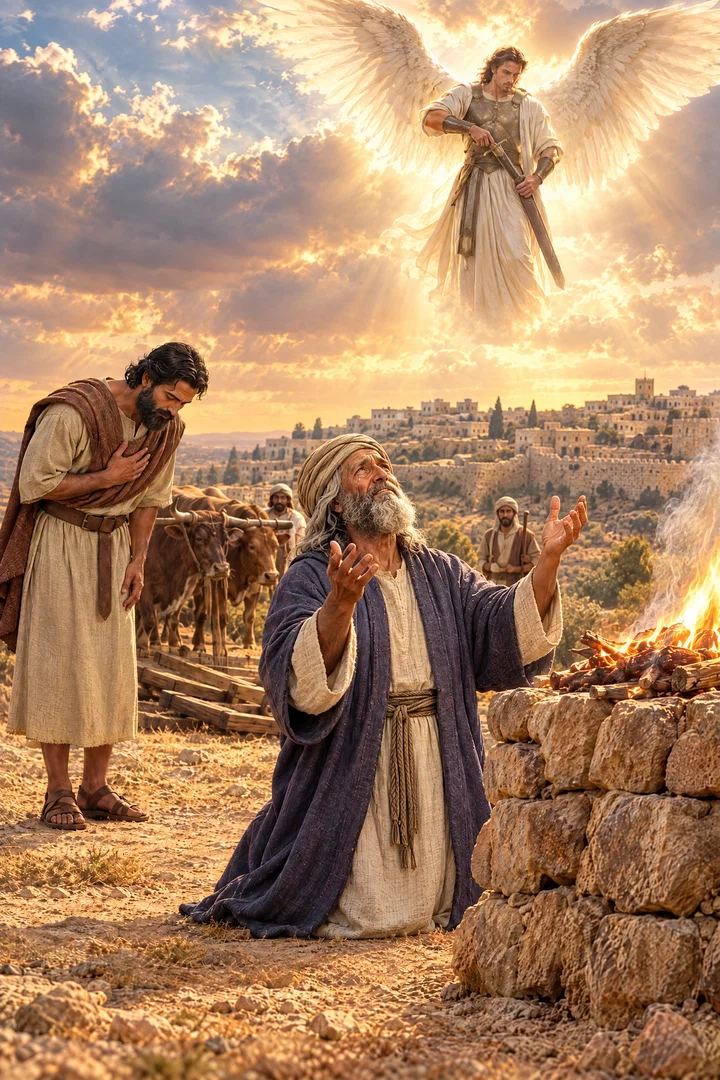
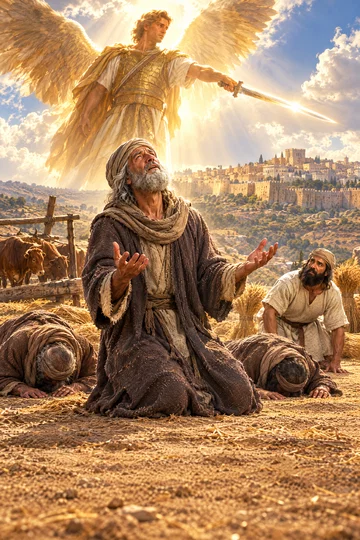
And David spake unto the LORD when he saw the angel that smote the people, and said, Lo, I have sinned, and I have done wickedly: but these sheep, what have they done? let thine hand, I pray thee, be against me, and against my father’s house.
Translations
And David spoke to the LORD when he saw the angel that smote the people, and said, See, I have sinned, and I have done wickedly: but these sheep, what have they done? let your hand, I pray you, be against me, and against my father’s house.
And David spake unto the LORD when he saw the angel that smote the people, and said, Lo, I have sinned, and I have done wickedly: but these sheep, what have they done? let thine hand, I pray thee, be against me, and against my father’s house.
And David spake unto the Lord when he saw the angel that smote the people, and said, Lo, I have sinned, and I have done wickedly: but these sheep, what have they done? let thine hand, I pray thee, be against me, and against my father’s house.
And David spoke to the LORD when he saw the angel that smote the people, and said, Lo, I have sinned, and I have done wickedly: but these sheep, what have they done? let thy hand, I pray thee, be against me, and against my father's house.
And David spake unto the LORD when he saw the angel that smote the people, and said, Lo, I have sinned, and I have done perversely: but these sheep, what have they done? let thine hand, I pray thee, be against me, and against my father’s house.
And David spake unto Jehovah when he saw the angel that smote the people, and said, Lo, I have sinned, and I have done perversely; but these sheep, what have they done? let thy hand, I pray thee, be against me, and against my father’s house.
And David speaketh unto Jehovah, when he seeth the messenger who is smiting among the people, and saith, 'Lo, I have sinned, yea, I have done perversely; and these — the flock — what have they done? Let, I pray Thee, Thy hand be on me, and on the house of my father.'
And David spoke to Jehovah when he saw the angel that smote among the people, and said, Behold, it is I that have sinned, and it is I that have committed iniquity; but these sheep, what have they done? let thy hand, I pray thee, be on me, and on my father's house!
Then said David unto Yahweh, when he saw the messenger who was smiting the people, yea he said—Lo! I, have sinned, and, I, have done perversely, but what have, these sheep, done? Let thy hand, I pray thee, be against me, and against the house of my father!
Berean Standard Bible, Majority Standard Bible
When David saw the angel striking down the people, he said to the LORD, “ Surely I, the shepherd, have sinned and acted wickedly. But these sheep, what have they done? Please, let Your hand fall upon me and my father’s house.”
David spoke to the LORD when he saw the angel who struck the people, and said, “ Behold, I have sinned, and I have done perversely; but these sheep, what have they done? Please let your hand be against me, and against my father’s house.”
And when David saw the angel who was causing the destruction of the people, he said to the Lord, Truly, the sin is mine; I have done wrong: but these are only sheep; what have they done? let your hand be against me and against my family.
And Dauid spake vnto the Lord (when he sawe the Angel that smote the people) and saide, Behold, I haue sinned, yea, I haue done wickedly: but these sheepe, what haue they done? let thine hand, I pray thee, be against mee and against my fathers house.
Douay-Rheims (Challoner revision)
And David said to the Lord, when he saw the angel striking the people: It is I; I am he that have sinned, I have done wickedly: these that are the sheep, what have they done? let thy hand, I beseech thee, be turned against me, and against my father’s house.
Pictures
Cross-references
- 1 Chronicles 21:17
And David said unto God, Is it not I that commanded the people to be numbered? even I it is that have sinned and done evil indeed; but as for these sheep, what have they done? let thine hand, I pray thee, O LORD my God, be on me, and on my father’s house; but not on thy people, that they should be plagued.
David confesses his sin and pleads for the people.
- 1 Chronicles 21:1
And Satan stood up against Israel, and provoked David to number Israel.
Satan provoked David to number Israel.
- 1 Chronicles 21:26-27
And David built there an altar unto the LORD, and offered burnt offerings and peace offerings, and called upon the LORD; and he answered him from heaven by fire upon the altar of burnt offering.
Fire from heaven and the sheathed sword answer David’s plea and end the plague.
- 2 Chronicles 3:1
Then Solomon began to build the house of the LORD at Jerusalem in mount Moriah, where the Lord appeared unto David his father, in the place that David had prepared in the threshingfloor of Ornan the Jebusite.
Identifies Ornan’s threshing floor, where David’s episode occurred, as the temple site.
- 2 Samuel 24:24
And the king said unto Araunah, Nay; but I will surely buy it of thee at a price: neither will I offer burnt offerings unto the LORD my God of that which doth cost me nothing. So David bought the threshingfloor and the oxen for fifty shekels of silver.
David follows his plea by buying a sacrifice himself and refusing an offering that costs him nothing.
- 2 Samuel 12:13
And David said unto Nathan, I have sinned against the LORD. And Nathan said unto David, The LORD also hath put away thy sin; thou shalt not die.
David confesses his sin and the LORD declares it forgiven.
- 1 Chronicles 21:15
And God sent an angel unto Jerusalem to destroy it: and as he was destroying, the LORD beheld, and he repented him of the evil, and said to the angel that destroyed, It is enough, stay now thine hand. And the angel of the LORD stood by the threshingfloor of Ornan the Jebusite.
Names Ornan, identified as Araunah.
- 1 Chronicles 22:1
Then David said, This is the house of the LORD God, and this is the altar of the burnt offering for Israel.
plea's sacrifice site becomes temple site
- 2 Samuel 24:10
And David’s heart smote him after that he had numbered the people. And David said unto the LORD, I have sinned greatly in that I have done: and now, I beseech thee, O LORD, take away the iniquity of thy servant; for I have done very foolishly.
David confesses his sin and asks the LORD to remove his iniquity.
- Psalms 51:3-4
For I acknowledge my transgressions: and my sin is ever before me.
David acknowledges his transgressions and confesses his sin to God.
- Genesis 22:1-19
And it came to pass after these things, that God did tempt Abraham, and said unto him, Abraham: and he said, Behold, here I am.
The threshing floor stood where God had tested Abraham.
- Ezekiel 18:17
That hath taken off his hand from the poor, that hath not received usury nor increase, hath executed my judgments, hath walked in my statutes; he shall not die for the iniquity of his father, he shall surely live.
Contrasted with the principle that a son is not condemned for his father’s sin.
- 1 Kings 15:5
Because David did that which was right in the eyes of the LORD, and turned not aside from any thing that he commanded him all the days of his life, save only in the matter of Uriah the Hittite.
David’s lapse in duty is set alongside his wrongful numbering of Israel.
- Psalms 103:13
Like as a father pitieth his children, so the LORD pitieth them that fear him.
Describes the Lord’s pity, which David trusted when choosing his punishment.
Commentary
Each commentary is drawn from primary sources: the writings of Ellen G. White and Adventist pioneers and periodicals. Each commentary is separate. Its own words are not a quotation; follow the references to read the source passages.
Ellen G. White
4 sources
The cry belongs to the aftermath of numbering Israel, a sin that brought pestilence upon the people in which seventy thousand died.1SP 384.3–385.3SG4 92.2–314MR 1.3–3.1 The destroying work was done by an angel smiting the people, seen in warlike dress with drawn sword stretched out over Jerusalem.1SP 384.3–385.3SG4 92.2–3Ms 39, 1898, par. 12–1414MR 1.3–3.1 David and those with him beheld him as he went to destroy Jerusalem, while David and the elders mourned in humiliation, until God in pity stayed him.1SP 384.3–385.3SG4 92.2–3
David knew the angel for what he was and was terribly afraid, yet distress and compassion for Israel moved him.1SP 384.3–385.3SG4 92.2–3Ms 39, 1898, par. 12–14 He openly confessed that he had sinned and done wickedly, taking the guilt upon himself.1SP 384.3–385.3SG4 92.2–3Ms 39, 1898, par. 12–1414MR 1.3–3.1 The people he called sheep, regarding them as innocent of his wrongdoing.1SP 384.3–385.3SG4 92.2–3Ms 39, 1898, par. 12–1414MR 1.3–3.1
He begged God to spare them and to let His hand fall instead upon himself and upon his father's house and household.1SP 384.3–385.3SG4 92.2–3Ms 39, 1898, par. 12–1414MR 1.3–3.1 That compassion for Israel went with his repentance, his heart was in the repentance, and the repentance was accepted.1SP 384.3–385.3SG4 92.2–3 Then God by the prophet directed atonement, which David made by purchasing Araunah's threshing floor at full price, refusing to offer what cost him nothing, and there building an altar and presenting burnt offerings and peace offerings until God answered with fire from heaven, accepted the sacrifice, bade the angel sheathe the sword, and brought the destruction to an end.1SP 384.3–385.3SG4 92.2–3
The account shows that when divine protection is withdrawn, God may allow destructive power to execute judgment.14MR 1.3–3.1
Sources
Pioneers and periodicals
22 sources
David numbered the people, bringing the Lord's anger and pestilence upon them through the smiting angel, and when he saw the angel he humbly confessed that he had sinned and done wickedly without excuse.ST Aug 7, 1884ST May 6, 1913ST Jul 22, 1889ST May 17, 1905ST Feb 17, 1904 He called the people sheep who had done nothing to deserve suffering for his wrong, and prayed for God's hand to turn against him and his father's house instead, offering himself to bear the punishment.ST Jul 22, 1889ST May 17, 1905ST Apr 15, 1913ST Apr 29, 1908ST Aug 7, 1884 His plea was true repentance and godly sorrow for the sin itself rather than mere distress over its consequences, caring more for cleansing of heart than removal of affliction and choosing to fall into the Lord's hands because His mercies are great.ST Aug 7, 1884ST Apr 15, 1913ST Feb 11, 1889ST Apr 15, 1897 His sin was forgiven and the Lord in pity stopped the destroying angel, and the plea led to his purchased sacrifice in the threshing floor of Araunah, answered by fire as proof of pardon.RH Sep 14, 1869RH Sep 11, 1860RH Oct 14, 1909ST Aug 7, 1884RH Oct 2, 1913 The people suffer temporal consequences for the misdeeds of their rulers, yet none is condemned for another's sin unless he makes it his own, and the outcome warns against proudly glorying in numbers, riches, and earthly power.ST Feb 17, 1904ST Apr 21, 1909RH Dec 10, 1867ST Apr 29, 1908ST Aug 7, 1884
Setting and Confession
The words belong to David's sin in numbering the people by census, which drew the Lord's anger and displeasure and brought judgment and pestilence upon the people through the angel.ST Aug 7, 1884ST May 6, 1913ST Feb 17, 1904ST Apr 21, 1909ST Apr 29, 1908 The numbering is presented as David's own sin, bringing consequences upon the people and calling forth his acknowledgment of personal guilt.ST Aug 7, 1884ST May 6, 1913ST Apr 29, 1908RH Feb 17, 1874 It was motivated by his desire to display Israel's growth and prosperity, contrary to God's plan.ST Apr 21, 1909
When David saw the angel smiting the people he humbly confessed that he had sinned and done wickedly, accepting responsibility for the judgment that had come on account of his own sin.ST Aug 7, 1884ST Jul 22, 1889ST May 17, 1905ST Apr 15, 1913ST Feb 11, 1889 He made this confession without excuse or comparison with others, seeking forgiveness and choosing to fall into the Lord's hands.ST Aug 7, 1884RH Oct 12, 1869ST Apr 15, 1897 Seeing the angel destroy the ungodly led him to own his guilt rather than to focus on their sins.ST Apr 15, 1897
He called the people sheep and declared that they had done nothing, asking what they had done to deserve suffering for his wrongdoing.ST Jul 22, 1889ST May 17, 1905ST Apr 15, 1913ST Feb 11, 1889ST Apr 29, 1908 He pleaded them innocent of his evil and asked why the punishment for his act should fall on them.ST May 17, 1905ST Apr 15, 1913ST Feb 11, 1889ST Apr 29, 1908RH Feb 17, 1874 He prayed for God's hand to turn against him and against his father's house, household and family instead of against the people.ST Jul 22, 1889ST May 17, 1905ST Apr 15, 1913ST Feb 11, 1889RH Oct 12, 1869 In this he took personal responsibility and did not lay blame on others, offering himself to bear the punishment and to make the personal sacrifice needed to avert the evil.ST May 17, 1905ST Apr 29, 1908ST Aug 7, 1884ST Apr 15, 1897
Repentance Mercy and Atonement
David's cry when he saw the angel smiting the people is true repentance and godly sorrow for the sin itself, not merely distress over its consequences, and true contrition brings such sorrow as he recognizes how deeply sin has affected him.ST Apr 15, 1913ST Feb 11, 1889ST Apr 15, 1897 Under affliction that has come because of sin he cares much more about the removal of his sin and the cleansing of his heart than about the removal of the affliction, submitting to God because of His goodness and seeking His favor for righteousness' sake, faithful even if God permits the affliction to remain.ST Feb 11, 1889 When given the choice of judgments he will not choose but leaves it all to God, humbly seeking forgiveness and choosing to fall into the Lord's hands because God's mercies are great.ST Aug 7, 1884ST Feb 11, 1889
He believes the prophetic reproof and humbly repents, and his great sin is forgiven so that afterward he prospers.RH Sep 14, 1869 Brought low by the plague after numbering Israel, he recognizes his weakness and God's mercy in preserving his life, for the Lord stops the destroying angel and has pity on the affliction of the people.RH Sep 11, 1860RH Oct 14, 1909 His plea leads to his sacrifice in the threshing floor of Araunah, after Gad directs him to offer sacrifice there.ST Aug 7, 1884RH Oct 2, 1913 There he insists on purchasing the oxen and wood and materials for fire for fifty shekels of silver and buys the place for 600 shekels, and God answers by fire, which is positive proof of his pardon and returning favor.ST Aug 7, 1884
Consequences Warning and Sanctuary
The verse shows that the people always suffer for the misdeeds of their rulers, as children suffer the consequences of parental sins.ST Aug 7, 1884 It is an example of temporal punishment connected with a father's sin in which others may suffer its consequences.RH Dec 10, 1867 This does not mean one person is condemned for another's sin unless that person makes the sin his own.RH Dec 10, 1867 Those who suffered may also have shared guilt by cherishing unholy ambitions.ST Apr 29, 1908 The people's suffering is connected with the Lord's anger against Israel.RH Sep 11, 1860
The census was motivated by David's desire to display Israel's growth and prosperity, contrary to God's plan, and it brought the Lord's displeasure.ST Apr 21, 1909 God's anger at David for numbering his hosts warns that a church or mission is not pleasing to God when it glories in numbers, riches, and earthly power.ST Feb 17, 1904 Its outcome is a warning against proudly counting numbers while ignoring the consequences of David's action.RH Apr 3, 1900 The terrible experience for David and his people could have been avoided by the lesson God gave Abram through the stars, which showed that God alone can read hearts and number the faithful.ST Feb 10, 1898
The destroying angel's hand was stayed at Jerusalem, after which Gad directed David to offer sacrifice at Araunah's threshing floor.RH Oct 2, 1913 The account leads to David's altar and special consecration at the threshing floor of Ornan, also called Araunah, where the angel of the Lord had appeared.ST Nov 5, 1912 Araunah is the same person as Ornan, who is mentioned in 1 Chronicles 21:15 and 2 Chronicles 3:1.RH Jan 30, 1879 This site was the same place where God had tested Abraham in the offering of Isaac, and it later became the site of Solomon's temple.ST Aug 7, 1884ST Nov 5, 1912
Sources