2 Samuel 12:13
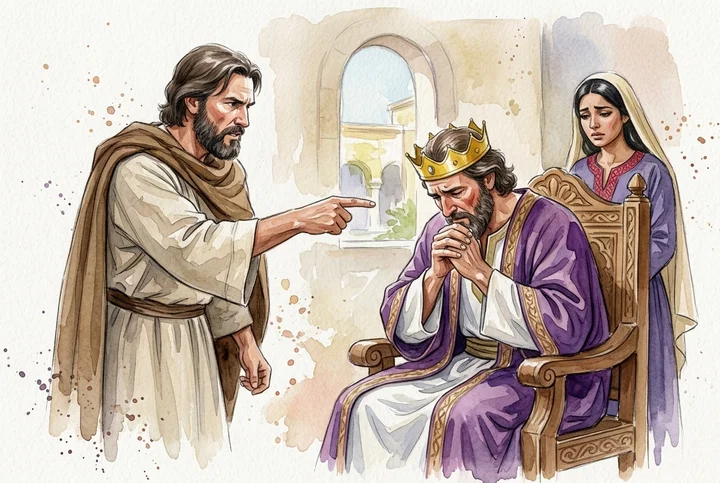
And David said unto Nathan, I have sinned against the LORD. And Nathan said unto David, The LORD also hath put away thy sin; thou shalt not die.
Translations
And David said to Nathan, I have sinned against the LORD. And Nathan said to David, The LORD also has put away your sin; you shall not die.
King James Version, Revised Version
And David said unto Nathan, I have sinned against the LORD. And Nathan said unto David, The LORD also hath put away thy sin; thou shalt not die.
And David said unto Nathan, I have sinned against the Lord. And Nathan said unto David, The Lord also hath put away thy sin; thou shalt not die.
And David said to Nathan, I have sinned against the LORD. And Nathan said to David, The LORD also hath put away thy sin; thou shalt not die.
And David said unto Nathan, I have sinned against Jehovah. And Nathan said unto David, Jehovah also hath put away thy sin; thou shalt not die.
And David saith unto Nathan, 'I have sinned against Jehovah.' And Nathan saith unto David, 'Also — Jehovah hath caused thy sin to pass away; thou dost not die;
And David said to Nathan, I have sinned against Jehovah. And Nathan said to David, Jehovah has also put away thy sin: thou shalt not die.
And David said unto Nathan, I have sinned against Yahweh. Then said Nathan unto David,—Yahweh also, hath put away thy sin, thou shalt not die!
Berean Standard Bible, Majority Standard Bible
Then David said to Nathan, “ I have sinned against the LORD.”“ The LORD has taken away your sin,” Nathan replied. “ You will not die.
David said to Nathan, “ I have sinned against the LORD.”Nathan said to David, “ The LORD also has put away your sin. You will not die.
And David said to Nathan, Great is my sin against the Lord. And Nathan said to David, The Lord has put away your sin; death will not come on you.
Then Dauid sayde vnto Nathan, I haue sinned against the Lord. And Nathan sayde vnto Dauid, The Lord also hath put away thy sinne, thou shalt not die.
Douay-Rheims (Challoner revision)
And David said to Nathan: I have sinned against the Lord. And Nathan said to David: The Lord also hath taken away thy sin: thou shalt not die.
Pictures



Cross-references 20 of 24
- Psalms 51:1-4
Have mercy upon me, O God, according to thy lovingkindness: according unto the multitude of thy tender mercies blot out my transgressions.
David confesses his sin and pleads for God’s mercy and cleansing.
- 2 Samuel 11
And it came to pass, after the year was expired, at the time when kings go forth to battle, that David sent Joab, and his servants with him, and all Israel; and they destroyed the children of Ammon, and besieged Rabbah. But David tarried still at Jerusalem.
David’s sins against Bath-sheba and Uriah lead to his confession.
- 2 Samuel 12:7
And Nathan said to David, Thou art the man. Thus saith the LORD God of Israel, I anointed thee king over Israel, and I delivered thee out of the hand of Saul;
Nathan’s confrontation brought David to acknowledge his sin.
- Psalms 51:9-12
Hide thy face from my sins, and blot out all mine iniquities.
David pleads for pardon, cleansing, and a renewed heart after sin.
- Psalms 51:14
Deliver me from bloodguiltiness, O God, thou God of my salvation: and my tongue shall sing aloud of thy righteousness.
David asks God to deliver him from bloodguilt after confessing his sin.
- Psalms 32:5
I acknowledged my sin unto thee, and mine iniquity have I not hid. I said, I will confess my transgressions unto the LORD; and thou forgavest the iniquity of my sin. Selah.
David confesses his sin, and the LORD forgives him.
- Psalms 51:3
For I acknowledge my transgressions: and my sin is ever before me.
David confesses his transgressions and keeps his sin before him.
- Luke 15:18-24
I will arise and go to my father, and will say unto him, Father, I have sinned against heaven, and before thee,
Both confess sin and receive forgiveness and a welcoming response.
- 2 Corinthians 7:10
For godly sorrow worketh repentance to salvation not to be repented of: but the sorrow of the world worketh death.
contrasts true repentance with lack of reform
- 2 Samuel 12:1-4
And the LORD sent Nathan unto David. And he came unto him, and said unto him, There were two men in one city; the one rich, and the other poor.
Nathan’s parable convicted David of his sin.
- 2 Samuel 11:2-5
And it came to pass in an eveningtide, that David arose from off his bed, and walked upon the roof of the king’s house: and from the roof he saw a woman washing herself; and the woman was very beautiful to look upon.
David’s adultery preceded his repentance.
- 2 Samuel 12:5
And David’s anger was greatly kindled against the man; and he said to Nathan, As the LORD liveth, the man that hath done this thing shall surely die:
David’s death sentence is set aside when his sin is forgiven.
- 1 John 1:9
If we confess our sins, he is faithful and just to forgive us our sins, and to cleanse us from all unrighteousness.
Confession of sin is met with God’s forgiveness.
- Psalms 103:10-12
He hath not dealt with us after our sins; nor rewarded us according to our iniquities.
God shows mercy by removing transgressions rather than dealing with people according to their sins.
- Psalms 51:17
The sacrifices of God are a broken spirit: a broken and a contrite heart, O God, thou wilt not despise.
A broken and contrite heart accompanies David’s plea for mercy.
- Proverbs 28:13
He that covereth his sins shall not prosper: but whoso confesseth and forsaketh them shall have mercy.
Both teach that confessing sin brings mercy and life.
- Micah 7:18
Who is a God like unto thee, that pardoneth iniquity, and passeth by the transgression of the remnant of his heritage? he retaineth not his anger for ever, because he delighteth in mercy.
Both show God pardoning sin through his mercy.
- Psalms 51:12-13
Restore unto me the joy of thy salvation; and uphold me with thy free spirit.
David’s repentance seeks restored salvation’s joy and anticipates sinners turning to God.
- 2 Samuel 11:27
And when the mourning was past, David sent and fetched her to his house, and she became his wife, and bare him a son. But the thing that David had done displeased the LORD.
David’s actions displeased the Lord.
- 1 Samuel 15:24-26
And Saul said unto Samuel, I have sinned: for I have transgressed the commandment of the LORD, and thy words: because I feared the people, and obeyed their voice.
David’s sincere confession contrasts with Saul’s response to sin.
Commentary
Each commentary is drawn from primary sources: the writings of Ellen G. White and Adventist pioneers and periodicals. Each commentary is separate. Its own words are not a quotation; follow the references to read the source passages.
Ellen G. White
29 sources
David's brief confession followed Nathan's parable exposing his adultery and murder in the matter of Uriah, and Nathan's reply announced that God had removed his guilt and spared his life from immediate judgment.PP 719.1SG4 86.2–87.11SP 378.1–379.15T 683.1 His acknowledgment was immediate, frank and open from the heart, without excuse, evasion or stubborn resistance, accepting God's judgment as just and merciful.Ms 76, 1900, par. 20Lt 48, 1887, par. 21–22Ms 164, 1902, par. 4 His trembling words meant that every wrong done to Uriah and Bathsheba reached back to God, against whom his sin was infinitely greater.Ms 76, 1900, par. 20PP 722.1 His humble confession brought full pardon, yet pardon did not excuse his crimes or remove every consequence, for he still bore punishment and lost his child because he had given God's enemies occasion to blaspheme, the death due to him falling instead on the child.Ms 164, 1902, par. 4SG4 86.2–87.11SP 378.1–379.1PP 722.2 Genuine repentance that is not repeated brings compassion and restoration to covenant favor, giving courage through all ages to God's children betrayed into sin not to give up to despair but to repent and walk again in God's commandments.PP 726.2Lt 51, 1886, par. 4–10ED 48.3–4
Sin and Confession
The confession covers adultery and murder in the matter of Uriah, whom David made the bearer of his own death-warrant by sending through his hand a letter commanding Joab to set Uriah in the forefront of the hottest battle and then retire from him so that he would be smitten and die, and Joab, already stained with the guilt of one wanton murder, did not hesitate to obey, so that Uriah fell by the sword of the children of Ammon.PP 719.1 It comes after David ordered Uriah's death in battle and joined Joab in hiding their guilt behind a carefully worded battle report, answering the news that Uriah was dead with indifference that the sword devours one as well as another and urging stronger battle.PP 719.4–720.1 At that point David had departed from God and yielded himself to the wicked one, becoming for the time the agent of Satan while still holding the position and authority God had given him.PP 719.2–3 His power was given to be exercised only in harmony with divine law, but he used it to command what was contrary to God's law and to claim an obedience that would imperil the soul of him who yielded it, as when Joab, whose allegiance was to the king rather than to God, transgressed God's law because the king commanded Uriah's death, for when a ruler commands what is contrary to God's law it becomes sin to obey.PP 719.2–3
Nathan faithfully exposed David's true condition by a parable that led David to pass judgment on his own case before being identified as the guilty man, and that reproof aroused his conscience to see his guilt in its enormity and helped him recognize and put away his sins.5T 683.14T 14.3–15.14MR 185.1–186.2 David accepted the counsel meekly, humbled himself before God under chastisement, and learned wisdom through God's dealings with him, whose warnings and judgments were accompanied by mercy.5T 683.14T 14.3–15.1 The words I have sinned against the Lord are bowed penitence spoken with trembling lips after the rebuke, meaning that all wrong done to others reaches back from the injured one to God.PP 722.1 David had sinned grievously against both Uriah and Bathsheba and felt it keenly, but his sin against God was infinitely greater.PP 722.1
The right response when reproof lays sin open in its aggravating character is immediate, frank, open acknowledgment from a repentant heart without defending, excusing, evading responsibility, or putting on a bold front, saying I have sinned against the Lord in humble contrition rather than stubborn resistance.Lt 48, 1887, par. 21–22Ms 164, 1902, par. 4EDFCP 16.1Ms 62, 1890, par. 39–40Ms 40, 1890, par. 25–30 Such acknowledgment accepts God's decision as just and merciful and trusts in mercy, and it is the very first evidence of amendment toward God and toward those burdened by the sinner's influence.Lt 48, 1887, par. 21–22EDFCP 16.1 The opposite course is defiantly answering not a word, justifying wrong, sympathizing with self, feeling aggrieved, recounting one's own good, and cherishing envy, faultfinding, and self-justification, while unconfessed sin keeps possession of the soul until ejected by full confession, defiles the heart, hides in the breast, hates the light lest its deeds be reproved, and refuses a verdict against itself, whereas God's plan and injunction are confess and live.Lt 48, 1887, par. 21–22Lt 6, 1880, par. 33–38 David openly acknowledged his sin and bore the punishment for his transgression rather than evading responsibility, exemplifying the recognition that his spirit, motives, and actions were unlike Christ's.Ms 164, 1902, par. 4Ms 62, 1890, par. 39–40Ms 40, 1890, par. 25–30
His recognition of the sin's ugliness brought deep, sustained grief, bitter humiliating confession, despairing cries, and humble prayer, with his transgression ever before him, marking him as truly penitent.Ms 76, 1900, par. 20Lt 51, 1886, par. 4–1021MR 379.5–6 When reproved for great crimes he humbled himself with deep humiliation and a becoming sense of his sin, distrusted himself, sought the Lord as his helper, and repented before God in a repentance which needeth not to be repented of.Ms 76, 1900, par. 20Lt 6, 1880, par. 33–38 His willingness to accept the full charge rather than silence the reprover showed that he still feared and trembled at the word of the Lord.SG4 88.2–89.11SP 380.2–381.2 His repentance was open, not concealed: he made it known even to people in his kingdom and composed a penitential psalm so that later generations could learn from his sin and repentance, seeking mercy, cleansing, and pardon.SG4 88.2–89.11SP 380.2–381.2 He repented for breaking God's law and relied on Christ's blood for pardon, clinging to the cross rather than presenting his own goodness or merits, acknowledging with humility and sorrow his wrong motives and un-Christlike spirit.4MR 185.1–186.2Ms 40a, 1890, par. 37–39
God was just in forgiving David's very great guilt and sparing his life because David humbled himself and confessed his sin when reproved, while Saul was rejected because he despised reproof and hardened his heart in impenitence, so that pardon depends on humble confession and repentance, not on whether the sin looks greater or smaller.PP 726.1 The crime was especially grievous because God had entrusted David with great responsibilities and shown him exceptional favor.Ms 76, 1900, par. 20 Keeping God's Word had made him steadfast, while forsaking its teachings led him into sin and stained his reputation, teaching that leaving God and trusting human wisdom is unsafe and that a living connection with God is humanity's only safety.Ms 76, 1900, par. 2021MR 169.1 In his response to conviction David showed penitence and humility, valuing God's favor more than his crown.5T 177.2
Pardon and Consequence
David’s sincere repentance and humble confession brought God’s forgiveness through the word sent by Nathan, which removed his guilt, put away his sin, and spared his life so he would not die.SG4 86.2–87.11SP 378.1–379.15T 683.1PP 722.2EDFCP 16.1 Though none in Israel would execute the death sentence upon the Lord’s anointed, he trembled lest he be cut down at once by swift judgment while guilty and unforgiven, and the assurance given him granted opportunity for repentance.PP 722.2 His response to rebuke and conviction was humble contrition rather than stubborn resistance, accepting God’s decision as just and merciful and trusting in mercy, valuing God’s favor more than his crown.EDFCP 16.15T 177.2 Nathan’s faithful exposure of his true condition made him aware of his sins and helped him put them away, and he accepted the counsel meekly, humbled himself before God, and learned wisdom through God’s dealings with him.5T 683.1
Forgiveness did not mean God excused or justified his crimes and did not remove every consequence.SG4 86.2–87.11SP 378.1–379.1 God averted part of the threatened calamity, yet David was still punished and bore punishment for his transgression because he had given the Lord’s enemies occasion to blaspheme.Ms 164, 1902, par. 4SG4 86.2–87.11SP 378.1–379.1 He openly acknowledged his sin rather than evading responsibility, and though the Lord forgave him after he sincerely repented, he lost his child as consequence of his transgression.Ms 164, 1902, par. 4Lt 91, 1903, par. 3
Forgiveness did not set aside justice, for the death sentence due to David was transferred to the child of his sin.PP 722.2 The suffering and death of that child as part of his punishment was far more bitter to him than his own death would have been.PP 722.2
The sin was nevertheless sorely punished and emboldened the people to transgress God’s commandments.ED 48.3–4 David was rebuked and punished for turning from righteousness, but when he became penitent and humble the Lord forgave his sins and took him into covenant relation with Himself.5T 683.14T 14.3–15.1Ms 34, 1892, par. 39–40 God’s warnings and judgments were thus accompanied by mercy, and under chastisement David accepted the prophet’s counsel meekly, humbled himself, and learned wisdom through God’s dealings.5T 683.14T 14.3–15.1
Because his repentance was genuine he did not repeat the same offense, declaring with bitter humiliating confession and despairing cries that his transgression was ever before him, and because of that the Lord had compassion on him and put away his sin.Lt 51, 1886, par. 4–10 Had he repeated the same offense after reproof the Lord would not have had compassion on him.Lt 51, 1886, par. 4–10
The verse shows genuine repentance toward God and faith in the Lord Jesus Christ and illustrates the struggles and temptations of humanity.PP 726.2 David’s sincere repentance and confession were accepted by God even though he still suffered for his transgression.PP 726.2 It gives encouragement to the repenting sinner through all the ages, especially to children of God who have been betrayed into sin and struggle under the burden of guilt and are ready to give up to despair, giving them courage to repent and try again to walk in the way of God’s commandments.PP 726.2
Sources
Pioneers and periodicals
49 sources
David confessed his adultery with Bathsheba and murder of Uriah when Nathan confronted him, and the Lord forgave and put away his great sin and spared his life though he deserved death.RH Sep 14, 1869RH Jul 27, 1869RH Mar 10, 1868RH Nov 15, 1870 His confession was humble and broken-hearted, making no excuse but fully admitting his guilt against the Lord with deep sorrow and sincere repentance.ST Apr 29, 1913RH Mar 19, 1861ST Feb 20, 1879RH Nov 15, 1870 This shows God is gracious and merciful, taking pleasure in treating the truly penitent sinner better than he deserves and cleansing even the worst sinner who confesses.RH Jul 1, 1902ST May 8, 1884RH Jan 15, 1861 Pardon did not mean approval of the crime or removal of its results, for severe chastening and trouble in his household remained upon David for the rest of his life to vindicate God's abhorrence of sin.ST Mar 31, 1881RH Jul 27, 1869RH Jul 27, 1869RH Jul 27, 1869RH Mar 19, 1861 His example teaches the right way to receive reproof, with humility, meekness and patience rather than anger against the reprover, turning accusation into peace through self-abasement and earnest return to God.RH Sep 7, 1869RH May 31, 1870RH Dec 13, 1870RH Dec 22, 1868
Setting in David's Sin
The verse stands in the account of David's adultery involving Bathsheba and his murderous plot to take Uriah's life and conceal his sin, which God condemned rather than approved.ST Nov 11, 1880 Nathan exposed the gravity of that adultery and of David's part in Uriah's death, declaring that punishment would follow in continuing violence in David's household and in the death of his child.ST Nov 11, 1880 The same account joins David's humble repentance and the Lord's forgiveness to Nathan's reproof, and joins his acknowledgment of sin and reception of pardon to deep sorrow, sincere repentance, abiding faith, and pleas for mercy, cleansing, and deliverance from blood guilt.RH Nov 15, 1870
Nathan confronted David with the parable of the poor man's ewe lamb, and with the parable of the man who wronged his neighbor, to lay open the greatness of his wrong.ST Nov 11, 1880ST Mar 11, 1889 At hearing it David became angry and declared that the wrongdoer should surely die, thereby unknowingly pronouncing sentence against himself.ST Mar 11, 1889 That self-condemnation came before the plain word, Thou art the man, by which the parable was turned upon him.RH Sep 7, 1869ST Mar 11, 1889
Scripture candidly records this great and outbreaking wickedness of the king in the case of Uriah, without covering it up, excusing it, or glossing it over, even though he was king.RH Oct 12, 1869ST Mar 11, 1913ST It does not present him as a flawless king but shows him as a sinful and selfish man, subject to God's judgment as a man and not exempt from the common moral standard because of his rank.ST Mar 11, 1913 His sin gave great occasion to the enemies of the Lord to blaspheme, and drew a terrible denunciation that was completely accomplished in the judgments that came upon David in his subsequent history.RH Oct 12, 1869ST May 8, 1884 Forgiveness therefore did not remove every consequence, for the child died, illustrating that sin brings suffering while God remains ready to forgive those who confess and truly repent, and that He may still permit lesser consequences for His glory and their good so they may grasp sin's seriousness.ST May 8, 1884
David's humbling of himself after Nathan reproved his sin against God in the matter of Uriah is expressed in the sorrow of Psalm 51, with its penitence and faith after his crimes involving Uriah and his conviction of sin.ST Apr 29, 1908ST Jul 17, 1884 There he was brought to repentance and prayed for cleansing, a clean heart, and the restoration of the joy of salvation.ST Jul 29, 1889 He published that confession to the world in Psalm 32, and notwithstanding his punishment in the death of Bathsheba's child, he praised God for the forgiveness he received when he confessed his sin to God after Nathan's warning.ST Sep 10, 1896 The chapter also records the subjection of the Ammonites.ST Apr 29, 1908
Nathan's Prophetic Rebuke
Nathan could stand before a king and denounce him openly and safely because he stood as a holy man, and David heard and heeded the warning.ST Nov 5, 1885 The plainness with which he rebuked David marks him as a true prophet.ST Jul 3, 1884 Through the prophet God's presence exposed the sin, so that David saw and acknowledged the enormity of what he had done.RH Jun 22, 1911
The reproof was wise as well as severe, aimed not only to rebuke David for a terrible crime but to rescue him from the ruin and perdition to which he had come close.RH Jul 27, 1869RH Dec 22, 1868ST Aug 26, 1875 By laying bare his guilt it led him to genuine and sincere repentance.RH Jul 27, 1869RH Dec 22, 1868ST Aug 26, 1875 Such repentance gives no hope to one who deliberately persists in transgression.RH Jul 27, 1869
The sin was grievous, and the denunciation it drew was sharp, severe and terrible.RH Oct 12, 1869ST May 6, 1897ST Feb 20, 1879 That denunciation was completely accomplished in the judgments that afterward came upon David in his subsequent history.RH Oct 12, 1869 His repentance under it was commendable, a heartfelt turning that met with forgiveness and shows cleansing is possible even for the worst sinner.ST May 6, 1897ST Feb 20, 1879 Even when reproof comes with severity, faithfulness in the reprover is no cause for anger, bitter personalities, or personal attack.RH Dec 14, 1869
David's Confession and Repentance
When reproved, David humbled himself, bowed down broken-hearted, and openly confessed that he had sinned against the Lord.ST Apr 29, 1913RH Jul 27, 1869 That open confession is more than merely feeling that one has done wrong.RH Sep 22, 1863 He made no excuse for his guilt, but his confession was marked by deep penitence and acceptance of God's righteous judgment.RH Mar 19, 1861 It was full admission rather than concealment, illustrating the need to admit sin fully.ST Feb 20, 1879 It came with deep sorrow, sincere repentance, and abiding faith, seeking mercy, cleansing, and deliverance from blood guilt.RH Nov 15, 1870
His example teaches going to God first with secret sin and receiving forgiveness from Him.ST Sep 25, 1893 Confession to people who were wronged may also be needed, but it comes after confession to God, who directs whom to approach.ST Sep 25, 1893 He was brought to repentance and conversion for his sins, an Old Testament example of the individual change called conversion, after which he prayed for cleansing, a clean heart, and restoration of the joy of salvation.ST Jul 29, 1889ST Aug 19, 1886 When he believed the prophetic reproof, confessed his sin, and humbly repented, God forgave his great sin, and afterward David prospered.RH Sep 14, 1869 He became a repentant man who finally overcame sexual sin.RH Mar 19, 1867 His repentance over the crime connected with Bathsheba was bitter and lasting, he regained God's favor though his punishment was severe, and he did not afterward repeat his sin against the marriage law, so his repentance rather than his earlier wrongdoing is the example to follow.RH Feb 6, 1879
Unlike Saul's refusal to accept God's direction, David was truly sorry and showed repentance, revealing his disposition to be true to God. On his sin being exposed he recognized his guilt, humbled himself before God, renounced his sin, and turned back to righteousness.RH Mar 27, 1913 In this way one who has sinned can demonstrate sincere devotion to God through repentance.RH Mar 27, 1913
Forgiveness and Spared Life
When David believed the prophetic reproof, confessed his sin to the Lord, and humbly repented, the Lord forgave his great sin, put it away and removed it, and spared his life.RH Sep 14, 1869RH Jul 27, 1869RH Mar 10, 1868RH Jan 15, 1861 Though he deserved punishment and death, his confession brought pardon and sparing from immediate death, and afterward he prospered.RH Sep 14, 1869RH Jul 27, 1869RH Jul 1, 1902 The assurance that he would not die was that he would not die for that sin, with no reference to exemption from the first death that comes to all men or from the second death.ST Mar 11, 1889
This dealing shows that God takes pleasure in treating the sinner better than he deserves, being gracious and disposed to show mercy and love, and merciful in treating the offender better than he deserves.RH Jul 1, 1902 He is ready to forgive those who confess and truly repent, and may still permit lesser consequences for His glory and their good so they grasp sin's seriousness.ST May 8, 1884 His plan of salvation can cleanse even the worst sinner, so the pardon of so grave a sin offers hope to transgressors who repent.ST May 6, 1897 Remembrance of the Day of Atonement's symbols of pardon gave hope and drew to seek God's mercy rather than despair, illustrating that God can forgive sin.RH Jan 15, 1861
Notwithstanding punishment in the death of Bathsheba's child, David published his confession to the world in Psalm 32 and praised God for the forgiveness he received.ST Sep 10, 1896 When he acknowledged his sin and repented he was spared, retained his kingship, and was restored to his former filial relationship with God, with his sin no longer held against him as a reproach.ST Feb 18, 1886 Accepting the reproof made him afterward a more spiritual channel for God's word to the people.RH Sep 13, 1906
God's pardon did not mean approval of the crime or compromise with evil, and His mercy is not a license to sin.RH Mar 19, 1861ST Jul 17, 1884 The account shows together God's abhorrence of sin and consolation given to a penitent sinner, for David did not excuse his guilt but confessed with deep penitence and acceptance of God's righteous judgment, even while severe, lasting consequences remained.RH Mar 19, 1861 Such repentance, which had brought him close to perdition before he saw his guilt and repented sincerely, offers no hope to one who deliberately persists in transgression.RH Jul 27, 1869
Consequences Despite Forgiveness
Though forgiven and spared from immediate death, David was not cut down at once only to escape all else, for chastening remained upon him and he faced severe troubles and anguish for the rest of his life.ST Mar 31, 1881RH Jul 27, 1869RH Jul 27, 1869RH Jul 27, 1869 His confession brought pardon that put away his sin and spared his life, yet forgiveness did not prevent painful consequences during those remaining years, especially sorrows and crimes within his family.ST Mar 31, 1881RH Jul 27, 1869RH May 30, 1912ST Mar 4, 1913 The pardon did not immediately remove sin's consequences, and his sin brought reproach on God's people, with loss of three children and danger to his own life.RH May 30, 1912ST Mar 4, 1913 Years of anguish followed a brief sinful pleasure, warning that sin brings no lasting profit.RH Jul 27, 1869
The declared punishment for his adultery and his part in Uriah's death, exposed by the parable of the poor man's ewe lamb, was not approval but condemnation followed by continuing violence in his household and the death of his child.ST Nov 11, 1880ST Mar 31, 1881RH Mar 10, 1868 The child died and the foretold calamities in his household came upon him, so he suffered great loss despite being pardoned.RH Mar 10, 1868ST Mar 4, 1913 Forgiveness did not cancel the penalty pronounced on his family, for sin against God brings fearful consequences in sorrows and crimes within the household.ST Mar 31, 1881
That enduring trouble publicly vindicated God's honor and abhorrence of wicked acts, showing wrong returning on the wrongdoer.RH Apr 26, 1870RH Jul 27, 1869 His sin had given the Lord's enemies occasion to blaspheme, and though his iniquity was forgiven upon confession, the death of the child remained to illustrate that sin brings suffering.ST May 8, 1884 God is ready to forgive those who confess and truly repent, yet He may still permit lesser consequences for His glory and their good, so they can grasp sin's seriousness.ST May 8, 1884
Pattern for Receiving Reproof
David shows the right way of receiving reproof when the prophet first speaks by parable and then says plainly, Thou art the man, and quick perception understands the ministry of God's instrument.RH Sep 7, 1869RH May 31, 1870 The rebuke thus becomes as excellent oil, received with humility, meekness and patience rather than with the claim that the Lord has not spoken but the messenger has spoken thoughts of his own mind.RH Sep 7, 1869RH May 31, 1870RH Dec 13, 1870 The mighty man bows down to the earth with broken-hearted confession that he has sinned against the Lord, because he has violated God's holy, just, good and perfect law.RH Sep 7, 1869 The same self-abasement and earnest supplication is required of sinners in Zion in this hour of judgment whose sympathies are always on the wrong side, on the side of error, and whose lives are a continual reproach upon God's cause.RH Sep 7, 1869
He does not turn against the reprover, become angry with him, or rise up against him.RH Sep 7, 1869RH Dec 13, 1870RH Dec 14, 1869 He does not join affinity with the prophet's open enemies, or aid the circulation of false reports to injure or destroy his influence, nor does he seek to conceal his wrong by trying to destroy the humble prophet.RH Sep 7, 1869 Even when reproof is given with severity, faithfulness is not treated as cause for anger, nor answered with bitter personalities and personal attack.RH Dec 14, 1869 This stands in contrast to Ahab toward Elijah, and to all the proud men who reject reproof and go their own way into Egypt.RH May 31, 1870RH Dec 14, 1869
His loyalty is shown in accepting reproof and submitting to God after doing wrong.RH Sep 7, 1869RH May 31, 1870ST Apr 17, 1907 He sticks to, clings fast to, delights in and seeks God's testimonies with the whole heart, thinking on his ways and turning his feet unto God's testimonies.RH May 31, 1870 Reproof sent by the Lord is therefore to be received with meekness and patience, without anger, with meek confession of sin against the Lord in guilt such as the case of Uriah.RH Dec 13, 1870
Humble repentance can turn an accusation into reproof and make it a herald of peace rather than a cause of destruction, as it would have been for Herod had he repented.RH Dec 22, 1868 The verse is also comfort after sin in the matter of Uriah, where confession is followed by the putting away of sin so that the sinner shall not die.ST Apr 10, 1893 When a person hates and loathes sin, Christ sends the Comforter within.ST Apr 10, 1893
Sources