2 Samuel 3:33
And the king lamented over Abner, and said, Died Abner as a fool dieth?
Translations
And the king lamented over Abner, and said, Died Abner as a fool dies?
King James Version, KJV Cambridge Paragraph Bible, Webster Bible
And the king lamented over Abner, and said, Died Abner as a fool dieth?
Revised Version, American Standard Version
And the king lamented for Abner, and said, Should Abner die as a fool dieth?
and the king lamenteth for Abner, and saith: — 'As the death of a fool doth Abner die?
And the king lamented over Abner, and said, Should Abner die as a fool dieth?
And the king addressed his dirge unto Abner, and said,—As a base man dieth, should Abner have died?
Berean Standard Bible, Majority Standard Bible
And the king sang this lament for Abner:
“ Should Abner die
the death of a fool?The king lamented for Abner, and said, “ Should Abner die as a fool dies?
And the king made a song of grief for Abner and said, Was the death of Abner to be like the death of a foolish man?
And the King lamented ouer Abner, and sayde, Dyed Abner as a foole dyeth?
Douay-Rheims (Challoner revision)
And the king mourning and lamenting over Abner, said: Not as cowards are wont to die, hath Abner died.
Pictures
Commentary
Each commentary is drawn from primary sources: the writings of Ellen G. White and Adventist pioneers and periodicals. Each commentary is separate. Its own words are not a quotation; follow the references to read the source passages.
Ellen G. White
1 source
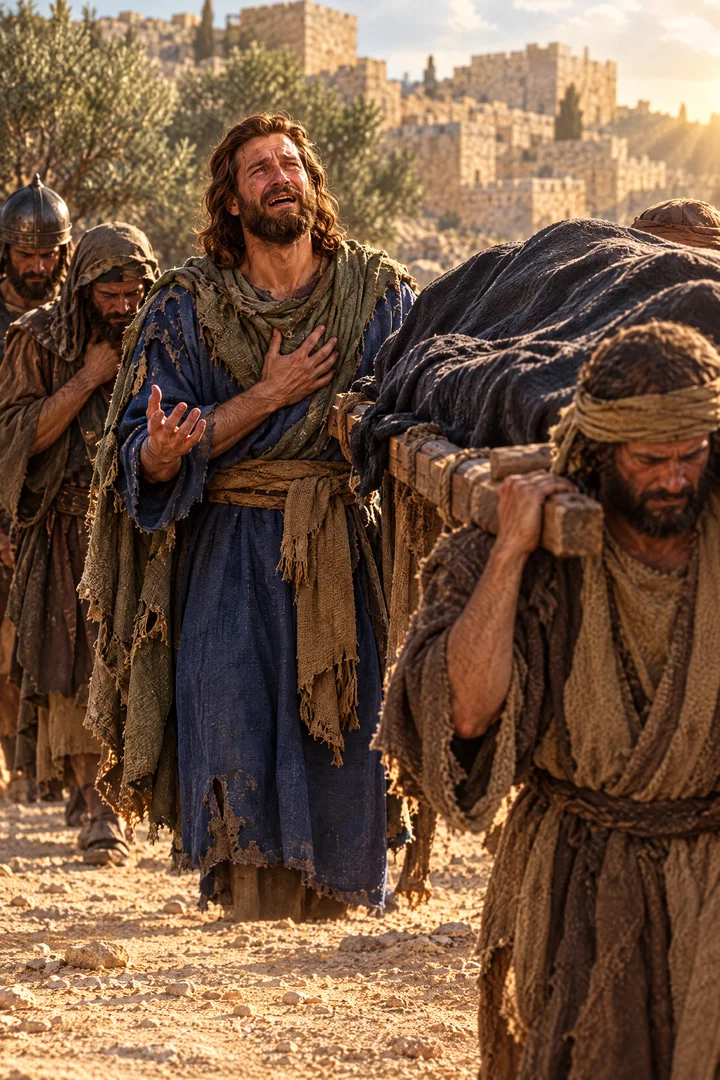
The lament poses the searching question whether Abner's end was the death of a fool.PP 699.3 The answer denies that his death was befitting a fool, since his hands were not bound and his feet were not put in fetters.PP 699.3 He did not die as a condemned criminal secured for just punishment, but as a free man cut down without restraint or lawful cause.PP 699.3 The lament declares instead that he fell as a man falls before wicked men.PP 699.3 That verdict exposes the killing as treacherous murder rather than a lawful or deserved death, and in doing so it rebukes those responsible for the deed.PP 699.3
Sources
Pioneers and periodicals
7 sources
The verse belongs to the history of the long war between the house of Saul and the house of David, which includes Abner's revolt to David and Abner's murder by Joab over the slaying of Saul's son Ishbosheth.ST Apr 14, 1909 It is David's public lament over Abner, whom he calls a great man, condemning the manner of his death as an ignoble, foul murder though Abner himself was not a fool, and it is invoked in lament over Abraham Lincoln as a noble leader struck down by his enemies while he was considering how to forgive them.RH May 23, 1865ST Jun 25, 1896 Abner died as a fool in that he was neither bound nor killed in battle, but was approached by Joab under a fair, brotherly appearance and murdered with a hidden dagger, illustrating the danger of seductive influence which conceals harmful intent under a fair appearance and leads its victim into destruction before the danger is recognized.RH Dec 29, 1859 Saul's death by his own hand is described in the same terms, presenting him as one who died a fool's death like Abner.ST Apr 24, 1901
The verse supplies the comparison for saying one died as a fool dies, which was questioned whether it fit the man under discussion, while he was said to be buried like a fool. To die as a fool is to die without God as a Christless sinner, a grievous death unlike the blessed death of those who die in the Lord. A fool's death is the opposite of the peaceful death of the righteous, coming when a person desires to die like the righteous but is unwilling to live the obedient, self-denying life of the righteous, and this link between living disobediently and dying a fool's death remains the law of life and death to the end of time.ST Sep 18, 1884 The verse warns against rejecting Christ's invitation and dying having neglected the opportunity for salvation, teaching that to refuse the offered atonement and the Spirit's call to come is a foolish choice and that the present moment may be the last chance to accept salvation. The verse applies to one who gains wealth dishonestly but lacks integrity, who despite other abilities and success lives without the confidence of good people and dies as a fool.ST Apr 15, 1880
Sources